
Navigation
Install the app
How to install the app on iOS
Follow along with the video below to see how to install our site as a web app on your home screen.
Note: This feature may not be available in some browsers.
More options
You are using an out of date browser. It may not display this or other websites correctly.
You should upgrade or use an alternative browser.
You should upgrade or use an alternative browser.
Microsoft to Remove Full ReFS Support from Windows 10 Pro
- Thread starter Megalith
- Start date
spinach_chin
Weaksauce
- Joined
- Apr 27, 2016
- Messages
- 64
... and if you have a NAS using Storage Spaces, you won't be able to expand your storage.And they are not. If you already setup ReFS, it won't be removed. You just won't be able to setup new ReFS. If you don't already have ReFS, then you don't need it. If you already have it, then you have nothing to worry about.
Talk about making mountains out of molehills.

michalrz
Supreme [H]ardness
- Joined
- Jun 4, 2012
- Messages
- 4,943
We're doing a major overhaul at work with internet services for patients in mind, I'm adding full Linux support as a requirement. Fuck this. I won't be taking no flak when MS pulls odd shit again.
I'm already having problems with a very expensive blood analysis machine refusing to operate properly on Win10 Pro. Explorer keeps becoming unresponsive after the machine's software been operating for a few hours.
This is a new computer, new blood analyzer from a major manufacturer, and now the supplier is in hot water because they can't get the thing to play nice on 10 Pro.
I will be yanking 10 wherever possible. I need a system I can trust and control. Yes, Linux meets most of my needs, and where it will not be able to, I'll be upgrading to 7 and placing a no-win-10 directive for the users.
Well that didn't go over well.
Talked to a potential supplier of an integrated clinic management system. Sadly there are few of them here.
They are a purely Microsoft shop and they consider Linux to be too 'unstable' feature and foundation wise. Also they boast their 'great cooperation' with Microsoft which would solve any potential problems. Hell, they claim "red hat" is costly and has poor support. Not good.
I'll be mailing to other suppliers and try to get Linux support as a requirement in the future acquisition of said suite.
Linux unstable that is pretty rich.
Call red hat direct and talk to them about possible suppliers ect. I'm not sure exactly what type of solution you are looking for, I imagine they can point you in the right direction.
https://www.redhat.com/en/about/contact
michalrz
Supreme [H]ardness
- Joined
- Jun 4, 2012
- Messages
- 4,943
Linux unstable that is pretty rich.
Call red hat direct and talk to them about possible suppliers ect. I'm not sure exactly what type of solution you are looking for, I imagine they can point you in the right direction.
https://www.redhat.com/en/about/contact
Well we're in the market for a quite specific software solution.
I'm located in Poland, and we're in the process of implementing a comprehensive 100% electronic workflow. Web based visit booking, SMS notifications for patients, ability to check one's lab results via web.
Also things like digital signing of medical records, data sharing between various clinic departments (so that a surgeon can easily verify a patient's insurance status, his previous treatments etc.).
There are few vendors of such products, as they are usually closely tied to what I'm told is the HL7 data protocol. I'm quite new to this, but I'm learning as I go along.
The fact that one of the largest vendors outright despises Linux is immature IMHO because I personally know of many success stories. Hell, we use Libre Office anyway, so it's only a matter of porting the thing.
I'll keep looking. Thanks for the recommendation.

- Joined
- Feb 1, 2005
- Messages
- 31,350
why remove a feature post release.
also.. why should MS be able to remove shit from your computer??
Not using that filesystem, but it seems lately Microsoft is intent on removing features from Windows 10 instead of adding features, which makes no sense.
Windows 10 you never not what you really got...


YeuEmMaiMai
Extremely [H]
- Joined
- Jun 11, 2004
- Messages
- 35,456
so with Windows 2000 they go with the Windows 2000 Professional aka WORKSTATION and now some 20 years later they decide to make Professional aka WORKSTATION not so professional lol
Well we're in the market for a quite specific software solution.
I'm located in Poland, and we're in the process of implementing a comprehensive 100% electronic workflow. Web based visit booking, SMS notifications for patients, ability to check one's lab results via web.
Also things like digital signing of medical records, data sharing between various clinic departments (so that a surgeon can easily verify a patient's insurance status, his previous treatments etc.).
There are few vendors of such products, as they are usually closely tied to what I'm told is the HL7 data protocol. I'm quite new to this, but I'm learning as I go along.
The fact that one of the largest vendors outright despises Linux is immature IMHO because I personally know of many success stories. Hell, we use Libre Office anyway, so it's only a matter of porting the thing.
I'll keep looking. Thanks for the recommendation.
NP ya I would start right at the main source. I wish I could give you more to go on as I do switch small-mid size companies myself, however I'm Canadian.... and I really don't have much of a clue about the medical field specific to the US. All our major hospitals and clinics here are gov run. The closest I could get I guess would be smaller eye doc/dentist offices, but it isn't a field I have really chased down. The stuff I have been doing keeps me busier then I have time for as it is. Hope you find something reliable... if you do end up stuck with MS hopefully your vendor is solid and everything goes smooth. (well hopefully any solution you find goes smooth.)
What's even funnier is windows does not support RAID above RAID5 So if you wanted a raid topology that will survive multiple drive failures you need an expensive raid card (and all the issues that brings) or just don't have storage above a certain value.
You can get RAID 10(stripes over mirrors)/mirrored storage pools with Storage Spaces using ReFS since Win 10 launched. Two way and three way mirrored. Parity storage pools are also supported, 3 drives for 1 disk failure or 7 for two disk failure.
The features been there. Just the performance isn't good compared to ZFS for no apparent reason I can tell. Using same machine as reference. Plus all the missing features compared to NTFS or ZFS.
Unless there's a significant market for that type of s/w on Linux, they're not going to do it. I don't know how big the market is for what you want, but IME unless it's Java based, vertical s/w is generally written for a single platform.Well we're in the market for a quite specific software solution.
I'm located in Poland, and we're in the process of implementing a comprehensive 100% electronic workflow. Web based visit booking, SMS notifications for patients, ability to check one's lab results via web.
Also things like digital signing of medical records, data sharing between various clinic departments (so that a surgeon can easily verify a patient's insurance status, his previous treatments etc.).
There are few vendors of such products, as they are usually closely tied to what I'm told is the HL7 data protocol. I'm quite new to this, but I'm learning as I go along.
The fact that one of the largest vendors outright despises Linux is immature IMHO because I personally know of many success stories. Hell, we use Libre Office anyway, so it's only a matter of porting the thing.
I'll keep looking. Thanks for the recommendation.
Where I'm at, most of that on the front end is Windows (again, unless it's java based), but and on the server side it's typically Linux. Most of these companies are not going to make s/w for both, because the product is typically for a single industry and it's just not worth developing and supporting multiple platforms, but maybe there's a company that does it just for *nix.
Really? I don't recall a home version of 2000. I first heard of a home version when XP came out.so with Windows 2000 they go with the Windows 2000 Professional aka WORKSTATION and now some 20 years later they decide to make Professional aka WORKSTATION not so professional lol
michalrz
Supreme [H]ardness
- Joined
- Jun 4, 2012
- Messages
- 4,943
Unless there's a significant market for that type of s/w on Linux, they're not going to do it. I don't know how big the market is for what you want, but IME unless it's Java based, vertical s/w is generally written for a single platform.
Where I'm at, most of that on the front end is Windows (again, unless it's java based), but and on the server side it's typically Linux. Most of these companies are not going to make s/w for both, because the product is typically for a single industry and it's just not worth developing and supporting multiple platforms, but maybe there's a company that does it just for *nix.
You're pretty much spot on.
Actually that kind of prompted me in the right direction (Java, but at the same time, eww). Thanks for your input sir.
Really? I don't recall a home version of 2000. I first heard of a home version when XP came out.
But Windows 2000 is Windows 2000 Professional. It was literally the Workstation OS just as NT 4 was before it. At the time the NT OS was the business/workstation OS whereas the normal 9x/ME was the home version of the OS. When Microsoft moved everything to the NT codebase was when it technically went the Home/Pro route under the same codebase at least by name. There has been a home/pro version since at least 3.1 and 3.51. Just because the names haven't been exactly the same doesn't mean the difference hasn't been there.
It matters, because he called it Win 2000 Professional, which didn't exist. 2000 was just a new version of NT.But Windows 2000 is Windows 2000 Professional. It was literally the Workstation OS just as NT 4 was before it. At the time the NT OS was the business/workstation OS whereas the normal 9x/ME was the home version of the OS. When Microsoft moved everything to the NT codebase was when it technically went the Home/Pro route under the same codebase at least by name. There has been a home/pro version since at least 3.1 and 3.51. Just because the names haven't been exactly the same doesn't mean the difference hasn't been there.
And FWIW, I don't think most desktops (even in business) were running NT. I worked at a major Telecom Equipment provider and when we moved from Nix to Windows, it was Windows 98. They did start moving to 2000 around the time XP came out (can't remember if it was before or after and we were large enough that it's possible some parts were moving sooner).
As I recall, they removed features from NT (probably when 2000 came out, but maybe earlier) that nerfed it's ability to work as a web server.
Regardless, I'm interested to see what this Workstation OS ultimately has and how much it is, but if the slides I saw are any indication, I have no need for it.
It matters, because he called it Win 2000 Professional, which didn't exist. 2000 was just a new version of NT.
And FWIW, I don't think most desktops (even in business) were running NT. I worked at a major Telecom Equipment provider and when we moved from Nix to Windows, it was Windows 98. They did start moving to 2000 around the time XP came out (can't remember if it was before or after and we were large enough that it's possible some parts were moving sooner).
As I recall, they removed features from NT (probably when 2000 came out, but maybe earlier) that nerfed it's ability to work as a web server.
Regardless, I'm interested to see what this Workstation OS ultimately has and how much it is, but if the slides I saw are any indication, I have no need for it.
He called it Win2k Pro because it was Win2k Pro.
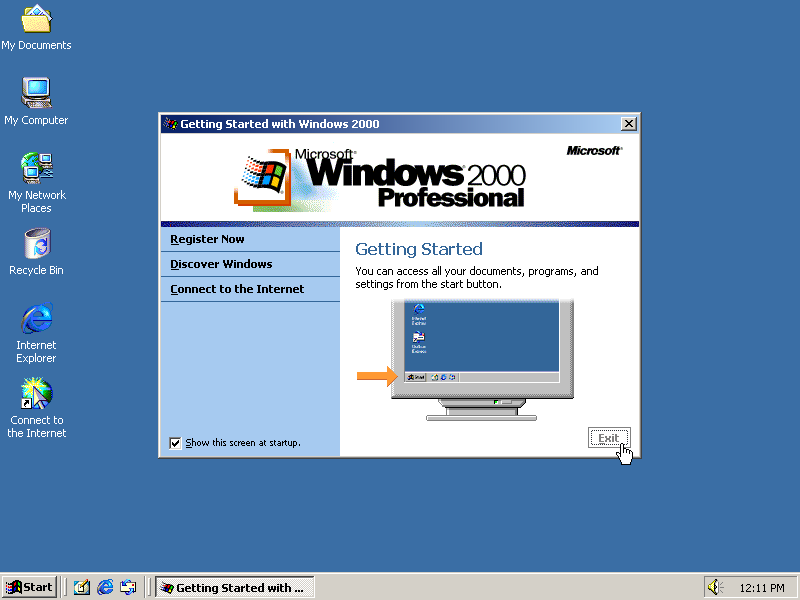
And just because you didn't see many NT systems doesn't mean there weren't plenty in use. I know of more than one place which was using NT4 and we're talking thousands of machines running it, state government as a matter of fact. NT4 was a shitton more stable than any 9x and had much better resource management. That's the very reason the 9x codebase was dropped and MS moved everything to the NT codebase.

naib
[H]ard|Gawd
- Joined
- Jul 26, 2013
- Messages
- 1,289
What about raid-Z1,raid-Z2, raid-Z3... What is needed with larger arrays. Windows doesn't support it. It doesn't provide multi disk redundancyYou can get RAID 10(stripes over mirrors)/mirrored storage pools with Storage Spaces using ReFS since Win 10 launched. Two way and three way mirrored. Parity storage pools are also supported, 3 drives for 1 disk failure or 7 for two disk failure.
The features been there. Just the performance isn't good compared to ZFS for no apparent reason I can tell. Using same machine as reference. Plus all the missing features compared to NTFS or ZFS.
YeuEmMaiMai
Extremely [H]
- Joined
- Jun 11, 2004
- Messages
- 35,456
There wasn't it was Windows 2000 Professional and Server. A lot of us ran 2000 Pro on our machines because it was FAR, FAR, FAR, (did I say FAR?) superior to windows 9x...Really? I don't recall a home version of 2000. I first heard of a home version when XP came out.
But Windows 2000 is Windows 2000 Professional. It was literally the Workstation OS just as NT 4 was before it. At the time the NT OS was the business/workstation OS whereas the normal 9x/ME was the home version of the OS. When Microsoft moved everything to the NT codebase was when it technically went the Home/Pro route under the same codebase at least by name. There has been a home/pro version since at least 3.1 and 3.51. Just because the names haven't been exactly the same doesn't mean the difference hasn't been there.
Negative, Windows NT 3.X was totally different than Windows 3.1 which was a GUI that ran on MS DOS. There was never a home version of NT based OS until XP. Even Windows 9x/ME did the same...ran on DOS
Windows NT was the result of the failed collaboration between IBM and MS... IBM went with OS2 and MS went with NT. The bone of contention was keeping DOS in the OS and IBM said nope... and as we all know OS2 is dead, dead, dead while NT is alive and well (Windows 10).
Last edited:
What about raid-Z1,raid-Z2, raid-Z3... What is needed with larger arrays. Windows doesn't support it. It doesn't provide multi disk redundancy
whatevs said:You can get RAID 10(stripes over mirrors)/mirrored storage pools with Storage Spaces using ReFS since Win 10 launched. Two way and three way mirrored. Parity storage pools are also supported, 3 drives for 1 disk failure or 7 for two disk failure.
The features been there. Just the performance isn't good compared to ZFS for no apparent reason I can tell. Using same machine as reference. Plus all the missing features compared to NTFS or ZFS.
There wasn't it was Windows 2000 Professional and Server. A lot of us ran 2000 Pro on our machines because it was FAR, FAR, FAR, (did I say FAR?) superior to windows 9x...
Negative, Windows NT 3.X was totally different than Windows 3.1 which was a GUI that ran on MS DOS. There was never a home version of NT based OS until XP. Even Windows 9x/ME did the same...ran on DOS
Windows NT was the result of the failed collaboration between IBM and MS... IBM went with OS2 and MS went with NT. The bone of contention was keeping DOS in the OS and IBM said nope... and as we all know OS2 is dead, dead, dead while NT is alive and well (Windows 10).
I know 3.1 was a graphical UI run on top of DOS and not NT. The point is that 3.1 was essentially the home version and NT 3.51 was the workstation/pro version MS put out. Just pointing out that MS for many, many, many years has had a difference between home and pro products and at this point is trying to neuter Win 10 Pro to turn it into Win 10 Home with a couple extra things to add in a new SKU which is the exact thing Pro is supposed to be.

- Joined
- Oct 4, 2007
- Messages
- 13,080
There wasn't it was Windows 2000 Professional and Server. A lot of us ran 2000 Pro on our machines because it was FAR, FAR, FAR, (did I say FAR?) superior to windows 9x...
Negative, Windows NT 3.X was totally different than Windows 3.1 which was a GUI that ran on MS DOS. There was never a home version of NT based OS until XP. Even Windows 9x/ME did the same...ran on DOS
Windows NT was the result of the failed collaboration between IBM and MS... IBM went with OS2 and MS went with NT. The bone of contention was keeping DOS in the OS and IBM said nope... and as we all know OS2 is dead, dead, dead while NT is alive and well (Windows 10).
What do you mean, the bone of contention was keeping DOS in the OS and IBM said nope? I was using OS/2 Warp as my primary OS back then and let me tell you, they have DOS in it, not some neutered version but full blown DOS. (I was able to run my DOS games through it.) They also had the ability to boot to DOS itself from within the OS, straight up real MS DOS off a floppy or CD for when you needed real DOS, without rebooting the computer.
Something tells me, you not remembering it correctly. (OS/2 did die though, but that was because IBM let it die.)
- Joined
- Oct 4, 2007
- Messages
- 13,080
He called it Win2k Pro because it was Win2k Pro.
View attachment 34428
And just because you didn't see many NT systems doesn't mean there weren't plenty in use. I know of more than one place which was using NT4 and we're talking thousands of machines running it, state government as a matter of fact. NT4 was a shitton more stable than any 9x and had much better resource management. That's the very reason the 9x codebase was dropped and MS moved everything to the NT codebase.
If by codebase, you mean the ring memory model then yes, that is right. 9x operating systems just did not have the protection of the OS/2, NT and other types of OSes like them.
My recollection is that IBM went with OS/2 and MS went with Win 9x (at the time called Chicago), not NT, but I'm not an expert on that. I did give Warp a try for a while, but I never got it running as smoothly as I wanted, though I was pulling for OS/2, because that was back when MS was playing the dirtiest pool (e.g. it's not finished until Lotus doesn't work)What do you mean, the bone of contention was keeping DOS in the OS and IBM said nope? I was using OS/2 Warp as my primary OS back then and let me tell you, they have DOS in it, not some neutered version but full blown DOS. (I was able to run my DOS games through it.) They also had the ability to boot to DOS itself from within the OS, straight up real MS DOS off a floppy or CD for when you needed real DOS, without rebooting the computer.
Something tells me, you not remembering it correctly. (OS/2 did die though, but that was because IBM let it die.)