- Joined
- Jul 3, 2009
- Messages
- 1,158
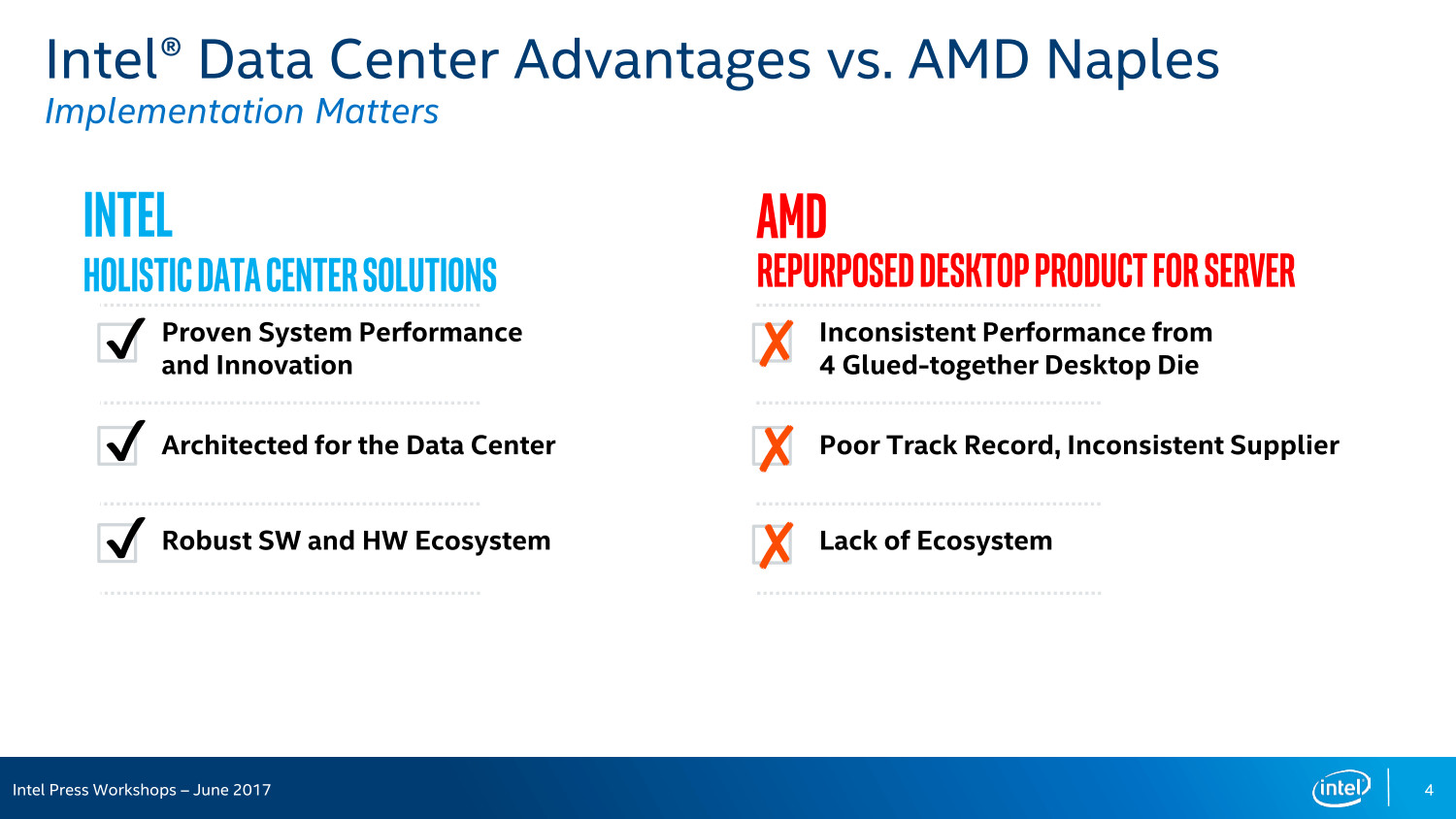
The only way AMD cpu prices are going up is if that special glue they use to put them together goes scarce.
I see you also follow the 100% true, unbiased, fact based Intel marketing.
![[H]ard|Forum](/styles/hardforum/xenforo/logo_dark.png)
Follow along with the video below to see how to install our site as a web app on your home screen.
Note: This feature may not be available in some browsers.
The only way AMD cpu prices are going up is if that special glue they use to put them together goes scarce.
After reading this thread I think the question becomes: when will AMD start getting greedy and screwing us?
Their 7nm stuff would not be called 7nm by the ITRS roadmap.
Since it is nowhere near actually having a 2nm pitch size, we'll see "smaller" nodes if nothing else as marketing fluff as things go forward. We have not reached the end of lithography yet, they'll keep improving the process and TSMC's MOU is when they get an improved process tech, call it a smaller node. So I fully expect to see "picometer" nodes in the future, even though it will have nothing to do with actual feature size. As for how small we can actually make things? Who knows but there is some solid research that 1nm may be achievable.
At this point though don't pay any attention to the size that you see coming out of fabs, it is largely detached from reality. Just take it as a marketing term that means "newer, better node." Remember even if there isn't a feature shrink, or only a minimal one, there are other things they can improve like the materials used and so on. So you could very well have a new lithography process that isn't really any smaller than the previous one, but still yields much faster chips.
Before people get lost in PR numbers "nm" has been broken ever since TSMC renamed their 20nm Finfet into "16nm" and decided not to follow the pack and just fluff numbers.
Intel's 10nm node is intact smaller than TSMC' 7 nm.
Intel 10nm logic = 54nm x 36nm
TSMC 7 nm logic = 54nm x 40nm
So stop looking at PR numbers...or you delude yourself...just saying
If you dont want people to misunderstand you, then your points should be written in a more clear manner.You completely missed the point - whoosh!

The FX-60 was a dual-core CPU released in 2006 for $1600, when then high-end CPUs were going for less than $1000 - meaning, at that point, and right before Intel released Conroe (Core 2), AMD started price gouging customers.If you dont want people to misunderstand you, then your points should be written in a more clear manner.
I was wondering when someone would mention this. I don't like slapping a new number on something b/c its going to confuse people.. but things like this happen all the time

The FX-60 was a dual-core CPU released in 2006 for $1600
Name another 64-core desktop processor, or even a 32-core... or even just another top end processor that has a lower cost per core than the next lower model.

Before people get lost in PR numbers "nm" has been broken ever since TSMC renamed their 20nm Finfet into "16nm" and decided not to follow the pack and just fluff numbers.
Intel's 10nm node is intact smaller than TSMC' 7 nm.
Intel 10nm logic = 54nm x 36nm
TSMC 7 nm logic = 54nm x 40nm
So stop looking at PR numbers...or you delude yourself...just saying
If Intel and Apple/ARM don't get their shit together soon, we might just see a repeat of the $1600 FX-60 sooner than we think.
Competition is good, but that works both ways!
The FX-60 was going for $1600 in 2006 - I remember seeing it on Newegg, TigerDirect, etc. with that price tag for some time.MSRP was $1,031, retail was like, $750-850 IIRC. For a halo part. Even factoring inflation the price wasn't gougey.
Third post in this thread from 2006 proves that:
http://www.rage3d.com/board/showthread.php?t=33841290
As with all FX series processors, the FX-60 debuts at $1031 in quantities of 1000, so you can expect street pricing to be at or around that number. The FX-57 will drop to $827 mark as it will co-exist with the FX-60.
While completely true and I agree 100% Intel sells the vast bulk of their supply to OEM's and very very few OEM machines ever get anything more than a Ram or HDD upgrade.Intel got greedy with their constantly changing sockets forcing you to buy a new mob every time your wanted to upgrade. .
Intel's biggest problem with their 10nm node is the design change they made to the transistors, they built their process on a change in the Metal Pinch and a design change that lets them use fewer gaps between the transistors for a significantly higher density. Problem is their gaps are proving to be uneven, their 10nm node was too ambitious with too many changes to design elements. Had they just done a node shrink things would be fine its all the other things they are trying to do at the same time that are biting them in the ass.sounds to me like Intel 10nm = AMD bulldozer.
Just made a crappy choice that didnt work out so well. Obviously one is an arch decision, and the other is a fab decision but the result for the respective companies has been similar.
If you saw it for $1600 then it was a retailer that was price gouging, not AMD. AMD's price was right around that of top end Intel processors. Its the same situation as during mining craze when low end AMD RX cards were around $1000. If we go by your logic, AMD must have set those 1k price points to price gouge us.The FX-60 was a dual-core CPU released in 2006 for $1600, when then high-end CPUs were going for less than $1000 - meaning, at that point, and right before Intel released Conroe (Core 2), AMD started price gouging customers.
The point - since it has to be spelled out for you - is that if Intel doesn't get it's act together soon, the price gouging is going to be reversed and AMD will start doing so, hence why I said competition is needed from both ends, aka, history repeats itself.
Yeah Canada doesn't have a lot of importers for computer equipment, and 90% of the supply chain flows through the US so we get a few extra costs along the way. The recent events in the US have started to change our supply chains though so we should have that reduced significantly by mid 2021.If you saw it for $1600 then it was a retailer that was price gouging, not AMD. AMD's price was right around that of top end Intel processors. Its the same situation as during mining craze when low end AMD RX cards were around $1000. If we go by your logic, AMD must have set those 1k price points to price gouge us.
edit: lol. From your thread here:
http://www.rage3d.com/board/showthread.php?t=33841290
Your proof it was $1600 is from Canadian dollars? Well, ya now it makes sense why you think the price was so high. If your looking at CAD prices then it is always ridiculous due to customs costs, extra shipping, and low CAD vs US. Its no wonder your not "getting it" and think people are misunderstanding your posts. Your comparing apples to oranges with currency
No, it was $1600 USD - I remember seeing it at that price point back then in the US - good catch on the CAD listing in that thread, I didn't see that.edit: lol. From your thread here:
http://www.rage3d.com/board/showthread.php?t=33841290
Your proof it was $1600 is from Canadian dollars? Well, ya now it makes sense why you think the price was so high. If your looking at CAD prices then it is always ridiculous due to customs costs, extra shipping, and low CAD vs US. Its no wonder your not "getting it" and think people are misunderstanding your posts. Your comparing apples to oranges with currency
You could be right about that - still doesn't change the $1600 USD price tag that was on it up until soon after Conroe's release.If you saw it for $1600 then it was a retailer that was price gouging, not AMD. AMD's price was right around that of top end Intel processors. Its the same situation as during mining craze when low end AMD RX cards were around $1000. If we go by your logic, AMD must have set those 1k price points to price gouge us.
After Conroe released, the prices you mentioned do seem accurate, as I do remember sharp drops in the price after that on the FX-60.I may have been lowballing the retail price, or remembering a later price, but it was under $1,000 unless you were paying full MSRP.
LMAO at that screenshot!I see you also follow the 100% true, unbiased, fact based Intel marketing.
No kidding, and that video was made in 2017 - before the meltdown, spectre, and 50+ other CPU hardware exploits occurred in Q1 2018.That Intel anti-trust video was crazy. I've read a lot of it over the years, but seeing it summarized like this..wow just wow. And the Pci-E junk I had to shake my head.
Well their 10nm launch was too ambitious, it wasn't just a reduction they also implemented a new design for transistor gates along with it as well as implementing a new system for dummy gates and some other things at a silicon level. They tried to do too much at once and that ultimately bit them in the ass, so I believe for now they have rolled back some of their expectations for the 10nm and they are getting it going and as their '+' get added to their 10nm line they can start creeping those new design elements in. But yeah their Research departments made some wild discoveries but sadly their Development side couldn't figure out how to make them work without some external help (I recall reading that they hired TSMC to help fix their 10nm node but I can't find it at this time), but Intel's 10nm will be short lived they are likely going to skip most of it for a more traditional 7nm, there is probably a reason that all other manufacturers skipped 10 could be some sort of UV scaling factor and things are just unstable at that scale I'm not too sure but yeah It's not so much a case their their engineers left for TSMC and Samsung but more like their Engineers said "they can't do this but we will!" and doubled down on their ego's.How did Intel screw the pooch so bad? It like they completely shut down all their R&D. Did all th engineers they let go to to tsmc and Samsung.


Before people get lost in PR numbers "nm" has been broken ever since TSMC renamed their 20nm Finfet into "16nm" and decided not to follow the pack and just fluff numbers.
Intel's 10nm node is intact smaller than TSMC' 7 nm.
Intel 10nm logic = 54nm x 36nm
TSMC 7 nm logic = 54nm x 40nm
So stop looking at PR numbers...or you delude yourself...just saying
LMAO at that screenshot!
The irony of Intel talking about AMD's "glued together" processors, when Intel literally did this in the mid-2000s with their "dual-core" Netburst and Atom CPUs, using the abysmally slow and high-latency FSB.
You're right, and especially with the Pentium II and III, with the L2 cache running at half-speed.They first did it with the Pentium Pro and later the Pentium II/Xeon where the cache was a completely separate wafer outside the CPU core itself. Later they did it with the Core 2 Quad and later with their mobile parts with integrated graphics.
Intel has their foot in their mouth more often than not.

This comes from Digitimes courtesy of our friends at The FPS review. This shrinking of processes is coming fast and furious to me. I would love for someone in the thread to detail who exactly are the major players worldwide developing these nodes and why TSMC seems to be killing it. How will this affect enthusiasts? What do these shrinking of processes yield in terms of performance and can we expect to see products based on them soon? These were thoughts that popped into my head, here is the link : https://www.thefpsreview.com/2020/0...es-research-and-development-for-2-nm-process/
I don't think it's possible to go much lower than 2nm with electronic circuits.Just like when we went from micrometer to nanometer, we will eventually go from nm to picometer. Probably from there, we would eventually get down to a femtometer. By the time we even come close to thinking about femtometer process nodes though, we will probably end up engineering the protons, neutrons, and electrons of the atom to create some sort of quantum transistors rather than "conventional" materials.

Probably what they said when vacuum tubes were the rage.I don't think it's possible to go much lower than 2nm with electronic circuits.
we will have entire civilizations on 2nm, let alone a simple circuit.I don't think it's possible to go much lower than 2nm with electronic circuits.
it would be funny if the successor to traditional semiconductors were essentially carbon vacuum nano tubes.Probably what they said when vacuum tubes were the rage.
Nah, he's just using a fancier version of the avatar that the Hololive vtubers use.Is this that guys first time ever talking?
Not only did they get greedy and lazy, they did some SERIOUSLY shady stuff over the years. I had an i7 920 then i7 4790k, now happy with Ryzen
Long winded video, grab some popcorn and learn of Intel's abuse over the years:

Well, TSMC is looking at 2023 for their first production on the fab, so we don't really.I didn't realize we had the technology to go below 5nm yet?
I don't think it's possible to go much lower than 2nm with electronic circuits.
Well, TSMC is looking at 2023 for their first production on the fab, so we don't really.