• Some users have recently had their accounts hijacked. It seems that the now defunct EVGA forums might have compromised your password there and seems many are using the same PW here. We would suggest you UPDATE YOUR PASSWORD and TURN ON 2FA for your account here to further secure it. None of the compromised accounts had 2FA turned on.
    Once you have enabled 2FA, your account will be updated soon to show a badge, letting other members know that you use 2FA to protect your account. This should be beneficial for everyone that uses FSFT.

Linux gaming is finally viable

Status
Not open for further replies.
That isn't true though. Ubuntu has nothing to do with Mint. Canc isn't providing anything for Mint... its open source Mint is TAKING the files. Its like saying Manjaro is made by Arch (its not). Or Bazzite is a IBM product. (It's not) NO where anywhere does Canc offer an official stripped down LTS base. Mint has nothing to do with Canonical.

I never made claim that Canonical have anything to do with distro's based on Ubuntu LTS, but the fact remains that they are based on Ubuntu LTS and they are pulling from Canonical repo's without forcing the use of Snaps.

Lens was part of Ubuntu for 5 years. I know I listed the first appearance in 12.10. But it was part of Unity and Ubuntu for 5 years.

Canonical quickly added a toggle allowing users to disable the feature, I don't know anyone who didn't disable it straight after OS install. As stated, this was way back in 2012 - I don't know why, but when it comes to Linux discussion from Windows users and often Linux users, it's like we're still stuck in 2012.

Amazon Lens Ubuntu.jpg


I am 100% ok with RHEL being "paywalled" its a commercial operating system. As it was prior to IBM buying Red Hat. RHEL was never ever free. Though they made a free version CentOS that IBM killed. Ubuntu isn't free either.

I'm not OK with it due to the fact IBM not only stuffed REHL source code behind a paywall, they then went on to kill CentOS - Furthermore, they did it in order to 'make money', absolutely no different to Canonical's past shenanigans. Furthermore, Ubuntu is very much free to use provided you don't need Enterprise support, you can even run Ubuntu Pro for free on up to 5 machines.

Canonical isn't done either. They have recently added Ubuntu Insights in 25.10 (October 2025) It will be rolling out to Ubutnu LTS in April with 26.04. This is a update to Ubuntu-reports.Insight sends a monthly report back to Canonical. Though to be fair to them... they did open source the server side code on it, which apparently wasn't the case with Ubuntu-report. I mean whatever my point is simple. They keep looking for new ways to gather telemetry. They haven't given up on gathering data.

And, to be fair, it is opt in - absolutely no different to User Feedback under KDE system settings which will be present under your own CachyOS install by default.

You know the difference between Cachy and Arch proper is almost nothing right? (if Arch breaks so does Cachy) Yes they have for sure enhanced the install experience with a GUI... and they have some great tools. Still they aren't doing anything all that special to the packages they recompile. They are just recompiling them. Depending what your using 1/3-1/2 your Cachy packages aren't from the Cachy repos at all they are just installed from the standard Arch Repos which Cachy still adds to pacman.
I know your more recently moved over to Cachy. Arch has been as stable as Cachy for years now. People just didn't know it cause they didn't use Arch. There have been people using distros like Manjaro much longer then Cachy and saying the same... that its just as stable as any Debian/Fedora/Suse distro. I appreciate what the Cachy devs are trying to do don't get me wrong, at its core though in most ways its just a Arch installer. They even make it possible at install to just unclick the cachy repos and essentially turn the cachy installer into a GUI arch installer.

Of Course I know the difference between Cachy and Arch is 'almost' nothing (however, it isn't nothing), the fact remains that CachyOS makes Arch convenient without having to build your own OS from scratch (Manjaro tried, they failed) - something Arch has needed for a very long time. Personally, I'm over building my OS from scratch, even using archinstall.

However, the fact remains that Valve have provided not only financial support to devs, allowing them to better focus more on what matters in relation to Arch which wasn't the case when everything was done on a mostly volunteer only basis; they also provide infrastructure support that includes secure signing - essentially, Valve brought stability and professionalism to a distro that honestly used to be not much more than a distro for neckbeards stating 'I use Arch BTW' - making it more accessible, while offering the stability expected by average users...

...Something that most definitely hasn't been the case for the past 10 years. As stated, I used Arch in the day, and failure after an update wasn't entirely uncommon, hence the reason I went back to Ubuntu based distro's. With the exception of btrfs tree corruption (which to be fair was more of a kernel regression than a btrfs issue), my CachyOS system has been literally rock stable since day one.

As you've stated, the fact Linux users have choice is a good thing, but stating that Canonical is evil and untrustworthy based on little more than a suspicion with no real perspective (as stated, other DE's have telemetry settings baked into the DE, and IBM haven't exactly been any less than underhanded in some of their actions) is somewhat unfair.
 
I use Arch, btw!

Half kidding.

I'm with Mazz on this one. Why the Amazon/Ubuntu thing is still being brought up is mind boggling. The Snap thing is overblown too. I also think Canonical has listened to the community about the issues with Snaps. Mozilla making Firefox a Snap by default for Ubuntu was a bad idea that turned into a good thing because it finally took a really important piece of software and screwed it up. Which forced Canonical to take a hard look at Snap and really fix it.

I only run Ubuntu Server LTS for my self-hosted stuff so that means I don't have to deal with the Snap stuff all that much. Although, my Nextcloud instance is the Snap version and I find it to be quite good.

The Snap store like any software distribution system has it's problems with bad software and malware. You can actually take a look at Snap packages here: https://snapscope.popey.com/

That said I think Flatpak has more or less won this war anyways. Far more people use it, me included, for much of their installs now. It's just a better option than Snap overall.

You all have finally convinced me to give CachyOS a try. I've been vanilla Arch as my daily driver for well over a decade now. I dabbled with Solus for a little bit and really liked it but as it was mentioned, Ikey is brilliant but is a flake, so when he left Solus I did too and went straight back to Arch.

But this install on my laptop needs a refresh so CachyOS it is.
 
I use Arch, btw!

Half kidding.

I'm with Mazz on this one. Why the Amazon/Ubuntu thing is still being brought up is mind boggling. The Snap thing is overblown too. I also think Canonical has listened to the community about the issues with Snaps. Mozilla making Firefox a Snap by default for Ubuntu was a bad idea that turned into a good thing because it finally took a really important piece of software and screwed it up. Which forced Canonical to take a hard look at Snap and really fix it.

I only run Ubuntu Server LTS for my self-hosted stuff so that means I don't have to deal with the Snap stuff all that much. Although, my Nextcloud instance is the Snap version and I find it to be quite good.

The Snap store like any software distribution system has it's problems with bad software and malware. You can actually take a look at Snap packages here: https://snapscope.popey.com/

That said I think Flatpak has more or less won this war anyways. Far more people use it, me included, for much of their installs now. It's just a better option than Snap overall.

You all have finally convinced me to give CachyOS a try. I've been vanilla Arch as my daily driver for well over a decade now. I dabbled with Solus for a little bit and really liked it but as it was mentioned, Ikey is brilliant but is a flake, so when he left Solus I did too and went straight back to Arch.

But this install on my laptop needs a refresh so CachyOS it is.
Try the new Cosmic desktop with CachyOS. I think it's great.
 
I've used Cosmic a bit. I like what System76 is doing but Cosmic isn't for me just yet. For now I'll stick with KDE.
I get it. I still consider myself something of a Linux neophyte and went full-time with it only few weeks ago. Anything that makes the transition easier is gold for me.
 
checked with grok for linux distros for beginners. it suggested following options:
  1. LMDE — debian based
  2. Zorin — windows like
  3. pop!_OS — ubuntu based
  4. Bazzite — fedora based
  5. Regata — openSuse based
  6. Garuda — arch based

LLM slop at its worst. Why do you post this?
 
So CachyOS is up and running. I've always been a standard bash shell kinda guy so fish is throwing me for a loop at the moment lmao.

But I can tell the system is definitely snappier than vanilla Arch. While I have my Arch install scripted and ready to drop in archinstall going through Calamares is always nice.

I absolutely love the stripped down KDE. With Arch you can install the meta package for less stuff but this is still much nicer.

Haven't done much gaming so far but it seems pretty good. Certainly don't see any slowdowns.

Screenshot_20260108_222710.png
 
So CachyOS is up and running. I've always been a standard bash shell kinda guy so fish is throwing me for a loop at the moment lmao.

But I can tell the system is definitely snappier than vanilla Arch. While I have my Arch install scripted and ready to drop in archinstall going through Calamares is always nice.

I absolutely love the stripped down KDE. With Arch you can install the meta package for less stuff but this is still much nicer.

Haven't done much gaming so far but it seems pretty good. Certainly don't see any slowdowns.

View attachment 777911

Bash is still there.... just type bash and hit enter. :) ZSH is also installed by default.

If you want to change the default to bash its just;
chsh -s /usr/bin/bash

You can do the same to change the default to fish or zsh, and you can call the other shells from within the othes as well, you can head back to your default running a exit.... ya that's right. lol

In all seriousness though. I prefer fish. But if your going to run a bash script. Switch to bash to run it... if you run a small script from say a .desktop or something you can invoke bash first. Fish is mostly complaint but more complicated scripts might be bashy.
 
People always say they don't like Fish, TBH I actually really like it.
 
Bash is still there.... just type bash and hit enter. :) ZSH is also installed by default.

If you want to change the default to bash its just;
chsh -s /usr/bin/bash

You can do the same to change the default to fish or zsh, and you can call the other shells from within the othes as well, you can head back to your default running a exit.... ya that's right. lol

In all seriousness though. I prefer fish. But if your going to run a bash script. Switch to bash to run it... if you run a small script from say a .desktop or something you can invoke bash first. Fish is mostly complaint but more complicated scripts might be bashy.

Saw that. Think I'm going to stick with fish for a bit though just to see.

People always say they don't like Fish, TBH I actually really like it.

Never said I didn't like it. Just threw me for a loop when I first started using it. It's pretty different from straight bash. I do like it though.
 
ChadD so as I said, not Linux desktop av available.
To add to this... as I'm sure you won't take my "not needed" as authoritative. :)

Anti viruses made for Linux are intended to scan networks, and network services which share files to and from windows/mac machines. Not for the protection of the Linux box, for the protection of other windows/mac users.
The way Linux works, software doesn't have and can not get kernel access. This is why kernel level anti cheat in games doesn't work right? We can pass windows malware around, so if you have a Linux email server or FTP server or something its the friendly thing to do for our windows using friends, to scan the files they transfer to or receive from our boxes. But that evil .com file in the Princely email or what have you isn't going to do anything to a standard Linux box. To even make a Linux desktop system vulnerable someone would have to be knowledgeable enough to completely strip out almost every built in security feature the OS has by default... and even then they would have to purposely not use Distro packages. And an attacker would actually have to know what versions of vulnerable depends they had on their system... which their system isn't going to tell them (unlike MS bastion of security which will tell you almost every thing you want to know lol... those hackathon events and such, there is a reason windows boxes fall generally in min. So many MS services will just report damn near everything. So many paths in... and so many services that will happily show malware the way.)

Linux is very safe. Of course nothing is ever 100%. But Linux is not Windows where if you take an non updated machine onto the internet your system is crying within 10min. Android phones... Anti virus exists but its really not needed. ChromeOS same thing. Linux permissions alone all but shut down malicious software. The kernel has a many more layers beyond simple permissions.

https://www.zdnet.com/article/do-you-need-antivirus-on-linux/
https://help.ubuntu.com/stable/ubuntu-help/net-antivirus.html.en
https://access.redhat.com/solutions/9203
https://fedoraproject.org/wiki/SecurityBasics#Understanding_Viruses_and_Spyware
https://support.scc.suse.com/s/kb/I...a-SUSE-Linux-Enterprise-Server?language=en_US
https://wiki.archlinux.org/title/List_of_applications/Security
https://linuxsecurity.com/news/security-trends/antivirus-linux
https://www.debian.org/doc/manuals/securing-debian-manual/ch08s08.en.html
https://www.howtogeek.com/135392/ht...t-need-an-antivirus-on-linux-and-when-you-do/
 
To add to this... as I'm sure you won't take my "not needed" as authoritative. :)

Anti viruses made for Linux are intended to scan networks, and network services which share files to and from windows/mac machines. Not for the protection of the Linux box, for the protection of other windows/mac users.
The way Linux works, software doesn't have and can not get kernel access. This is why kernel level anti cheat in games doesn't work right? We can pass windows malware around, so if you have a Linux email server or FTP server or something its the friendly thing to do for our windows using friends, to scan the files they transfer to or receive from our boxes. But that evil .com file in the Princely email or what have you isn't going to do anything to a standard Linux box. To even make a Linux desktop system vulnerable someone would have to be knowledgeable enough to completely strip out almost every built in security feature the OS has by default... and even then they would have to purposely not use Distro packages. And an attacker would actually have to know what versions of vulnerable depends they had on their system... which their system isn't going to tell them (unlike MS bastion of security which will tell you almost every thing you want to know lol... those hackathon events and such, there is a reason windows boxes fall generally in min. So many MS services will just report damn near everything. So many paths in... and so many services that will happily show malware the way.)

Linux is very safe. Of course nothing is ever 100%. But Linux is not Windows where if you take an non updated machine onto the internet your system is crying within 10min. Android phones... Anti virus exists but its really not needed. ChromeOS same thing. Linux permissions alone all but shut down malicious software. The kernel has a many more layers beyond simple permissions.

https://www.zdnet.com/article/do-you-need-antivirus-on-linux/
https://help.ubuntu.com/stable/ubuntu-help/net-antivirus.html.en
https://access.redhat.com/solutions/9203
https://fedoraproject.org/wiki/SecurityBasics#Understanding_Viruses_and_Spyware
https://support.scc.suse.com/s/kb/I...a-SUSE-Linux-Enterprise-Server?language=en_US
https://wiki.archlinux.org/title/List_of_applications/Security
https://linuxsecurity.com/news/security-trends/antivirus-linux
https://www.debian.org/doc/manuals/securing-debian-manual/ch08s08.en.html
https://www.howtogeek.com/135392/ht...t-need-an-antivirus-on-linux-and-when-you-do/

It's an odd, if not self defeating scarecrow argument, when the fact the OS doesn't require AV to remain safe, is the argument against the use of the OS due to the fact it hasn't got AV. :confused:
 
  • Like
Reactions: ChadD
like this
It's an odd, if not self defeating scarecrow argument, when the fact the OS doesn't require AV to remain safe, is the argument against the use of the OS due to the fact it hasn't got AV. :confused:

You see some silly things. A few Linux anti virus scanners around that were made for no other reason then corporate compliance reasons. Linux admins sick of arguing with management, and just making a stupid script to run useless scans.
 
You see some silly things. A few Linux anti virus scanners around that were made for no other reason then corporate compliance reasons. Linux admins sick of arguing with management, and just making a stupid script to run useless scans.


Shhhhh Don't tell anyone. But the Anti Virus IS the Virus and Spyware. :D

Crap am I typing my thoughts out loud again!!
 
  • Like
Reactions: ChadD
like this
You see some silly things. A few Linux anti virus scanners around that were made for no other reason then corporate compliance reasons. Linux admins sick of arguing with management, and just making a stupid script to run useless scans.

It's not completely neutral. AV packages present attack surfaces on their own. It can be less secure to run them than not.
 
  • Like
Reactions: ChadD
like this
Shhhhh Don't tell anyone. But the Anti Virus IS the Virus and Spyware. :D

Crap am I typing my thoughts out loud again!!

Exactly like the anti cheat system loading into ring 0.
I would say Shhh... but we been telling our windows friends that for a long time they just don't seem to hear. Pew Pew Pew online trolls to shoot I guess.
 
Ya, its been for a fairly long time now, at least 1998 ish that most products are just choosing what companies listen to you and watch your information.

So dear MS, comcast, telegram and discord.

I HOPE YOU LIKE MY CAT PICS AND PICO DE GALLO RECEIPTS!!

Maybe next ill buy a iphone to tell Apple my philosophical musing.
 
It's an odd, if not self defeating scarecrow argument, when the fact the OS doesn't require AV to remain safe, is the argument against the use of the OS due to the fact it hasn't got AV. :confused:
Think it is more people who decide to install things, a developer who grabs random NPM packages that are compromised and sudo install's them.....Linux can get "infected", but it usually takes a user, or an exploitable component to be accessible some how...but not the core of linux it's self..
 
Think it is more people who decide to install things, a developer who grabs random NPM packages that are compromised and sudo install's them.....Linux can get "infected", but it usually takes a user, or an exploitable component to be accessible some how...but not the core of linux it's self..
Yep... Most malware gets into windows due to users, not OS flaws. Same thing can go for desktop Linux, and having no extra layer of security is not a good thing. I'm sure there are plenty of things malware can monitor and spy on without kernel access ;) on both OSes.
 
Yep... Most malware gets into windows due to users, not OS flaws. Same thing can go for desktop Linux, and having no extra layer of security is not a good thing. I'm sure there are plenty of things malware can monitor and spy on without kernel access ;) on both OSes.

No they really can't. That is the thing. Linux doesn't allow software to enter the kernel ring. EVER. So no malware really can't do shit. It can exploit very specific, versions of software that might have a flaw. It isn't windows, those flaws don't hang around for 10 years. The malware would also have to KNOW you have that version of the vulnerable library or whatnot. If your on a rolling release that won't be happening. Even if your on a locked down long term server. ALL the majors back port all security fixes. So its not like RHEL with 2 year old libraries is actually vulnerable all those libraries have current back ported fixes. GT... keep in mind that 95% of the worlds servers run Linux. Almost none of them are running virus scanning as you know it. I linked for you the post for RHEL (IBM) where they specifically say they don't provide offer or suggest any anti virus. Though if your hosting windows users you might want to rubber up for their protection.

Linux just isn't vulnerable in the way windows is by design. Again this is why KERNEL level anti cheat doesn't work in Linux. Its not because Linux has some no no button or something. Its not possible to run in Ring 0. Linux will not allow you to do that. In order to run software in ring zero. You can't just SUDO in or log in as Root you would have to actually go through the trouble of editing Kernel code and re compiling a kernel that would allow it. Could you do that? I guess though I assume if your are capable of doing that you wouldn't be stupid enough to be running any thing potentially malicious.

The point of a windows virus scanner is to find software running in memory that has elevated itself to kernel level to avoid detection by standard windows security (I know I can admit there is some standard windows security). With Linux software can't hide itself like that so there isn't anything to scan for. Another avenue attack is software not hiding running in ram and causing buffer over runs.... can't do that on Linux. Can't copy yourself around, can't over run the ram, can't access systems you don't have access to... writing a working virus for Linux that can do much of anything is near impossible. All the research viruses made for Linux over the years... 9/10 of them can't really do much of anything. Some can grab some data but can't get access to send it anywhere. Some can get access to the network but can't really copy much of use to send anyway. Its just 10x harder then writing a working windows virus.

GT... there are about 20 KNOWN Linux "viruses" most are more malware then virus but I digress on that point. 20... a few more are around but they are just renamed versions of the known ones. Here is the thing though of those 20... I think all but 1 or 2 of them are aimed at Internet Of things devices. Stuff that technically are running Linux... but not desktop Linux. You can target refrigerators or Linux cams and what not cause they tend to run simple systems and the companies that make them run the same minimal Linux kernel+simple system on them. So if you can find a vulnerability you might be able to turn a few thousand refrigerators into a bot net. A couple of the known threats are a decade old at this point... like Podloso which is; an IPOD virus. RST which attacked a very very specific Korean language version of firefox. The commercial Linux virus companies list "Winux" as a Linux virus.... its actually a malware distribution its not a virus at all. LOL Yes there are some shitty distros out there that will spy and steal your info if your dumb enough to install a distro called Winux. The rest of what is known are all research viruses like Brundle and a few others that like the ones that attack IOT devices need very specific things to be true about your Linux install.

Anyway I'm sure your still worried that you got no virus scanner. Hey if you want to buy a Linux anti virus suite go ahead. They do exist. They are pointless for a desktop but they do exist. Again 99% of what they scan for are windows threats. If you do download the ipod virus somewhere though they will catch em. :)
 
Last edited:
Think it is more people who decide to install things, a developer who grabs random NPM packages that are compromised and sudo install's them.....Linux can get "infected", but it usually takes a user, or an exploitable component to be accessible some how...but not the core of linux it's self..
Even running sudo, you're not gonna get kernel level ring 0 access - which is the problem regarding Windows. The whole internet literally runs on Linux, and with the exception of mail servers scanning for Windows viruses, most of those servers won't be running any form of AV - They'll be protected via firewalls and DNS filtering.

Stating that an OS is less secure because it doesn't have AV is literally a Windows mindset and nothing more. In most cases, AV solutions are actually worse than the Viruses they're supposed to be protecting the system from; and most attacks are the result of social engineering, which Norton bloatware won't protect you from.
 
Last edited:
Even running sudo, you're not gonna get kernel level ring 0 access - which is the problem regarding Windows. The whole internet literally runs on Linux, and with the exception of mail servers scanning for Windows viruses, most of those servers won't be running any form of AV - They'll be protected via firewalls and DNS filtering.

Stating that an OS is less secure because it doesn't have AV is literally a Windows mindset and nothing more. In most cases, AV solutions are actually worse than the Viruses they're supposed to be protecting the system from; and most attacks are the result of social engineering, which Norton bloatware won't protect you from.
Agree,

My post was more you can be compromised on Linux, but that takes user interaction usually to have that happen, which that same user would then also get compromised on Windows, because they are doing things with out paying attention.
 
Agree,

My post was more you can be compromised on Linux, but that takes user interaction usually to have that happen, which that same user would then also get compromised on Windows, because they are doing things with out paying attention.
My point being, it's really not possible to compromise Linux to the same degree that's possible under Windows.
 
There have been plenty security holes in the Linux kernel that were class arbitrary code execution.

And don't get me started on potential holefests like wifi firmware binary blobs.
 
There have been plenty security holes in the Linux kernel that were class arbitrary code execution.

And don't get me started on potential holefests like wifi firmware binary blobs.
And most vulnerabilities are identified early as a result of community driven efforts as well as various independent audits and patched quickly. Using the Linux WiFi stack vulnerability as an example, it was essentially identified and patched before it was made public there was even an issue:

https://lore.kernel.org/netdev/20221013100522.46346-1-johannes@sipsolutions.net/T/#u
 
My point being, it's really not possible to compromise Linux to the same degree that's possible under Windows.
The OS yes, but user space, sure
My point being, it's really not possible to compromise Linux to the same degree that's possible under Windows.
Certainly, and now we see Windows trying to rework their kernel access after Crowdstrike fiasco..

But, in terms of end user compromise, when a user says "ya, okay install" that user space is as good as violated
 
But, in terms of end user compromise, when a user says "ya, okay install" that user space is as good as violated
No one's disputing this fact, but the reality is: violating user space is nowhere near as effective as violating kernel ring 0 - and you're gonna have a harder time violating the kernel under Linux. It's not uncommon for malicious actors to use signed driver code and gain kernel level ring 0 access under Windows, once they have access to the kernel, they have access to everything - hell, Windows users willingly install rootkits just to play games.

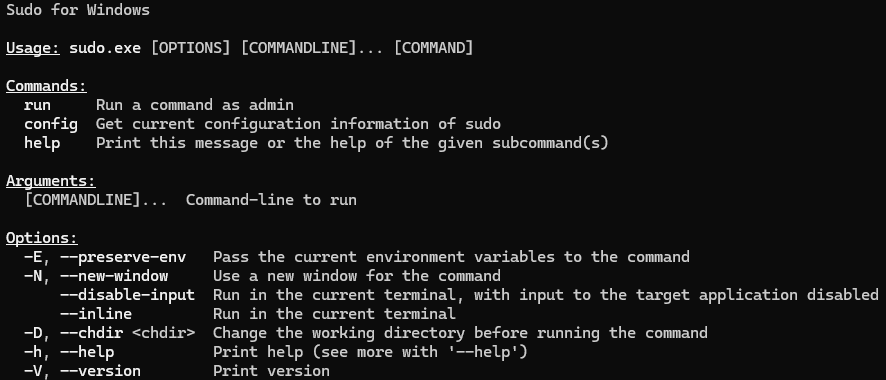
Even the process of installing a virus or malware in the root file system is a notably harder under Linux than it is under Windows due to the fact that Windows doesn't really have effective privilege escalation (apparently 'sudo' is coming to Powershell, but it's still based on UAC).
 
And most vulnerabilities are identified early as a result of community driven efforts as well as various independent audits and patched quickly. Using the Linux WiFi stack vulnerability as an example, it was essentially identified and patched before it was made public there was even an issue:

https://lore.kernel.org/netdev/20221013100522.46346-1-johannes@sipsolutions.net/T/#u

So?

There are holes (in all OSes) and you don't know which bad actors might have found them before publishing them with the patch.
 
Status
Not open for further replies.
Back
Top