
Why LibreWolf Destroys Chrome and Firefox for Operational Security

MrGuvernment

Fully [H]
2FA
Joined
Aug 3, 2004
Messages
24,354
I know people love Firefox, but it is not what it used to be.. and reading some of the things it can do from this article...I know won't ever be using it again...

https://www.sambent.com/why-librewolf-destroys-chrome-and-firefox-for-operational-security/

LibreWolf strips Firefox of corporate surveillance while implementing aggressive fingerprinting resistance and privacy hardening.

LibreWolf represents the antithesis of surveillance capitalism disguised as web browsing, stripping Mozilla's Firefox of its corporate tracking apparatus while hardening privacy protections that mainstream browsers deliberately weaken. This open-source browser fork demonstrates how community-driven development creates superior operational security compared to corporate products designed to harvest user data for profit.

Corporate Browser Surveillance Architecture and LibreWolf's Response​

Chrome and Firefox implement comprehensive data collection systems that monitor browsing behavior, search queries, and user preferences while claiming to protect privacy through marketing theater.

Google Chrome operates as a surveillance platform first and browser second, transmitting detailed usage analytics, syncing browsing history to Google servers, and integrating with Google's advertising ecosystem to create comprehensive user profiles for targeted marketing and government cooperation. Mozilla Firefox, despite positioning itself as a privacy alternative, maintains telemetry collection, sponsored content injection, and partnerships with data brokers that compromise user privacy through default settings most users never modify.

image-23.png

Firefox's Studies system allows Mozilla to remotely execute code on user systems for research purposes, creating potential security vulnerabilities and privacy invasions that corporate oversight cannot adequately control.

Both browsers implement safe browsing features that send URL hashes to corporate servers, creating opportunities for traffic analysis and user tracking through seemingly beneficial security measures. LibreWolf eliminates this surveillance infrastructure entirely, removing Mozilla's telemetry collection, sponsored shortcuts, Pocket integration, and Studies functionality while implementing privacy-first defaults that assume users want protection rather than convenience.

image-26-1.png

The browser strips out Firefox's data collection mechanisms at the source code level through systematic source code modifications, ensuring that privacy cannot be compromised through configuration errors or software updates that reset user preferences to corporate-friendly defaults.

LibreWolf's development process involves auditing Firefox's codebase for privacy violations and systematically removing or disabling features that could compromise user anonymity, creating a browser that prioritizes operational security over corporate data collection requirements.

Technical Hardening and Fingerprinting Resistance Implementation​

LibreWolf implements aggressive fingerprinting resistance through technical modifications that prevent websites from creating unique browser signatures used for tracking across different domains and browsing sessions.
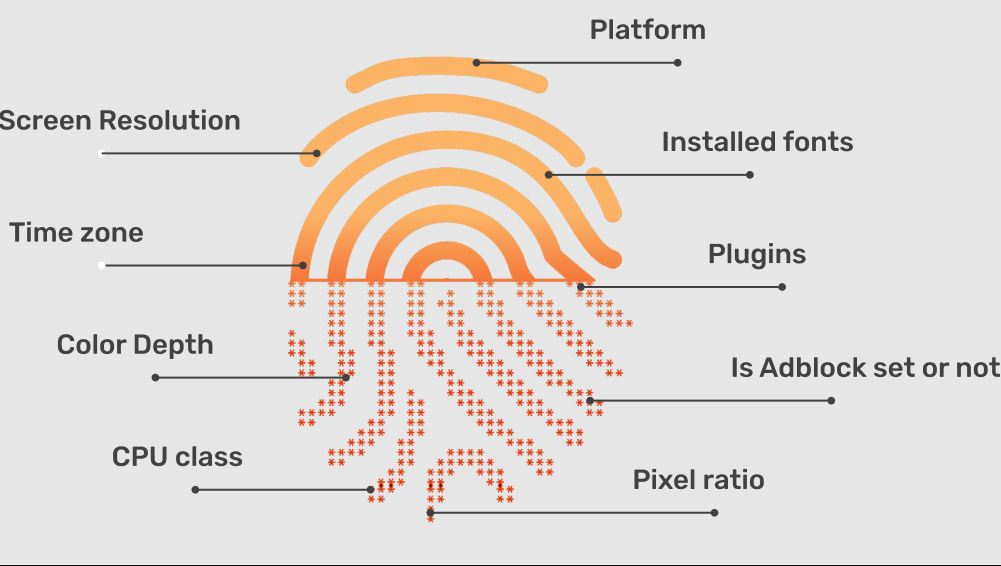
image-25.png


Librewolf aggressively resists fingerprinting
The browser spoofs user agent strings, standardizes screen resolution reporting, and randomizes canvas fingerprinting outputs to prevent websites from identifying individual users through hardware and software configuration details. WebRTC functionality gets disabled by default in LibreWolf, preventing websites from discovering real IP addresses behind VPN connections or proxy services through JavaScript-based network enumeration attacks that bypass traditional privacy protections.

The browser modifies JavaScript timing APIs to prevent high-resolution timing attacks that can fingerprint users through hardware performance characteristics, network latency measurements, and CPU execution timing that creates unique identifying signatures. LibreWolf disables WebGL by default, eliminating GPU fingerprinting vectors that websites use to identify users through graphics hardware specifications, driver versions, and rendering capabilities that remain consistent across browsing sessions and privacy tools.

image-27.png

The browser implements strict referrer policies that prevent websites from tracking user navigation patterns through HTTP referrer headers that reveal previous page visits and cross-site browsing behavior.

Font enumeration protections prevent websites from identifying users through installed font lists, while audio context fingerprinting gets blocked to stop websites from creating unique audio signatures through browser audio processing capabilities. LibreWolf's fingerprinting resistance operates at multiple levels, modifying both browser behavior and website interaction patterns to create a more uniform fingerprint that resists statistical analysis techniques used by tracking companies.

The browser's privacy protections extend to DNS over HTTPS configuration, secure connection preferences, and cookie handling policies that minimize data leakage through network-level monitoring and cross-site tracking mechanisms that corporate browsers enable by default.

Open Source Development Model and Security Transparency​

LibreWolf's open source development model provides security advantages that proprietary browsers cannot match through community-driven code auditing, transparent development processes, and accountability mechanisms that prevent hidden surveillance features or backdoor implementations.
image-28.png


LibreWolf's open source development
The browser's source code remains publicly available for security researchers to examine, identify vulnerabilities, and verify that privacy claims match actual implementation details rather than relying on corporate promises about data handling practices. Community development means that privacy-hostile features cannot be secretly introduced through opaque corporate decision-making processes, while security improvements get implemented based on user needs rather than business model requirements that prioritize data collection over user protection.

LibreWolf's development team maintains independence from corporate influence, advertising revenue, and government pressure that compromises mainstream browser development through conflicts of interest between user privacy and business profitability. The open source model enables rapid security response when vulnerabilities are discovered, with community contributors able to develop and deploy fixes without waiting for corporate approval processes that may prioritize business considerations over user security.

Fork-based development allows LibreWolf to inherit Firefox's security updates while rejecting privacy-hostile features, creating a browser that maintains compatibility with web standards while eliminating surveillance capabilities that Mozilla includes for revenue generation.

The browser's development process involves systematic removal of corporate tracking infrastructure, replacement of privacy-hostile defaults with security-focused configurations, and ongoing auditing of upstream Firefox changes for potential privacy violations. LibreWolf demonstrates how open source development can create superior privacy tools compared to corporate alternatives by eliminating conflicts of interest between user protection and business model requirements that inevitably compromise mainstream browser security.

Community-driven development ensures that browser features serve user interests rather than corporate surveillance objectives, while transparent development processes enable users to verify that privacy claims match actual implementation rather than trusting corporate marketing statements.
 
Hmm.

Might be time to give LibreWolf a try.

Everything else seems to be going to shit.

The only issue with projects like this is, how long until they pull a WaterFox/PIA and clandestinely sell themselves to a data harvesting company?

It feels like you have to constantly play whack-a-mole, and I hate that.

More so than ever, the internet in 2025 is a Fox Mulder "Trust No1" type of experience.

You never know what enthusiast trusted secure and private piece of software is going to wind up being a Manchurian candidate.

And that makes me so angry.
And they advertise it with duckduckgo as search, which is not your friend anymore either. So, yes, whackamole. Can't win.
 
Lovely.

Are there any better alternatives? Or are we just left with our choice of shit sandwiches?

Swisscows maybe?
Brave search is probably the least compromised of the bigger browser/search engines, but yeah, basically it's just shit sandwiches around. Datapoints for everything, everywhere. Not even sure if it is worth trying to limit it anymore this day and age. Especially with the admin(or any admin for that matter) and big tech, palantir et al. opsec/persec online is pretty much impossible when it comes to the black and white of it. We are just fooling ourselves chasing the dragon.
 
  • Like
Reactions: Mega6
like this
I know people love Firefox, but it is not what it used to be.. and reading some of the things it can do from this article...I know won't ever be using it again...

https://www.sambent.com/why-librewolf-destroys-chrome-and-firefox-for-operational-security/
I've switched to LibreWolf after most recent Mozilla stunt with Privacy Notice. Profiles are cross-compatible, so transition was seamless. I use multiple profiles under different shortcuts.

Said goodbye to Firefox, a browser I've used since beta version in 2003 or so. Mozilla lost my trust, however I still use their e-mail Relay service ($1 a month). It's just too good, until I find an alternative.
 
I go between Vivaldi and waterfox (the advertising company doesn’t own it anymore). Firefox itself is an advertising company now, so it’s the first thing to go when I do a fresh Linux install to test builds out.
 
And they advertise it with duckduckgo as search, which is not your friend anymore either. So, yes, whackamole. Can't win.

How is Ecosia? That's what I've been using lately after an LTT video talked about them.

I'm assuming these are the same people that created libreoffice? If so I might try it, as long as it supports all of Firefox's extensions. But I can see this just becoming another abandoned or sold out fork. Then again Libreoffice is still going, and I use it a lot so... Maybe it has some staying power.
 
I know people love Firefox, but it is not what it used to be.. and reading some of the things it can do from this article...I know won't ever be using it again...

https://www.sambent.com/why-librewolf-destroys-chrome-and-firefox-for-operational-security/
Thanks for the article! Privacy is always worth fighting for. I've heard Firefox has been getting shittier and have been turning off all the tracking things that I am aware of, everytime that I install. I'm making the switch.
Even if these companies / government get some of your data, they are going to build their systems on the people who are providing all of their data - they're unlikely to bother as much with the edge cases of people that actually give a shit about their privacy. The more I can limit their overreach, the better.
Also, with the way the US's economy is headed, I want to provide as little data to them on me as possible, so it is harder for them to profile me when the SHTF.
 
Hmm.

Might be time to give LibreWolf a try.

Everything else seems to be going to shit.

The only issue with projects like this is, how long until they pull a WaterFox/PIA and clandestinely sell themselves to a data harvesting company?

It feels like you have to constantly play whack-a-mole, and I hate that.

More so than ever, the internet in 2025 is a Fox Mulder "Trust No1" type of experience.

You never know what enthusiast trusted secure and private piece of software is going to wind up being a Manchurian candidate.

And that makes me so angry.
I actually installed Librewolf to also give it a try. It's basically Firefox with better security. If I have to I'll wack-a-mole again.
 
Is this actually any better than DuckDuckGo? I know it's basically a link to Google Search results. IIRC, the founder of this one wasn't great either.
I guess what's the most private search engine nowadays?
I've been using kagi. Don't know how "private" they are (you need an account and pay to use), but they did have a security audit done, for whatever that's worth.

They have a "privacy pass": "Kagi already respects your privacy. With Privacy Pass, we go even further - adding an extra layer of anonymity to make your searches completely unlinkable to your account. Search with confidence, knowing your identity stays private."

Dunno why it's not default, but I suppose I could guess why.
 
I've been a fan of Basilisk, which is an older fork of Firefox that maintains compatibility with the OLD plugins, but that actually became so old that although I have it installed, I was happy to use LibreWolf.
It's literally the same as modern Firefox, but without ... all that annoying shit.
 
Been on Librewolf for a few years now, really like it. Has one of the lowest fingerprints but I miss dark background and larger real estate. You can disable ResistFingerprinting and get these features back if you "Have Nothing to Hide". Wish they'd change the icon.

I use searx as my main search but some instances stop getting maintained and you have to find another, wack a mole indeed.
 

A lot of stuff mentioned there is complete BS that has no real life relevance to most people but that Microsoft deal is very shocking which I didn't know about. The whole point of DDG was to use it as a privacy layer between you and Bing. If they leak data to Bing anyway then what the fuck is the point!? Might as well use Bing straight up then. God damnit... Now what I am supposed to use for searches...
 
A lot of stuff mentioned there is complete BS that has no real life relevance to most people but that Microsoft deal is very shocking which I didn't know about. The whole point of DDG was to use it as a privacy layer between you and Bing. If they leak data to Bing anyway then what the fuck is the point!? Might as well use Bing straight up then. God damnit... Now what I am supposed to use for searches...
Agree, but as you noted, making deals with MS to feed them data, that blows that trust away and now who knows what else they are doing until it is found out again...

Going to try startpage and brave's search now, something new to get used to :D
 
Been on Librewolf for a few years now, really like it. Has one of the lowest fingerprints but I miss dark background and larger real estate. You can disable ResistFingerprinting and get these features back if you "Have Nothing to Hide". Wish they'd change the icon.

I use searx as my main search but some instances stop getting maintained and you have to find another, wack a mole indeed.
Just self-host SearXNG. It's ridiculously easy. It's the best and honestly the only way to get true private search that you control.
 
Just self-host SearXNG. It's ridiculously easy. It's the best and honestly the only way to get true private search that you control.


if you are the sole user of your SearXNG instance, your IP address is directly associated with all search queries sent to the underlying search engines, potentially making your activity more identifiable compared to using a public instance where queries are mixed with others. Can be mitigated by VPN, proxy or cloudflare tunnel.
 
Agree, but as you noted, making deals with MS to feed them data, that blows that trust away and now who knows what else they are doing until it is found out again...

Going to try startpage and brave's search now, something new to get used to :D

Startpage seems OK but they are still the new kid around the block, not sure if I trust them yet. I have to give Brave search a go. I do like their browser after getting rid of the crypro crap but it is also that association with crypto crap why I have been hestitating on giving their search a try up to this point.
 
I've switched to LibreWolf after most recent Mozilla stunt with Privacy Notice. Profiles are cross-compatible, so transition was seamless. I use multiple profiles under different shortcuts.
Does LibreFox support most/all FireFox plug-ins? I depend on Dashlane to supply ID/password for all the websites I log into.
 
I used to use LibreWolf but then discovered Floorp. Great with security, performance, & customization.
 
It's language like LibreWolf's that explains why Google and Mozilla won't be worried about projects like this any time soon.

Do Chrome and Firefox collect data? Yes, and it might be more than you're comfortable with. But all the grousing about "corporate surveillance" and business "compromises" is going to make eyes glaze over for anyone who isn't deep into that Richard Stallman level of FOSS worship.

This isn't to say we shouldn't pursue more privacy-minded browsers — I'm just not going to fault someone for using Chrome or Firefox because it's more convenient. As I like to put it, real-world freedom matters more than the theoretical kind. An iPhone user in China can ironically do more than a diehard FOSS fan who refuses to touch modern devices or large chunks of the web.
 
Copied my Firefox profile over and then used C:\Program Files\LibreWolf\librewolf.exe -p in the run to create a new profile with that as its basis.

1755804716576.png


Well, okay then.

Looked this up online, turns out the compatibility.ini file in the profile folder I used from my Firefox has a newer Firefox version number, so I manually changed the LastVersion variable to what Librewolf's executable had (I left the date portion alone, didn't seem to matter). That at least got me started with with all of my extensions intact. However, my history was gone for some reason. Bookmarks? There. Logins? There. History? Gone. Also none of the logins would actually auto populate on any of the web sites that it had in its records.

I decided that maybe the "false start" was the issue, so I tried using its profile manager to delete that profile, copying again, changing the compatibility, etc, and then starting it. That at least got me all of my history. Unfortunately passwords for some reason still will not autofill... and then when I restarted it when selecting the exact same profile, my history was gone again, despite (afaik) me having no setting to clear history after launch.

Overall Librewolf is a no-go. I can maybe try it again on a completely fresh install, in case the thing got completely contaminated from my first attempt, but idk if I want to bother. Firefox profile is 1.25GB at this point and takes a little bit to copy, kind of annoying.

I used to use LibreWolf but then discovered Floorp. Great with security, performance, & customization.

Tried Floorp out, it did import all of my data properly. Started without a hitch. Was even logged in to all of the same web pages I was before (typing from it right now). Logins also work. But for some reason I have two sets of close/minimize/etc window buttons, and my menu bar is below the tabs again... It's better than Librewolf, and it didn't give me any of the compatibility nonsense, but I don't know if there's much point to switching to it considering the visual artifacts. I would have to mess around trying to fix those.

Honestly, would any of these browsers be able to exist and keep being updated without Firefox existing, though? I'm sort of seeing it as a "necessary evil" that I need to disable all of the new Firefox privacy bullshit, because at the end of the day with it turned off at least it is private enough. What's the next best alternative? Brave? Brave isn't nearly as customizable. Dunno what to do tbh.
 
if you are the sole user of your SearXNG instance, your IP address is directly associated with all search queries sent to the underlying search engines, potentially making your activity more identifiable compared to using a public instance where queries are mixed with others. Can be mitigated by VPN, proxy or cloudflare tunnel.
That doesn't make sense at all. Just because a billion people use Google you think they can't filter out my IP amongst the other users? I don't care if they get my IP. Everybody gets your IP unless you're using a VPN or things like a Cloudflare tunnel.

With SearXNG they get NOTHING else. If I search for a widget, all a big search engine gets is my IP and that I searched for a widget. They don't get any information about which link I clicked on. SearXNG strips the tracking pieces of the URLs out so you get just a straight URL.

https://docs.searxng.org/own-instance.html#how-does-searxng-protect-privacy

Right now I'm at a crossroads with my browser. I used Chrome for years. Went back to Firefox when manifest v3 hit. Firefox is OK. I miss the speed of Chromium though. I've been playing with Brave and it's not bad after disabling all their AI bullshit and their crypto crap. The one main issue is that Brave mobile doesn't let you manually define a custom search engine like mobile Chrome and Firefox do. Brave can index search engines that use the opensearch specifications. However, it can't index SearXNG. So the question is who is at fault? SearXNG or Brave mobile? Based on open issues with Brave mobile I'd say it's Brave and it's been an open issue for quite awhile. A long standing issue like this doesn't give me a warm and fuzzy about a "privacy focused" browser.
 
It's language like LibreWolf's that explains why Google and Mozilla won't be worried about projects like this any time soon.
Can you explain a bit. I've been using FF since like whenever. I consider Chrome to be toxic sludge and i don't like EDGE any more than I liked IE.
 
Copied my Firefox profile over and then used C:\Program Files\LibreWolf\librewolf.exe -p in the run to create a new profile with that as its basis.

View attachment 749176


I decided that maybe the "false start" was the issue, so I tried using its profile manager to delete that profile, copying again, changing the compatibility, etc, and then starting it. That at least got me all of my history. Unfortunately passwords for some reason still will not autofill... and then when I restarted it when selecting the exact same profile, my history was gone again, despite (afaik) me having no setting to clear history after launch.

Overall Librewolf is a no-go. I can maybe try it again on a completely fresh install, in case the thing got completely contaminated from my first attempt, but idk if I want to bother. Firefox profile is 1.25GB at this point and takes a little bit to copy, kind of annoying.

Did you go through the settings to loosen Librewolf up? Because by default Libewolf is set up so damn security hardened that you may want to go through the settings and relax it a bit just to get some funcionality back. I don't remember for sure but password managing being disabled (which I think is a good thing) and history clearing on are probably one of them.
 
Can you explain a bit. I've been using FF since like whenever. I consider Chrome to be toxic sludge and i don't like EDGE any more than I liked IE.
The LibreWolf team claims that Chrome is a "surveillance" tool first and browser second, and that Mozilla is allegedly making "compromises" (like sponsored content and data broker deals) because it wants to make money. Basically: trust us because anything other than a non-profit open-source project is pure evil.

You're fine using Firefox. It's more private than Chrome and Edge, and there's little real damage from Mozilla's purported sacrifices. I also don't think Google and Microsoft are as conniving as the LibreWolf team suggests. Of course both companies see their browsers as vehicles for their businesses, but they still need to make good-enough browsers — if Edge was still based on the IE engine it wouldn't matter how well Copilot worked.

For the record, I much prefer Edge over IE. The Chromium foundations are much better. Microsoft sometimes tries too hard to pitch its services (Copilot, Bing, and the like)... but unlike IE, Edge really can be your main browser rather than the tool you use to download Chrome.
 
The LibreWolf team claims that Chrome is a "surveillance" tool first and browser second, and that Mozilla is allegedly making "compromises" (like sponsored content and data broker deals) because it wants to make money. Basically: trust us because anything other than a non-profit open-source project is pure evil.

Pure evil is a little strong, but as soon as there are financial incentives involved, especially when they are different from directly selling you a product, then you are not going to get the product that is best for purpose.

Personally, while I get a little annoyed by ads too, they don't really bother me too much. I understand that the companies providing services and content need to pay for that content, so it is an acceptable sacrifice.

Where I draw the line is user data collection. The only acceptable amount for any organization to collect is absolute zero. Any data harvesting (or even telemetry that hasn't been validated to be 100% anonymized) at all, is always going to be completely unacceptable to me, regardless of what kind of "personalization", "recommendation" or other benefits they can offer me in return.

And I am always going to want the blood of anyone who collects any information about me against my will.

My position is completely absolute. The only acceptable data leakage from any device or software I own or use is no data leakage. It doesn't matter who it is going to, or for what purpose. I'd argue it should be legal to use lethal force against anyone who even tries to collect any data, in self defense.

I view any attempt to collect any data about me at all by any organization as a direct attack on me, and I wish all the organizations that do and all the organizations involved in transacting, processing, analyzing or otherwise using that data, and all of their employees a fiery death, They are less than scum to me.
 
Last edited:
Been on Librewolf for a few years now, really like it. Has one of the lowest fingerprints but I miss dark background and larger real estate. You can disable ResistFingerprinting and get these features back if you "Have Nothing to Hide".

I've been testing it since seeing this thread.

I noticed the lack of dark mode on webpages as well.

I wish they'd give you the option to override just that one aspect of fingerprinting resistance. So many people like dark mode that I can't imagine it would have a huge impact on fingerprinting resistance either way.
https://librewolf.net/docs/faq/#usability
In case you are really sure you would like to adjust these settings, you could try switching to fingerprinting protection instead by first disabling RFP in the LibreWolf settings, or in your overrides and then either setting overrides or about:config like this:

defaultPref("privacy.fingerprintingProtection", true);
defaultPref(
"privacy.fingerprintingProtection.overrides",
"+AllTargets,-CSSPrefersColorScheme"
);
This would keep most of the fingerprinting protection active, while still letting websites know whether you prefer light or dark theme. The other available FPP override targets can be found here.

In case you aren't that concerned by fingerprinting and decide to disable both RFP and FPP, please consider using an extension like CanvasBlocker to retain at least a minimum amount of fingerprinting protection.

Librewolf Dark Mode​

LibreWolf enforces a light theme on all websites by default due to its Resist Fingerprinting (RFP) feature, which prevents the browser from signaling a preference for dark mode to websites, as this could be used for user fingerprinting. This means that even if a user has a dark theme enabled in their system or browser settings, websites will typically display in light mode.
While the native dark mode setting in LibreWolf is effectively disabled by RFP, there are several workarounds available. One approach is to modify specific about:config preferences to allow the browser to request dark themes from websites. This involves setting privacy.resistFingerprinting to false, privacy.fingerprintingProtection to true, and adding an override for privacy.fingerprintingProtection.overrides to +AllTargets,-CSSPrefersColorScheme. This configuration allows the browser to respect the user's preferred color scheme while still maintaining a high level of fingerprinting protection.
For users who prefer not to disable RFP, installing a client-side extension like Dark Reader is a recommended alternative. Dark Reader works entirely on the client side, applying a dark overlay to web pages, and is considered safe and open-source. Another option is the "Dark Website Forcer" extension, though it may sometimes cause visual issues with images on certain sites. A community-maintained package on the Arch User Repository, librewolf-allow-dark, adds a specific configuration option (privacy.override_rfp_for_color_scheme) that allows changing the color scheme even with RFP enabled, providing a more targeted solution.

Older post, not sure if still applicable
https://www.reddit.com/r/LibreWolf/...mode_really_dont_care_about_giving_away_this/
 

I'll have to read up on the distinctions between RFP and Fingerprinting Protection. Their names suggest they do the same thing, but the LibreWolf team seems to be suggesting that RFP is superior.


Thanks for the link, but unfortunately I can't read Reddit anymore.

At some point they started blocking VPN users unless they were signed in.

And then my account got banned. I could never figure out why. I don't think I posted anything even remotely controversial. My assumption is it had something to do with VPN and/or pihole tracker/ad blocker use.

And once that happened I can no longer access Reddit at all.

1755888137360.png


I've filed the ticket as they suggest, but no one ever replies.

I guess it is some sort of hard line stance to try to force users who care about their privacy to create exceptions or carveouts for them, but instead the only effect it has had on me is I just don't use them anymore. Good riddance I guess.

Reddit can sometimes be a good source of information, but honestly I never really liked it anyway. The UI is borderline unusable compared to a good forum, and the fact that they claim ownership of anything users post, and then sell it for AI training is a betrayal as well. So I almost see this as a blessing in disguise forcing my hand to do something I probably should have anyway, and just never go there. I certainly am not about to deactivate my privacy protections for them.

Some people complain when DNS filters, ad blockers, VPN's, fingerprinting protection and tracking protection breaks things. I just use it as a sign for which websites I should avoid.

When a site tells you who they are, believe them the first time.
 
As a side note, I have noticed that LibreWolf also forgets site specific zoom settings.

This is a minor nuisance, but I guess this is also a part of fingerprinting protection.

In the mobile era I have found that many (most?) sites use comically large UI elements and fonts, like some sort of childrens picture book. As a result I usually zoom out a little on most sites. For instance, I always use the hard forums at 90% zoom.

Firefox remembers those setting per site, but Librewolf defaults to 100% when I come back to a site. It's a little annoying, but if it helps privacy I guess I'll get used to it.
 
What would be really cool is if they developed a custom renderer.

It would request the same size render from the web site regardless of what screen or other hardware the user actually has.

Essentially, provide every single site with the same user agent string. Linux + Mozilla regardless of what is actually used. Then tell every single site that every single user is full screen at 4k and has all the fonts in the world.

Then the renderer would use that standard sized website (maybe even utilizing AI) to dynamically process it in real time and display it in a way that makes sense for a users hardware, automatically selecting the closest fonts to the ones used by the site, automatically selecting font size and layout, and even automatically scaling images if necessary. It could also use AI approaches to automatically convert the website to "dark mode" for users who prefer that, and users can tell it to scale particular sites up or down a little and it could remember that, without ever having to alter what it sends upstream.

There could even be a few different presents to choose from. (Text Information density high/medium/low, Image size preference high/medium/low, Light/Dark mode, etc.)

There is a risk some sites might render poorly, but the user could be given a GUI tool with which to make changes, which could be interpreted into a site specific profile, saved, and then used as an input to model training that improves it going forward, such that it is self learning.

This would be a really cool project, and an awesome application of AI.

I wish I had the skillset needed to start a project like that.

Here's hoping someone steals my idea and runs with it!
 
I'll have to read up on the distinctions between RFP and Fingerprinting Protection. Their names suggest they do the same thing, but the LibreWolf team seems to be suggesting that RFP is superior.


Thanks for the link, but unfortunately I can't read Reddit anymore.

At some point they started blocking VPN users unless they were signed in.

And then my account got banned. I could never figure out why. I don't think I posted anything even remotely controversial. My assumption is it had something to do with VPN and/or pihole tracker/ad blocker use.

And once that happened I can no longer access Reddit at all.

View attachment 749354

I've filed the ticket as they suggest, but no one ever replies.

I guess it is some sort of hard line stance to try to force users who care about their privacy to create exceptions or carveouts for them, but instead the only effect it has had on me is I just don't use them anymore. Good riddance I guess.

Reddit can sometimes be a good source of information, but honestly I never really liked it anyway. The UI is borderline unusable compared to a good forum, and the fact that they claim ownership of anything users post, and then sell it for AI training is a betrayal as well. So I almost see this as a blessing in disguise forcing my hand to do something I probably should have anyway, and just never go there. I certainly am not about to deactivate my privacy protections for them.

Some people complain when DNS filters, ad blockers, VPN's, fingerprinting protection and tracking protection breaks things. I just use it as a sign for which websites I should avoid.

When a site tells you who they are, believe them the first time.
When I moved to a new apartment building last year I got this. I also couldn't view YT videos without being logged in, was unable to view Videocardz.com at all (blocked just like reddit, although like your screenshot, I could log in and see reddit), and so on. I talked to my ISP and I don't know what they did but the next day all those sites started working. No VPN in use on my end, but I did get internet through my building, so maybe it had something to do with the number of people all sharing whatever.
 
When I moved to a new apartment building last year I got this. I also couldn't view YT videos without being logged in, was unable to view Videocardz.com at all (blocked just like reddit, although like your screenshot, I could log in and see reddit), and so on. I talked to my ISP and I don't know what they did but the next day all those sites started working. No VPN in use on my end, but I did get internet through my building, so maybe it had something to do with the number of people all sharing whatever.
Yeah,

I suspect there are heuristic models (like what are used by Cloudflare) that try to per-empt abuse (like DOS attacks) by looking at data on an IP address basis.

When they see lots of traffic from multiple different users originating front he same IP address (more than you'd typically expect based on a single home NAT) I suspect they are sometimes flagged as suspected of abuse, and then automatically blocked.

These are just educated guesses though, but it makes sense to me.

This could result in a similar impact on users who are NAT:ed by a apartment building and users who use VPN.
 
Back
Top