• Some users have recently had their accounts hijacked. It seems that the now defunct EVGA forums might have compromised your password there and seems many are using the same PW here. We would suggest you UPDATE YOUR PASSWORD and TURN ON 2FA for your account here to further secure it. None of the compromised accounts had 2FA turned on.
    Once you have enabled 2FA, your account will be updated soon to show a badge, letting other members know that you use 2FA to protect your account. This should be beneficial for everyone that uses FSFT.

Hyper-V memory performance hit in Windows 10

ochadd

[H]ard|Gawd
2FA
Joined
May 9, 2008
Messages
1,464
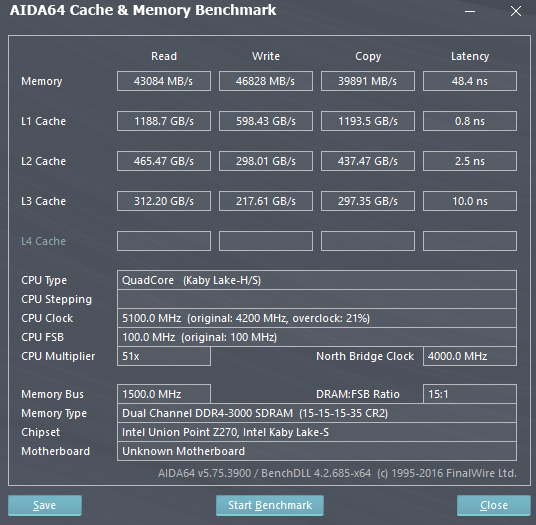
I recently built a new PC and found that Hyper-V hit memory and cache performance hard when installed. Screenshots were taken @ idle. No virtual machines running or created. Basically Hyper-V installed, restarted, benchmarked. Virtualbox does not seem to have the same problem.

Before Hyper-V and without virtualization enabled in the bios.
aida64_7700k_3_9_2017.png

With Hyper-V installed and virtualization enabled.
7700k_hyperv_asus.PNG

Hyper-V uninstalled and virtualization enabled.
7700k_uninstalled_hyperv.PNG

I've always run Virtualbox on my personal home computer but run Hyper-V at work for production. Thought I'd try standardizing and run Hyper-V at home. Not sure if this is expected but I sure didn't.

Virtualbox installed and virt. enabled.

7700k_virtualbox.PNG
 
When you install the Hyper-V role your OS is now a VM, hence the dip in performance.

#Inception
Actually, running a type I hypervisor (any of them) would cause a hit compared to straight VT-x (not a large one, but it's there) - that is why they have typically been on servers - not workstations or even general PCs. Windows 8 was, in fact, the first general-purpose OS that was capable of supporting a type I hypervisor that was NOT a server OS; the only real flaw with Windows 8 was that EPT was not exactly commonplace outside of server CPUs; even more problematical was that it was more common in terms of AMD general-purpose CPUs than on Intel - my first Windows 8+ Hyper-V testbed was an AMD-driven HP Pavilion. (It's running Windows 10 today - I use it for Android-development testing.) Nowadays, EPT is MUCH more common - and especially on Intel hardware, as is HTT support - while Hyper-V can use it, it's not a requirement. However, those that think of themselves as gamers - and especially hardcore gamers - hate running ANYTHING in the background while gaming.
 
Back
Top