Comcast Improperly Cashes Customer's Rent Check

Because as an individual you are pre-meditating a crime that you know is fraudulent. You have to make exceptions to keep things efficient. It is just the way a massive operation and banking works. I am sorry you don't understand that and want to make Comcast and banks out as boogeymen.

The real probably as stated over and over was the rep just saying they would credit the account when the customer just wanted their money back.

When did I say I wanted to make Comcast or banks the bad guy? All I mentioned was equal liability for such actions.
 
I'm wondering how Comcast managed to get the check cashed if the Landlord didn't endorse it first. Seems like Comcast and their bank both broke the law in this case.

they use the account and routing number, you don't really need a check.
 
Yes, is definitely is entirely the banks' fault. Yes, I typed "banks'" on purpose. First off, Comcast's bank should have seen the "Pay to the order of" line and immediately dropped the check and sent it to her. They didn't. Second, her bank should have seen the "Pay to the order of" line and bounced the check back to Comcast's bank as invalid, and Comcast's bank would have to send it back to her. This is the established bank operation for over a century. The fact that so many banks don't even bother to check that line or the date line to make sure checks are valid before being processed shows a SERIOUS problem in the banking industry right off the bat.

She could come back at her bank that this was an invalid check, and they, by law, would have to put the funds back in her account and collected the funds from Comcast's bank for the invalid check. This is completely check fraud.

If an individual were to do this, it would be caught by the bank in a heartbeat, and that individual would immediately be prosecuted for check fraud, with 6 months in jail and hefty fines.

The fact that Comcast does this without repercussion shows their total disregard for enforcing the law.
No. This is NOT the bank's fault. I already explained how this happened in the first place. Comcast didn't necessarily break a law when they cashed the check. Comcast didn't necessarily break the law when they offered a credit to the account (they are technically paying the customer back with services). What they did do is a MONUMENTAL FUCKUP IN CUSTOMER RELATIONS by not investigating and refunding her check. See my previous posts. I will post them again below.

The only thing I forgot to mention, is that when the check is scanned in, the receiving company gets the account number/routing number, then reads the amount. They then create a what's called a substitute check to present to the bank for proof of payment. This is allowable per the Federal law Check 21 Act. The "pay to" field on this substitute may even have Comcast written on it because Comcast scanned the check. Substitute checks are rarely exact copies of the original when the information is submitted electronically (reading MICR line and amount only), hence the "substitute" in the name. Sometimes they can be the full scan of the check itself, but that rarely happens when you got a massive company like Comcast doing millions of these a day since a full image is much larger bandwidth usage and takes more time. When the MICR line and amount are scanned in electronically by these machines by the receiving party (Comcast billing department in this case), they don't really look at the "pay to" field because its assumed it is the receiving party (again...Comcast). The machine submits "acct=1234567890, rout=123456789, amt=$buttrape" then generates an electronic proof of pymt to send to the bank.

As mentioned previously, these fuckups are a common occurrence when systems are highly automated like this. What isn't common occurrence is this monumental failure in fixing the issue after the fact.

The only thing you are correct about is the bank is required to investigate and file a dispute. However, what you are forgetting is that the bank would have no knowledge of this transpiring in the first place due to the issue I mentioned before with the substitute check. The bank is required to investigate once they are informed of the issue. Meaning this woman needed to go straight to her bank branch and file a dispute. Again, I said this in a previous post.

FWIW, I have worked at a bank for 3.5 years now. I handle tech support and online banking bill payment disputes. If anyone here has more information than what I have already provided, please speak up.

=================================

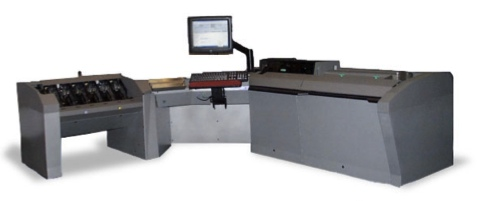
As TwistedAegis mentioned above, these checks are fed into a huge machine which rips the envelope open, separates checks from other, then scans the MICR line at the bottom of the check that includes the account number and routing number and reads the amount usually using a camera and software. Anything it can't read it spits out for a human to take care of. I've seen these massive machines in person. The one at our bank headquarters for credit card payments was about the size of a small car and could handle millions of checks a day. This machine is all automated and submits the payment to the electronic systems.

This is how Comcast managed to process a check that wasn't written to them. Happens all the time with other companies and doesn't necessarily get them in trouble. As mentioned above, what really gets them in trouble is not investigating it and refunding it.

Here are some pics of some of these automated check machines I mentioned in my previous post.

This is a more modern machine.
stacks_image_4090_1.png


The one at the bank I work at looked more like this one. Slightly smaller.
12_reader_sorter_-_smaller.png
 
Just to clarify a bit - to be legal, a Check21 substitute check will always include a full image of the actual check - Comcast wouldn't be overwriting the Pay to line and adding their own name.

HOWEVER - while an image will be included, the only information that is being captured in a machine readable fashion is what's on the MICR line - routing, account and check# (not always applicable). The machine will then further try to read any hand-written dollar amounts; any potential errors then get kicked out for rapid manual entry where, again, all they're doing is a massive assembly line hand-keying dollar amounts.
 
IF that is truly the case I am sending all future payments to all companies in round or awkward shaped envelopes. :)
LMAO. Awesome. Nothing wrong with that as long as you are willing to accept a few getting lost in the mail. Your biggest issue becomes the Post office sorting machines at that point.

Your best bet? Electronic payments.
 
Seems like another case of people blowing up a little story into major drama because they hate the company involved.

A first line rep answering phones at a call center can't normally issue a refund, and at best they can normally only credit an account which explains why they offered that route instead of instantly mailing out ouf check and in fact no only did she get a refund but she also had the $235 credited to her cable bill, so why all the drama?
 
Just to clarify a bit - to be legal, a Check21 substitute check will always include a full image of the actual check - Comcast wouldn't be overwriting the Pay to line and adding their own name.

HOWEVER - while an image will be included, the only information that is being captured in a machine readable fashion is what's on the MICR line - routing, account and check# (not always applicable). The machine will then further try to read any hand-written dollar amounts; any potential errors then get kicked out for rapid manual entry where, again, all they're doing is a massive assembly line hand-keying dollar amounts.
I must be confusing Check21 with something else then. My apologies. Glad someone here is correcting my info in case I got it wrong.:cool: I work with our bill pay system that sends electronic payments. I don't deal with handwritten checks much. Hopefully I'm getting most of the info right.

I've seen a few times a company will send proof of an electronic ACH that reads more like a receipt. I've seen these images with my own eyes and they barely resemble an actual check. But that is ACH not handwritten check. Maybe Comcast never did a Check21 substitue check? They just scanned the MICR line and amounts like you and I said. I'm still pretty sure the customer should have immediately gone to their bank branch and filed a dispute. The bank would have gotten that money back easily.
 
Seems like another case of people blowing up a little story into major drama because they hate the company involved.

A first line rep answering phones at a call center can't normally issue a refund, and at best they can normally only credit an account which explains why they offered that route instead of instantly mailing out ouf check and in fact no only did she get a refund but she also had the $235 credited to her cable bill, so why all the drama?
While true, the drama is that this is an elderly woman probably living on a fixed income. That was her rent check. People are getting irrational thinking this is anything from bank fraud to elder fraud.

She should have gone to her bank and filed a dispute. If she was unable to make it due to disability, lack of transportation, etc., then she should have some sort of power of attorney on file to allow someone to help her with it. Hell, she could have simply picked up the phone and called the bank and either handled it by phone or given instructions on what to do next. Instead, she called the local news station.
 
I've seen a few times a company will send proof of an electronic ACH that reads more like a receipt. I've seen these images with my own eyes and they barely resemble an actual check. But that is ACH not handwritten check. Maybe Comcast never did a Check21 substitue check? They just scanned the MICR line and amounts like you and I said. I'm still pretty sure the customer should have immediately gone to their bank branch and filed a dispute. The bank would have gotten that money back easily.

So Check21 substitute checks are different than an ARC or BOC (Accounts Receivable Check/Back Office Conversion) ACH item - that is where the data gets stripped off the check (MICR and amount) and converted into an ACH debit.

Similar, but I believe ARC/BOC was available prior to check 21.
 
Again, not trying to defend Comcast, just explain the reason for this:

The customer service reps are going to be somewhat empowered to credit your account. But giving you money back is an entirely different thing. They have enough problems with asshats who work for them changing names to something insulting. Do you really want those same people capable of giving money to anyone?

.
Not suggesting level 1 CS people should be empowered to cut people checks. HOWEVER, the fact that they have scripts to define the order of escalation in instants like this sounds like they want to screw people over by only crediting their account (hence locking them in for another X number of months). They could just as easily, flag whatever complaint and forward it to someone who DOES have the ability to cut a check and pop it in the mail, but they don't it that way because they want your money... even money that they're not owed.
 
The checks were probably just scanned in and cashed electronically. It's a "mistake" any company could make. I don't like Comcast, but this isn't really anything outrageous. Comcast should issue a refund if the customer requests it, but it's not going to happen immediately.
 
Also, living in SF and having my skewed view of rent, my immediate thought was, "An overpayment of thousands of dollars should be immediately recognized as an error" by Comcast. But a rent check of $235, come on...that's not an anomalous amount even if it was "10x" the customer's bill.
 
So Check21 substitute checks are different than an ARC or BOC (Accounts Receivable Check/Back Office Conversion) ACH item - that is where the data gets stripped off the check (MICR and amount) and converted into an ACH debit.

Similar, but I believe ARC/BOC was available prior to check 21.
Eureka! That's it. This is exactly how Comcast got that check to go through despite it being written to someone else.

Thanks for the info. :cool: That's what I was looking for. BOC came into play in 2007 after Check21 in 2004.

How Does BOC Work?

A consumer makes a payment by check to a merchant.
The checks are collected throughout the day and later sent to the back office. The check is used as a source document to retrieve the MICR information necessary to create an ACH transaction in lieu of processing the paper check. Information is taken from the magnetic ink character recognition (MICR) line at the bottom of the check (i.e., routing number of the payor bank, number of the check and account number of the consumer.) The amount of the check is captured using a variety of automated methods.
The merchant subsequently compiles a file of multiple ACH transactions for delivery to its financial institution (ODFI) and ultimately for settlement.
The ODFI transmits the file of BOC items to the Federal Reserve for processing.
The Federal Reserve processes the file and passes a credit for the BOC items to the ODFI and debits to RDFIs.
The consumer’s financial institution (RDFI) debits the consumer’s account. The payment is listed on his or her account statement, including the date of the payment, name of the company paid, check number, and amount of payment.
 
Also, living in SF and having my skewed view of rent, my immediate thought was, "An overpayment of thousands of dollars should be immediately recognized as an error" by Comcast. But a rent check of $235, come on...that's not an anomalous amount even if it was "10x" the customer's bill.

hehe... yeah $235 sounds like you got some Internet/Phone/TV package with all the extras.
 
I work at a large insurance company and honestly when you're a large company, it doesn't matter what the hell is on the check. If there's sufficient information to cash it, the company will cash it. Regardless of the amount. You can't honestly expect to sit there and review every single check that comes in from millions of customers. It's always taken care of after the fact obviously, but they don't "do it out of spite" or anything like that. Obviously if you send your check to someone, that's clearly some sort of intent to provide them with funds and they have all the reason to accept it.

Not trolling, but this is how most companies handle it. Just call them and tell them you made a mistake and they'll have it refunded asap. Kinda sucks but it's really your fault for not checking where you send it. Just sayin.
 
People still actually use checks? :eek:

I'm actually about to cancel my credit card that's issued through my bank because they don't have an online payment service. I have to log into my bank account, then request a transfer of funds which has them essentially write a check, to pay off the credit card, and that takes 3 business days... except I found out yesterday because of the holiday took closer to a week... Hell they don't even have a paperless option for the statement... what are we only 15 years into the 21st century for crying out loud!
 
No. This is NOT the bank's fault.

Yes, Captain Numb Nuts - your nick is 100% appropriate here - anyone who cashes a check not written out to the person or company cashing it is wrong. PERIOD. END OF STORY. It doesn't matter if a human did it or a machine did it. WHAT IS THE POINT OF WRITING A CHECK OUT TO A SPECIFIC PARTY IF THE F**KING BANKS IGNORE IT!?

Shit's unacceptable.
 
Yes, Captain Numb Nuts - your nick is 100% appropriate here - anyone who cashes a check not written out to the person or company cashing it is wrong. PERIOD. END OF STORY. It doesn't matter if a human did it or a machine did it. WHAT IS THE POINT OF WRITING A CHECK OUT TO A SPECIFIC PARTY IF THE F**KING BANKS IGNORE IT!?

Shit's unacceptable.

I see you are just refusing to listen to people who have a clear understanding (an even experience) in the banking field. There is no point of you even being in the discussion.

With millions of customers and items there is leniency given when efficiency is used. There is no pre-meditation to commit fraud here. The banking system has errors and procedures to correct those errors. The banks also do not ignore the pay line, as a consumer who have a variety of LARGE windows to dispute items and the pay to line comes into play. You would slow our financial system and retail companies operations to a crawl if they held your dick and made sure you sent the check to the right person.
 
Well, you would be right about that if not for the fact that you're not right about that.

I am not the one who doesn't understand the banking industry and refuses to listen to the multiple people on this thread who do.

You want to find a boogeyman and there is not one here.
 
I'm wondering how Comcast managed to get the check cashed if the Landlord didn't endorse it first. Seems like Comcast and their bank both broke the law in this case.

Because Comcast, like pretty much any utility or large company these days, does not cash the checks. They convert them into an electronic funds transfer which you agreed to by not opting out and disconnecting your cable immediately after they put it on page 497 of their privacy statement or wherever they hid it. You basically authorized them to vacuum out any amount of funds form your account, which sometimes they do.

For me, the issue was that if you don't set up auto billing, they only do this when you send them a check. One month I sent them a check and it apparently did not get there in a timely manner for some reason. They hassled me, so I paid vis the phone robot. Then the check arrived, they removed the funds, and I got double billed.

They wouldn't cut a check for any reason. They insisted they would apply the credit to my next bill. For about 1.5 years. Eventually I got them to use it by shorting the payment every month by that amount. After a few months they eventually cashed it out and we were even.
 
Ok, cool. I just hear things that if a crime is committed and the USPS was involved in any way, it's a federal crime. It's not the first time I've heard of an elderly person putting the wrong check in the wrong envelope. Usually, it's fixed by the company though, when it's brought to their attention. Not taking care of it is an asshole move. Not surprised though, with Comcast. Wasn't it them that said they were putting more into good customer service so they aren't shit anymore, or was that someone else?
Nope. Laws are for poor schmucks like us :mad:
 
Yes, Captain Numb Nuts - your nick is 100% appropriate here - anyone who cashes a check not written out to the person or company cashing it is wrong. PERIOD. END OF STORY. It doesn't matter if a human did it or a machine did it. WHAT IS THE POINT OF WRITING A CHECK OUT TO A SPECIFIC PARTY IF THE F**KING BANKS IGNORE IT!?

Shit's unacceptable.

Poking fun at me because of my user handle will get you no where. Do you honestly think I care if your idea of a clever insult is to use one that I created myself? Please call me a numb nuts again. It's amusing.:p

Also, what was the point of forum member's posts explaining exactly how it happened if you are just going to ignore it? A BOC check clearing system is the most likely cause of this situation. The simplest explanation is most likely the correct one, not this conspiracy you believe of everyone at Comcast ignoring the "pay to" line, to processing a check the old fashioned and time consuming way and sending that to the bank where a banker looked at the check and still made the payout. A machine likely did this, plain and simple. See post #54 for an exact explanation. BOC is a method of check clearing that allows the payee (Comcast) to scan only the MICR line (account and routing number) and the amount, but does not require the "pay to" line be scanned. It's essentially the equivalent of calling up the payee and speaking the routing number, account number, and amount over the phone for payment since no "pay to" information is ever involved. The payee (Comcast) then inputs the transaction as an electronic transaction (ACH) then sends the receipt to the bank. Since the "pay to" line was likely never read the Bank was never given the opportunity to stop it before it happened. The bank never got a chance to ignore it because they never knew it happened in the first place. The customer would have to notify the bank in this case. As far as the bank was concerned she did an electronic payment to Comcast over the phone or via a website, all they saw was the ACH.

You can say I'm wrong, fine. I only got most of the details right, which I admitted to being wrong on check 21 when it was BOC system that likely caused this. But several other users in this thread have banking experience like I do, and they have stated almost the exact same information and even corrected me on my info which you still ignore. They have also stated this isn't the bank's fault, but Comcast's. The bank would only be at fault if nothing was done about it when the customer approached them about the problem.
 
Actually, this is not really the banks fault. The poor old lady is really at fault, and the issue is completely forgivable from the banks perspective.

Everything is automated these days. There is no technology to reliably read the 'pay to the order of' line in a reliable fashion if it is handwritten. And really no great reason in this case to do so. If a check is sent to the bill to address for Comcast, it is an entirely reasonable assumption that it is intended for Comcast without looking at the payee.

As stated elsewhere, the real issue isn't the fact that check was deposited to Comcast's account. It is Comcast's terrible handling of the customers mistake after the fact.

So, basically, they should effectively remove the "Pay to the order of" from checks, and just tell people, if it gets into the wrong hands, it's their own fault. Banks and conglomerates are just too rich and too busy letting machines do all the work to have the responsibility to verify anything whatsoever... It fucks up the bottom line for CEO pay and cuts into Wall Street investors profit when humans have to be hired to make sure things are processed properly!

And God forbid if you become old and screw something up, it's your fault for aging without vast wealth, moron!
 
So, basically, they should effectively remove the "Pay to the order of" from checks, and just tell people, if it gets into the wrong hands, it's their own fault. Banks and conglomerates are just too rich and too busy letting machines do all the work to have the responsibility to verify anything whatsoever... It fucks up the bottom line for CEO pay and cuts into Wall Street investors profit when humans have to be hired to make sure things are processed properly!

And God forbid if you become old and screw something up, it's your fault for aging without vast wealth, moron!
Seriously? You and DanDragonRage need to read the thread. I and several others have posted several times how this happens regardless of the "Pay to" line. Please take a moment and read my post directly above yours. If you are so inclined, read my previous posts also.

I'm going to re-type this all in one post for all of you who still aren't getting the picture.

Most likely scenario sequence of events:
1. Old woman mails rent check by mistake (and possibly a second check made out to Comcast) along with remittance slip from Comcast bill that had her Comcast account number.
2. Comcast billing department receives it in mail. Her envelope, along with millions of others are fed into a machine and the process is completely automated from there.
3. This machine rips open envelope, separates checks and remittance slip and trashes envelope all in one step.
4. Machine reads barcode or account number off remittance slip from bill. The check's MICR line is read (magnetic ink character recognition) to get customer's checking account number and routing number at their bank. Simultaneously, a digital camera/scanner takes a snapshot of the amount box only, and through software recognition determines the amount to be paid. If the software fails to recognize the handwriting (very rare), it immediately spits everything out to have a human look over it.
5. "Pay to order of line" may not be read by machine, it is assumed to be the company that received the check. The routing number, account number, and amount of the check are inputted and converted to an ACH (Automated Clearing House) electronic payment, then the machine trashes the original check. This is allowable under Federal Law under the Check21 Act of 2004 and specifically ARC/BOC processing rules (Accounts Receivable/Back Office Conversion) that went into effect in March 2007. This is no different than calling them up and giving them the account information but in no way are you foregoing your rights to dispute the transaction or declare it fraudulent. If it turns out to be fraudulent transaction, it is the customer's responsibility to notify their bank and the bank will immediately take care of it.


TL;DR version

-Customer mistakenly sent rent check to Comcast
-Comcast check processing machine converted it to electronic payment and trashed original check per pre-existing federal regulations regarding check processing
-No one ever saw the original check as the whole process is automated. The only info ever sent to customer's bank was electronic payment, again due to the way the check is allowed to be processed, thus the Bank had no ability to know that this was an incorrect payment coming through and stop it.
-Customer calls Comcast for refund, Comcast customer service procedures suck donkey balls and they only credit customer's account nor do they even bother telling her she can dispute it with her bank.
-Customer should have immediately called their bank to dispute the transaction per their rights as a consumer. Article makes no mention of her doing this, only that she bitched to news media.


===============

That's it. I'm done. If you still don't understand how this happened, why it is legally allowed, why it couldn't be stopped beforehand but easily fixed afterwards, I don't know what to say.:mad:
 
didn't scroll through all the replies here but this could be an honest mistake. They probably just scan in all checks, turn them into digital transfer and don't actually send them in. so they wouldn't have known the amount. So I can see how they cashed it. refund though would be possible.
 
Seriously? You and DanDragonRage need to read the thread. I and several others have posted several times how this happens regardless of the "Pay to" line. Please take a moment and read my post directly above yours. If you are so inclined, read my previous posts also.

I'm going to re-type this all in one post for all of you who still aren't getting the picture.

Most likely scenario sequence of events:
1. Old woman mails rent check by mistake (and possibly a second check made out to Comcast) along with remittance slip from Comcast bill that had her Comcast account number.
2. Comcast billing department receives it in mail. Her envelope, along with millions of others are fed into a machine and the process is completely automated from there.
3. This machine rips open envelope, separates checks and remittance slip and trashes envelope all in one step.
4. Machine reads barcode or account number off remittance slip from bill. The check's MICR line is read (magnetic ink character recognition) to get customer's checking account number and routing number at their bank. Simultaneously, a digital camera/scanner takes a snapshot of the amount box only, and through software recognition determines the amount to be paid. If the software fails to recognize the handwriting (very rare), it immediately spits everything out to have a human look over it.
5. "Pay to order of line" may not be read by machine, it is assumed to be the company that received the check. The routing number, account number, and amount of the check are inputted and converted to an ACH (Automated Clearing House) electronic payment, then the machine trashes the original check. This is allowable under Federal Law under the Check21 Act of 2004 and specifically ARC/BOC processing rules (Accounts Receivable/Back Office Conversion) that went into effect in March 2007. This is no different than calling them up and giving them the account information but in no way are you foregoing your rights to dispute the transaction or declare it fraudulent. If it turns out to be fraudulent transaction, it is the customer's responsibility to notify their bank and the bank will immediately take care of it.


TL;DR version

-Customer mistakenly sent rent check to Comcast
-Comcast check processing machine converted it to electronic payment and trashed original check per pre-existing federal regulations regarding check processing
-No one ever saw the original check as the whole process is automated. The only info ever sent to customer's bank was electronic payment, again due to the way the check is allowed to be processed, thus the Bank had no ability to know that this was an incorrect payment coming through and stop it.
-Customer calls Comcast for refund, Comcast customer service procedures suck donkey balls and they only credit customer's account nor do they even bother telling her she can dispute it with her bank.
-Customer should have immediately called their bank to dispute the transaction per their rights as a consumer. Article makes no mention of her doing this, only that she bitched to news media.


===============

That's it. I'm done. If you still don't understand how this happened, why it is legally allowed, why it couldn't be stopped beforehand but easily fixed afterwards, I don't know what to say.:mad:

guess somebody did say this
 
Back
Top