• Some users have recently had their accounts hijacked. It seems that the now defunct EVGA forums might have compromised your password there and seems many are using the same PW here. We would suggest you UPDATE YOUR PASSWORD and TURN ON 2FA for your account here to further secure it. None of the compromised accounts had 2FA turned on.
    Once you have enabled 2FA, your account will be updated soon to show a badge, letting other members know that you use 2FA to protect your account. This should be beneficial for everyone that uses FSFT.

Sony Mini Disc Computer Drive Existance

Joined
May 22, 2010
Messages
2,079
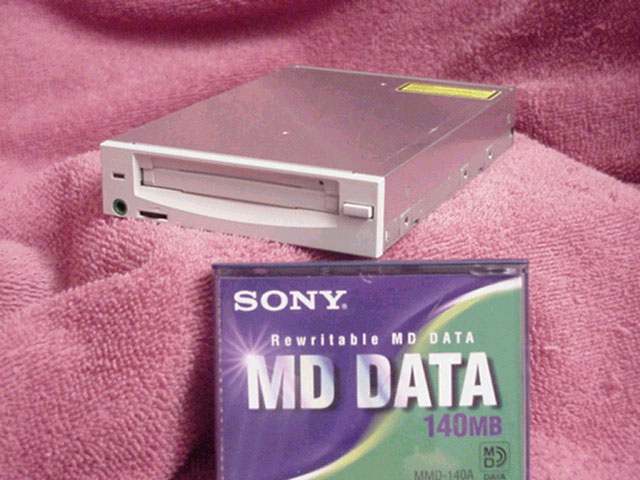
I have two Sony Mini Discs that my friend gave me after he sold his mini disc player awhile back and I've held on the them because I could have sworn Sony or someone made a mini disc drive for computers that could have possibly allowed me to put data on them, but I can't find it. Did or does this device exist and where can I find it?
 
Having owned an MD player back in the day...I don't think they ever made USB MD drives, and even when they did, they would be USB1.

Shoot even getting audio onto and off the damn things was annoying as hell thanks to Sony bricking the players in the name of "copyright".
 
Sony did make a pc disk drive. And in typical sony fashion they made 100% incompatible with the players. It would have been tits to have a 150mb disk drive in 1995, but good old sony marketing...
 
they did it did not catch on very well as cds stored more data but there were internal computer drives
http://www.ebay.com/itm/Sony-MDS-JB...latine-DECK-/291539568033?hash=item43e11cc5a1

looks like the md disc drives were in sony viao desktops and select laptops
typical data disc were 140 mb up to 1.3 gig when they stopped making them.

Honestly i would not spend a whole lot of money just to get into dead formats...

Coming from someone who owns a working ls-120 drive and has it in a pc running windows 7 and only has 1 disk for it...

Sony did make a pc disk drive. And in typical sony fashion they made 100% incompatible with the players. It would have been tits to have a 150mb disk drive in 1995, but good old sony marketing...

not true near the end of the life of the minidisc they opened up the format a bit and you could put audio on the pc style ones and put them in players... but by that time blank cdr were 19 cents a piece and much more widely supported sony had wanted to fit md in to replace floppy disks but zip and cds killed that plan.
 
As an eBay Associate, HardForum may earn from qualifying purchases.
not true near the end of the life of the minidisc they opened up the format a bit and you could put audio on the pc style ones and put them in players... but by that time blank cdr were 19 cents a piece and much more widely supported sony had wanted to fit md in to replace floppy disks but zip and cds killed that plan.

Sadly when they did that...those 19 cent CD-Rs were total shit. They'd degrade and corrupt inside of a year or two.

My last workplace jumped early on the burnable-consumer-CD-R craze, and like all institutions that jumped early on it, got bit bad and lost at least half-a-decade's worth or archival material due to that shitty early CD media. Every year comprising many hundreds+ of CD-R disks. Those corrupt CD-Rs are still in their archive as there's no manpower budget to go back and dig through the tens-of-thousands and find the media archive media that is no good.
 
Sadly when they did that...those 19 cent CD-Rs were total shit. They'd degrade and corrupt inside of a year or two.

My last workplace jumped early on the burnable-consumer-CD-R craze, and like all institutions that jumped early on it, got bit bad and lost at least half-a-decade's worth or archival material due to that shitty early CD media. Every year comprising many hundreds+ of CD-R disks. Those corrupt CD-Rs are still in their archive as there's no manpower budget to go back and dig through the tens-of-thousands and find the media archive media that is no good.

except the problem is that degrading issue is not limited to older media or cdr it is present in all cdr and dvd as well there are some brands who claim to fix the issue but those blank disc are very much expensive in comparison and some require a compatible writer.

Look into m-disc the bio dye has been replaced with a stone ceramic compound supposedly and the claim is the disc will be good for 1000 years they are hella expensive it is about 2.50$ per disc and they only hold 4.7 gig...they are supposedly making a bluray version of the mdisc
 
except the problem is that degrading issue is not limited to older media or cdr it is present in all cdr and dvd as well there are some brands who claim to fix the issue but those blank disc are very much expensive in comparison and some require a compatible writer.

Look into m-disc the bio dye has been replaced with a stone ceramic compound supposedly and the claim is the disc will be good for 1000 years they are hella expensive it is about 2.50$ per disc and they only hold 4.7 gig...they are supposedly making a bluray version of the mdisc

The cheap media you got at say WorstBuy or Circuit City back in the day however rotted out fast. As in 12 months sitting inside a dark room with no windows, and it would self corrupt. And archivists noticed this, as most archivists are told to buy cheap as there's no budget-and their archives were dying before their eyes. The cheap stuff was horrible in stability back then. Taiyo Yuden (now JVC owned) made media that might not actually last 50-100 years....but the stuff certainly didn't go to pot even inside of 10 years IME working at my last workplace. All burnable media degrades, but most people would expect more than 12 months out of any CD burn.

Like I said. That workplace lost thousands of gigabytes of non-replaceable data archive material from those El Cheapos. Because no one knew any better back then, and it was all new ginchy tech. Shoot, I and my coworkers only found out about it when customers were trying to retrieve data off to no avail at all. And the bosses don't know and aren't spending money/time to find the corrupted data. Fortunately that workplace and its archival media problems are in my "not my problem any more" list.
 
Wow all this sounds like a major disappointment for something that could hold alot more than a floppy, Zip Disc, or Super Disc from the sound of what you all are saying. Especially at 140 MB, 150 MB or 1.3 GB, whichever the total capacity your trying to say it was. It's sounds like a darn shame that they weren't compatible with the players or that no one figured out how to work around the security limits or whatever prevented this. Also, sounds like mini cd-r's, mini dvd-r's, and even mini bd-r's pretty much replaced it or any like mini disc because they internally corrupted, like I think you all are trying to say. From the sound of it these disc are pretty much useless now unless someone will buy them from me on ebay.
 
Ah, the eternally cool Mini-Disc, a trip down memory lane... ;)

Sony could have made the Mini-Disc the replacement for the floppy. It was everything necessary and more:

- 140GB native capacity
- read-writable with no practical limits on the cycles
- incredibly tough and resilient design of the media itself in a damned near impossible to destroy in day to day use
- small portable size

and other aspects. The thing that killed them was they didn't pursue it as a floppy replacement even in spite of making that (insanely overpriced) Mini-Disc data drive mentioned above. I had the original Sony portable MD player/recorder back in 1993, even went so far as to purchase a few pre-recorded albums (Pearl Jam "Ten," Rush "Counterparts," and a few others) and loved the hell out of it in the time I owned it.

It's just another example of Sony creating some incredibly awesome technology then shooting themselves in the foot by doing something colossally stupid with it. For the MD it was a three-fold death knell:

First, they charged too much for that data drive as already mentioned. When it was first introduced in limited scope it was selling for like $1500 USD (no idea what was in Yen or whatever back in 1992-1993 times), and they chose not to miniaturize the MD data drive technology itself which was easy to do: if they could make that first portable MD player/recorder then using it strictly for a data drive would not have resulted in a device much larger but the MD data drive itself was freakin' monstrous in size overall. The price and the non-portability of the hardware necessary to use the Mini-Discs (themselves meant to be portable) was just a nightmare for Sony.

Second, they did tend to charge quite a bit for the consumer versions of their MD hardware as well, especially in 1993 - I paid $799 for that first Sony portable MD unit but amazingly the pre-recorded discs were about the same price as CDs at the time, roughly $14-18. It really angers me that today if I wanted to go out and buy the very first CD I ever owned - Dire Straits' magnificent work "Brothers In Arms" - I'd pay like $19 for it. When I bought the original CD in 1986 it was only $12.99 so, the hell with inflation. In those days it WAS expensive to manufacture CDs and jewel boxes because it was still relatively new technology and the fabrication plants were like a couple of billion to build themselves. But nowadays with the cheap efficiency to make such discs, charging people upwards of $20 for a CD that was originally released 30 years ago (geez, has it been that long? Ugh...) is just flat out ripping people off. Anyway...

Third, the consumer versions of the Mini-Disc hardware were strapped with the god awful SonicStage software that Sony just couldn't do right even if they had all the luck in the universe behind 'em. It was just horrible terrible disgusting stuff, really. If you could get it to run long enough before it crashed you might be able to transfer some content to your MDs, and as for recording things and then doing a digital copy of it, oh lord, you had to do a real-time analog copy process because of all nefarious DRM BS they claim they were forced to use because the recording industry didn't want people to rip 'em off by copying the discs like crazy.

And then Iomega came into the picture with the Zipdisk and that was that. Sony had the chance, it was right there for them to just reach out and grasp it and the floppy disk could have been relegated to the scrap heap of obsolete technology within a year or two but, no, they just didn't "get it" and so Iomega with their shitty disks and shitty hardware (but with a lot of space when it did work) just rolled right over the removable storage market like a proverbial Mack truck and that was that. :(

Having said that, the actual audio compression that Sony created for the MD< ATRAC, was damned good stuff. It could theoretically exceed CD quality and I never had a beef with that aspect of them.

Also: battery life. The original Sony portable I had could barely get through maybe 3 albums before it up and died on me regardless of whether they were fresh new ones in the battery pack or the rechargeable, didn't matter. Ran very warm too but, it was the first of its kind.

Contrast that with the last Sony Mini-Disc device I had, the all-too-awesome MZ-N1. It came with an internal "gum stick" battery because that's about how large it was: the size of a stick of something like typical chewing gum, about 1/8" thick. On a full charge I could easily get 35 hours of playback, seriously. Think about that for a moment:

The Mini-Disc is an electro-mechano-optical device: it has a spinning motor for the disc, it has other components that work in a mechanical fashion (the laser tracking assembly), and it has the laser itself which literally is pure energy for the most part. 35 freakin' hours from such a device in 2002 was damned amazing but it gets even better.

The MZ-N1 came with a small plastic battery extender that held one single AA battery. With the fully charged gum stick in place and then putting a fresh alkaline AA battery in the extender and screwing it on, how long would it play for continuously before dying?

105 hours.

No joke. I tested that claim because Sony put it in the marketing material and I consistently got 101-103 hours of raw playback - I put the Rush "Counterparts" MD in it, set it for random play/loop (so it would randomly just keep playing without intervention) and wham, it just wouldn't die for 4 damned days.

Astonishing, to say the least, and I never complained about the $400 price tag for it again. :)

I never got into the NetMD thing even though I thought the increased capacity could/would have been awesome. I wouldn't mind having another MD unit sometime just for shits and giggles. I see people putting up MD collections of hardware and pre-recorded discs on craigslist sometimes but they ask insanely high prices for the stuff. I want one again, sure, but I'm not forking over a handful of cash for it considering my smartphone these days is my audio device of choice more often than not.

Boy those were fun times, however. ;)

ps
I hadn't visited the site in years but it's cool to see MiniDisc.org is still around and still the best source for MD info of all kinds, including a page devoted specifically the data drives that Sony created:

http://www.minidisc.org/md_data_table.html

Fascinating stuff, really. Note that Sony DID make a floppy drive (not disk, I mean the physical drive) that would fit in the spot where a traditional floppy disk drive did:

sony_mdm111.jpg


but the pricing was just too much as expected and they chose to couple it with a SCSI interface instead of IDE for some stupid reason. I would have LOVED to have had one of those, would probably have a gigantic collection of MDs. I mean, if Neo from "The Matrix" used Mini-Discs, why the hell not? :D
 
Last edited by a moderator:
Damn the last mini CD I had came with drivers and software for the L.I.S MCE VFD-Display :p
 
Ah, the eternally cool Mini-Disc, a trip down memory lane... ;)

Sony could have made the Mini-Disc the replacement for the floppy. It was everything necessary and more:

- 140GB native capacity
- read-writable with no practical limits on the cycles
- incredibly tough and resilient design of the media itself in a damned near impossible to destroy in day to day use
- small portable size

and other aspects. The thing that killed them was they didn't pursue it as a floppy replacement even in spite of making that (insanely overpriced) Mini-Disc data drive mentioned above. I had the original Sony portable MD player/recorder back in 1993, even went so far as to purchase a few pre-recorded albums (Pearl Jam "Ten," Rush "Counterparts," and a few others) and loved the hell out of it in the time I owned it.

It's just another example of Sony creating some incredibly awesome technology then shooting themselves in the foot by doing something colossally stupid with it. For the MD it was a three-fold death knell:

First, they charged too much for that data drive as already mentioned. When it was first introduced in limited scope it was selling for like $1500 USD (no idea what was in Yen or whatever back in 1992-1993 times), and they chose not to miniaturize the MD data drive technology itself which was easy to do: if they could make that first portable MD player/recorder then using it strictly for a data drive would not have resulted in a device much larger but the MD data drive itself was freakin' monstrous in size overall. The price and the non-portability of the hardware necessary to use the Mini-Discs (themselves meant to be portable) was just a nightmare for Sony.

Second, they did tend to charge quite a bit for the consumer versions of their MD hardware as well, especially in 1993 - I paid $799 for that first Sony portable MD unit but amazingly the pre-recorded discs were about the same price as CDs at the time, roughly $14-18. It really angers me that today if I wanted to go out and buy the very first CD I ever owned - Dire Straits' magnificent work "Brothers In Arms" - I'd pay like $19 for it. When I bought the original CD in 1986 it was only $12.99 so, the hell with inflation. In those days it WAS expensive to manufacture CDs and jewel boxes because it was still relatively new technology and the fabrication plants were like a couple of billion to build themselves. But nowadays with the cheap efficiency to make such discs, charging people upwards of $20 for a CD that was originally released 30 years ago (geez, has it been that long? Ugh...) is just flat out ripping people off. Anyway...

Third, the consumer versions of the Mini-Disc hardware were strapped with the god awful SonicStage software that Sony just couldn't do right even if they had all the luck in the universe behind 'em. It was just horrible terrible disgusting stuff, really. If you could get it to run long enough before it crashed you might be able to transfer some content to your MDs, and as for recording things and then doing a digital copy of it, oh lord, you had to do a real-time analog copy process because of all nefarious DRM BS they claim they were forced to use because the recording industry didn't want people to rip 'em off by copying the discs like crazy.

And then Iomega came into the picture with the Zipdisk and that was that. Sony had the chance, it was right there for them to just reach out and grasp it and the floppy disk could have been relegated to the scrap heap of obsolete technology within a year or two but, no, they just didn't "get it" and so Iomega with their shitty disks and shitty hardware (but with a lot of space when it did work) just rolled right over the removable storage market like a proverbial Mack truck and that was that. :(

Having said that, the actual audio compression that Sony created for the MD< ATRAC, was damned good stuff. It could theoretically exceed CD quality and I never had a beef with that aspect of them.

Also: battery life. The original Sony portable I had could barely get through maybe 3 albums before it up and died on me regardless of whether they were fresh new ones in the battery pack or the rechargeable, didn't matter. Ran very warm too but, it was the first of its kind.

Contrast that with the last Sony Mini-Disc device I had, the all-too-awesome MZ-N1. It came with an internal "gum stick" battery because that's about how large it was: the size of a stick of something like typical chewing gum, about 1/8" thick. On a full charge I could easily get 35 hours of playback, seriously. Think about that for a moment:

The Mini-Disc is an electro-mechano-optical device: it has a spinning motor for the disc, it has other components that work in a mechanical fashion (the laser tracking assembly), and it has the laser itself which literally is pure energy for the most part. 35 freakin' hours from such a device in 2002 was damned amazing but it gets even better.

The MZ-N1 came with a small plastic battery extender that held one single AA battery. With the fully charged gum stick in place and then putting a fresh alkaline AA battery in the extender and screwing it on, how long would it play for continuously before dying?

105 hours.

No joke. I tested that claim because Sony put it in the marketing material and I consistently got 101-103 hours of raw playback - I put the Rush "Counterparts" MD in it, set it for random play/loop (so it would randomly just keep playing without intervention) and wham, it just wouldn't die for 4 damned days.

Astonishing, to say the least, and I never complained about the $400 price tag for it again. :)

I never got into the NetMD thing even though I thought the increased capacity could/would have been awesome. I wouldn't mind having another MD unit sometime just for shits and giggles. I see people putting up MD collections of hardware and pre-recorded discs on craigslist sometimes but they ask insanely high prices for the stuff. I want one again, sure, but I'm not forking over a handful of cash for it considering my smartphone these days is my audio device of choice more often than not.

Boy those were fun times, however. ;)

ps
I hadn't visited the site in years but it's cool to see MiniDisc.org is still around and still the best source for MD info of all kinds, including a page devoted specifically the data drives that Sony created:

http://www.minidisc.org/md_data_table.html

Fascinating stuff, really. Note that Sony DID make a floppy drive (not disk, I mean the physical drive) that would fit in the spot where a traditional floppy disk drive did:

sony_mdm111.jpg


but the pricing was just too much as expected and they chose to couple it with a SCSI interface instead of IDE for some stupid reason. I would have LOVED to have had one of those, would probably have a gigantic collection of MDs. I mean, if Neo from "The Matrix" used Mini-Discs, why the hell not? :D

Hey good point about Neo from the Matrix using this technology because I thought he did, but it was hard to tell for sure.
 
Back
Top