Anyone know if I am going to run into any problems if I sand (lap) my acrylic waterblock tops? Had good luck so far with copper, silver, and stainless steel. I want to eliminate the wavyness in the sides of the waterblock top. Will I be able to get a clear surface with like 2000 grit W&D or will I also have to buff out the acrylic when done sanding?
![[H]ard|Forum](/styles/hardforum/xenforo/logo_dark.png)
Navigation
Install the app
How to install the app on iOS
Follow along with the video below to see how to install our site as a web app on your home screen.
Note: This feature may not be available in some browsers.
More options
-
Some users have recently had their accounts hijacked. It seems that the now defunct EVGA forums might have compromised your password there and seems many are using the same PW here. We would suggest you UPDATE YOUR PASSWORD and TURN ON 2FA for your account here to further secure it. None of the compromised accounts had 2FA turned on.
Once you have enabled 2FA, your account will be updated soon to show a badge, letting other members know that you use 2FA to protect your account. This should be beneficial for everyone that uses FSFT.
You are using an out of date browser. It may not display this or other websites correctly.
You should upgrade or use an alternative browser.
You should upgrade or use an alternative browser.
Sanding acrylic?
- Thread starter Top Nurse
- Start date
SarverSystems
Supreme [H]ardness
- Joined
- Feb 9, 2002
- Messages
- 7,408
No matter what you do, it'll look foggy.
After you sand it, you'll want to hit it with a blow torch to "shine" the edges.
I'm not sure what the process is called, but that's how they do the acrylic cases.
After you sand it, you'll want to hit it with a blow torch to "shine" the edges.
I'm not sure what the process is called, but that's how they do the acrylic cases.

You will have to buff it, but buffing is easier than sanding, IMO.
I've had a lot of luck with sanding... flat file-400-600-1000-1500-2000 then polished with the novus 3 step plastic polishes. You can get a very flat, smooth, reflective polish out of the edges of acrylic this way, in my experience.
Using a torch is called flame polishing and I'm not a huge fan of the result, either.
I was pretty sure I'm not the only guy to have done this so I googled and saw that linear added similar comments to his acrylic faq:
http://case-mods.linear1.org/acrylic-lexan-and-plastics-faq/
(Q: Can I polish up the edges of my piece? )
I've had a lot of luck with sanding... flat file-400-600-1000-1500-2000 then polished with the novus 3 step plastic polishes. You can get a very flat, smooth, reflective polish out of the edges of acrylic this way, in my experience.
Using a torch is called flame polishing and I'm not a huge fan of the result, either.
I was pretty sure I'm not the only guy to have done this so I googled and saw that linear added similar comments to his acrylic faq:
http://case-mods.linear1.org/acrylic-lexan-and-plastics-faq/
(Q: Can I polish up the edges of my piece? )

SpeedSlayer
Supreme [H]ardness
- Joined
- Mar 15, 2002
- Messages
- 4,219
My dad owns a manufacturing company that does sunroofs for corvettes and honda del sols, and the windjammers
After cutting the shapes, they sand the edges then polish it, and the finish is very nice, you cant even tell that someone used a router on that part
After cutting the shapes, they sand the edges then polish it, and the finish is very nice, you cant even tell that someone used a router on that part
So if I sand to say 2,000 grit will I still have to use a buffing wheel to get the crystal clear look? The Aqua Computer blocks I have now are pretty clear already, but you can definitely tell they were milled on the sides upon close inspection. My main concern is that I am planning on drilling the arylic blocks to fit a small LED into each of them and am concerned how it will look with the rough edges.
Here are some pics of what I am working with.
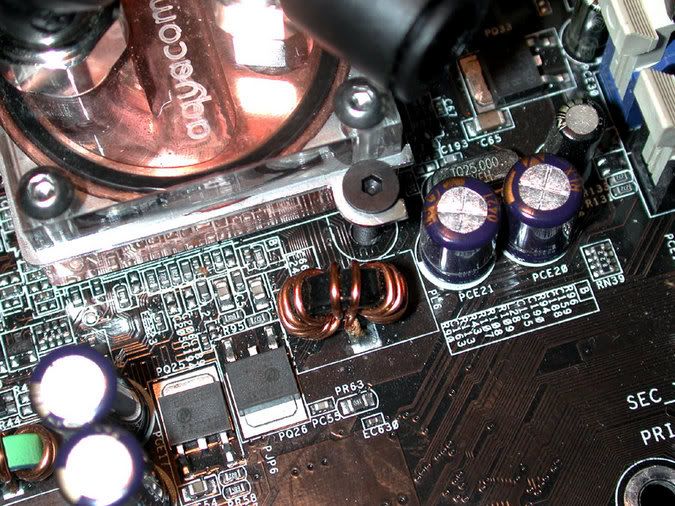
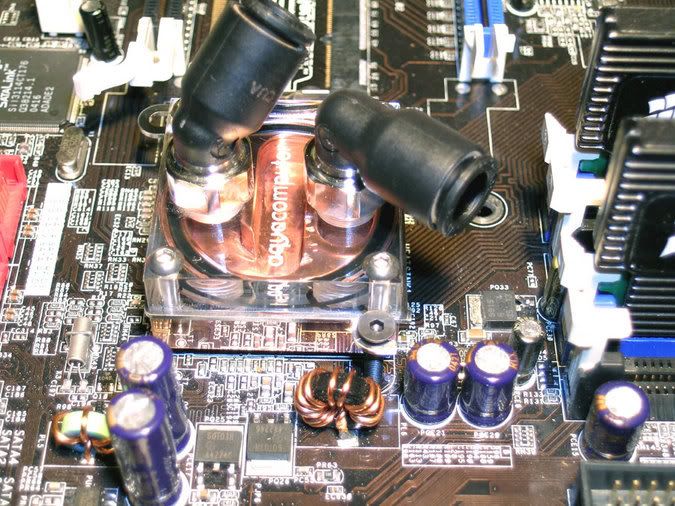
Here are some pics of what I am working with.

- Joined
- May 16, 2005
- Messages
- 8,474
oh hell, if you're planning on inserting an LED into the block. I'd say sand the sides with 100 grit to give it a nice haze for the light from the LED to refract off of, so your block will glow around the edges.
UnknownSouljer
[H]F Junkie
- Joined
- Sep 24, 2001
- Messages
- 9,041
For images of reflective acrylic surfaces, you can check out the Orac3. The entire case is primarily made of acrylic, and a lot of it was custom cut, so a lot of the edges has to be cleaned, sanded, and then polished (buffed) to become 100% clear again.
I think he got a dremel kit (comes with a buff pad, and liquid which I assume is the key to getting it back to clear).
I think he got a dremel kit (comes with a buff pad, and liquid which I assume is the key to getting it back to clear).