R9 Nano Review Thread

I'm really trying to stay out of this one... not sure how to respond without being insulting.

Anywho how about that nano? Makes no sense, just buy a Fury X or 980ti. :D

Bah, who cares. The insults have been thrown. Join in. Lol. Whichever way they fly.

Nano... I dunno. I wouldn't buy one. Pricing is way off. I just don't see the point. It's time for a completely new architecture from everything AMD offers. These refreshes are getting stale...have been stale for a long time now.
 
I can accept that, so long as you tell me the way you represent an electric field in this alternate universe. I don't have your book in front of me, so it's bothering me not knowing :D

I already searched Google and found this, so I get that it's interchangeable. E or V, depending on your boook.

All I asked was a simple question, and nobody has had the balls to answer me!

This is a basic electrical equation, are you really arguing that is not correct? Oh brother, you clearly have not gone to school or you went to the wrong one. Whatever, enjoy, I am not arguing since there is no point, K.I.S.S.
 
Was there anything I needed to prove?


I just did. Why do you believe what you said is true?
Also you havent proved what you said in your first post and then repeated twice after?
How does Energy = Voltage?


Wrong way round.
Answer the above.


lol. Is that a standard scientific statement?
Yes I am serious.
Define what you mean clearly.

Yes, there is. You brought another's question into our discussion in attempt to prove something.

Fine. Incorrect usage. Not energy, rather emf(E) = voltage. HOORAY!

No, it's not a standard scientific statement.

Anyway, I'm exiting the conversation. It's like going round and round with a child that keeps asking "WHY" after everything you say.
 
Yes, there is. You brought another's question into our discussion in attempt to prove something.
I didnt bring up anyones question.

Fine. Incorrect usage. Not energy, rather emf(E) = voltage. HOORAY!
Precisely.
You make things up to suit your argument.

No, it's not a standard scientific statement.
Yep, it was gibberish.

Anyway, I'm exiting the conversation. It's like going round and round with a child that keeps asking "WHY" after everything you say.
Thats cos your Daddy never asked you why you dont understand and make things up.
Its bound to happen again some day.
Seeya.
 
Your education needs a brush up.
Electro Motive Force (EMF) is 3 words used to define Voltage.

EMF generally stands for ElectroMagnetic Field. There is also Motive which deals with voltage b/c of induced potential difference.

Voltage and energy are not the same.

Physicist here.
 
EMF generally stands for ElectroMagnetic Field. There is also Motive which deals with voltage b/c of induced potential difference.

Voltage and energy are not the same.

Physicist here.

I know, I didnt make a claim they are the same.
I said they are not the same because he claimed they are.

To be clear, E.M.F. describes Voltage in electronics and is a standard term.

http://hyperphysics.phy-astr.gsu.edu/hbase/electric/elevol.html
When a voltage is generated by a battery, or by the magnetic force according to Faraday's Law, this generated voltage has been traditionally called an "electromotive force" or emf. The emf represents energy per unit charge (voltage) which has been made available by the generating mechanism and is not a "force". The term emf is retained for historical reasons. It is useful to distinguish voltages which are generated from the voltage changes which occur in a circuit as a result of energy dissipation, e.g., in a resistor.
 
So to summarise,

The only place the Nano is interesting is in SFF cases that literally cannot fit an 8" card or somehow only have 1 8pin connector:
In these circumstances the Nano competes primarily with the 970 mini / ITX, where the AMD card achieves a non-OC ~20% improvement for as much as double the price (here in the UK a 970 is approximately £210, a Nano ~£420). Whilst you can OC the Nano by upping the power limits, this rapidly pushes you beyond the 175W TDP.
Such small cases *may* have issues with 175W throughput (though since there are 700W SFX PSUs now I don't see the problem until you're down to picopsu), obviously this increases with an OC.
They also *may* have issues venting 175W+ heat when >50% of that ends up inside the case (you could water cool it if you wanted but what was the point in saving the space?).
Last but not least, the lack of HDMI2.0 is frustrating for anyone wishing to power a 4k HDPC setup, unless they buy a DP screen or wait for the appropriate DP-HDMI adapters to arrive.

In all other aspects the Fury is inferior to the Fury X:
Whilst you can OC the Nano to near-Fury X levels by raising the power throttling limit, the power delivery circuits will never be quite the same.
If you want the 175W TDP, you can probably undervolt and underclock the Fury X to something approximating the Nano (obviously the X won't have been binned so hard).
The Fury X is likely to be quieter, unless you've WC'd your nano.

Soooooo enough of these comparisons of Nano vs Fury X or Nano vs 980Ti. That was (hopefully) never the intention, even if AMD has listed the card as "1000MHz".

Now I just have to make a decision between all the *normal* graphics cards for my 12.5L SFF build, because the NCASE M1 (just like the vast majority of other SFF cases) supports 11" cards with ease.

P.S. alxlwson,
Don't get so hung up on dimension labels - people use different letters for all sorts of different things. Provided you define E=Voltage, no-one should have a problem with that. You could say F=Voltage, if you really liked.
Of course, saying Voltage=Energy is frankly retarded: V=J/C, where V=voltage(volts), J=energy(joules) and C=charge(coulombs). [EDIT: I suppose if you were to specify the amperage from the start, then Voltage is proportional to Energy since C becomes constant, but that would make V=kE, where k=1/C. It's still not V=E]

Voltage is to electricity what temperature is to heat: The differential of each drives energy flow (heat/electricity) across a resistance (material of certain thermal/electrical conductance) hence V=IR.
 
Last edited:
So to summarise,

The only place the Nano is interesting is in SFF cases that literally cannot fit an 8" card or somehow only have 1 8pin connector:
In these circumstances the Nano competes primarily with the 970 mini / ITX, where the AMD card achieves a non-OC ~20% improvement for as much as double the price (here in the UK a 970 is approximately £210, a Nano ~£420). Whilst you can OC the Nano by upping the power limits, this rapidly pushes you beyond the 175W TDP.
Such small cases *may* have issues with 175W throughput (though since there are 700W SFX PSUs now I don't see the problem until you're down to picopsu), obviously this increases with an OC.
They also *may* have issues venting 175W+ heat when >50% of that ends up inside the case (you could water cool it if you wanted but what was the point in saving the space?).
Last but not least, the lack of HDMI2.0 is frustrating for anyone wishing to power a 4k HDPC setup, unless they buy a DP screen or wait for the appropriate DP-HDMI adapters to arrive.

In all other aspects the Fury is inferior to the Fury X:
Whilst you can OC the Nano to near-Fury X levels by raising the power throttling limit, the power delivery circuits will never be quite the same.
If you want the 175W TDP, you can probably undervolt and underclock the Fury X to something approximating the Nano (obviously the X won't have been binned so hard).
The Fury X is likely to be quieter, unless you've WC'd your nano.

Soooooo enough of these comparisons of Nano vs Fury X or Nano vs 980Ti. That was (hopefully) never the intention, even if AMD has listed the card as "1000MHz".

Now I just have to make a decision between all the *normal* graphics cards for my 12.5L SFF build, because the NCASE M1 (just like the vast majority of other SFF cases) supports 11" cards with ease.

P.S. alxlwson,
Don't get so hung up on dimension labels - people use different letters for all sorts of different things. Provided you define E=Voltage, no-one should have a problem with that. You could say F=Voltage, if you really liked.
Of course, saying Voltage=Energy is frankly retarded: V=J/C, where V=voltage(volts), J=energy(joules) and C=charge(coulombs). [EDIT: I suppose if you were to specify the amperage from the start, then Voltage is proportional to Energy since C becomes constant, but that would make V=kE, where k=1/C. It's still not V=E]

Voltage is to electricity what temperature is to heat: The differential of each drives energy flow (heat/electricity) across a resistance (material of certain thermal/electrical conductance) hence V=IR.

You cannot just start arbitrarily assigning different letters to something. The equation is exactly correct, E=IR. Also, I=E/R and so on. Voltage is E in the equation, that is the way it is, it is not something we just made up.
 
You cannot just start arbitrarily assigning different letters to something. The equation is exactly correct, E=IR. Also, I=E/R and so on. Voltage is E in the equation, that is the way it is, it is not something we just made up.

But... No...

Because the SI unit for voltage is V, not E. So if YOU are going to arbitrarily assign the letter E, you have to define voltage as E. THEN your equation is correct.

In other words:
1. You can perfectly well arbitrarily assign whichever letters you like (as you have done), provided you define them (which you have, though I contest that 'that is the way it is').

2. The only exception to having to define the letter is when you're referring to common usage. This is either:
a) The usage within a textbook, where E has been defined as Voltage in previous pages.
b) The use of the SI unit, which is the international system for such units and will be assumed whenever you fail to define a different nomenclature.
EDIT:
Or, I guess c), where your industry uses a non-standard assigned letter and just assumes everyone gets it. Which is bad practice, IMHO.
 
I thought we were still ranting about how much we hate the Nano, what is the math formula crap have to do with anything..
 
I thought we were still ranting about how much we hate the Nano

It didn't really live up to the hype, but AMD has been trying to keep its stock afloat for a long time now and the hype train is as good a set of armbands as anything else.

But you're right - I'll leave the thread to discussions of the (largely pointless) Nano, rather than (largely pointless) discussions on algebraic nomenclature.
 
But... No...

Because the SI unit for voltage is V, not E. So if YOU are going to arbitrarily assign the letter E, you have to define voltage as E. THEN your equation is correct.

In other words:
1. You can perfectly well arbitrarily assign whichever letters you like (as you have done), provided you define them (which you have, though I contest that 'that is the way it is').

2. The only exception to having to define the letter is when you're referring to common usage. This is either:
a) The usage within a textbook, where E has been defined as Voltage in previous pages.
b) The use of the SI unit, which is the international system for such units and will be assumed whenever you fail to define a different nomenclature.
EDIT:
Or, I guess c), where your industry uses a non-standard assigned letter and just assumes everyone gets it. Which is bad practice, IMHO.

I have a degree in EE.

I can assure you E=IR is 100% correct, and uses the correct industry standard variables.

E=Electromotive Force - EMF (or Potential if you prefer) in Volts
I=Current in Amperes
R=Restance in Ohms

The variable designations are NOT a reflection of their units of measure, and they cannot be arbitrarily reassigned.

E=IR, I=E/R, R=E/I, P=IE, P=I^2R, etc...
 
Last edited:
I also have a Degree in EE.
We used V as did all the texts.
 
Lol the discussion about voltages and currents is really more interesting than the Nano...let's rename the thread!
Anyway zsolmanz is absolutely correct, i don't get how some people doesn't get it, i.e. I can define T as voltage, Y as resistance and K as current and the right equation (that by the way and is the Ohm Law) is:
T = Y K
On a side note (oh yes the thread in about the Nano...) on the review of www.hardware.fr (that i find the most interesting one) a surprising comparison is made between the Nano and the Fury X on which the max power is constrained to 185 W and another one between the Nano and the Titan X in the same condition.
 
I have a degree in EE.

Me too! Does that mean I must be right as well, simply by appeal to authority?

Ok, this topic took me on a really, really boring hour of reading. Turns out E was the original letter Ohm used for Electromotive Force, but also for field energy. Over the past 20 years or so, E has fallen out of favour because it stands for too many things, whereas V is relatively unique.
This is why I've never heard of E: I've only recently graduated, I was never taught it.

I can assure you E=IR is 100% correct, and uses the correct industry standard variables.

Here we get to the stickler: There is no industry standard variable. I looked up the SI and ISO80000 (though this was behind a £100 paywall), and from what I can see the use of E or V or any other symbol is purely a matter of convention or whatever the author defines it to be. Which brings us to our last point:

The variable designations are NOT a reflection of their units of measure, and they cannot be arbitrarily reassigned.

I agree that they're not a reflection of their units of measure: The symbol for volts is not V because it's e.g. 10V, just like I and R have nothing to do with A and Ω. It's V because people want it to be. It's easy to remember and much less ambiguous.

In other words, the variable designations CAN be arbitrarily reassigned. Otherwise we'd not have all these folks using V instead of E:

Like Wikipedia, the electrical engineering sub-forum of physicsforums.com and this random free Electrical Power e-book where they DO use E with a unit of volts, but only for induced emf and self inductance, i.e. when pertaining to magnetic fields (as Ohm did) (page 7). The power equation about 3 lines above clearly states W=VI. Yes, they used W instead of P - and that's fine too because they defined it clearly.

I was wrong to denounce E as being incorrect, and I apologise. However, it is *not* a defined industry standard, and it is a somewhat archaic term, so I will continue to use V unless I start working with old people.
 
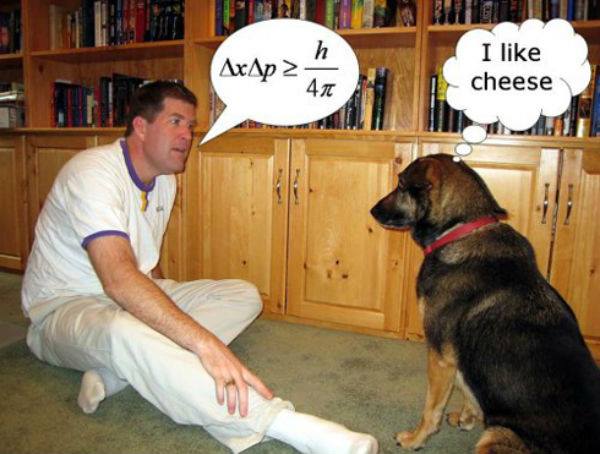
1-i-like-cheese.jpg

Heisenberg's uncertainty principle written out in full instead of using the reduced Planck constant.

Source: I also have a degree in EE err I mean chemistry. :D
 
on the review of www.hardware.fr (that i find the most interesting one) a surprising comparison is made between the Nano and the Fury X on which the max power is constrained to 185 W and another one between the Nano and the Titan X in the same condition.

You mean this page?

I don't understand that graph. How is the Fury X doing so poorly if it's still allowed a TDP of 285W? Is that a typo?

EDIT: It must be a typo. The title states Fiji@185W, and the TDP of the Fury X is 275W not 285W.
EDIT2: But if it IS a typo, how is the Fury X consistently out-performing the higher-binned Nano by 10% or more? This makes no sense to me.
 
Last edited:
You mean this page?

I don't understand that graph. How is the Fury X doing so poorly if it's still allowed a TDP of 285W? Is that a typo?

EDIT: It must be a typo. The title states Fiji@185W, and the TDP of the Fury X is 275W not 285W.
EDIT2: But if it IS a typo, how is the Fury X consistently out-performing the higher-binned Nano by 10% or more? This makes no sense to me.
It's not a typo, the reviewer limited the power absorbed by the Futy X to a level lower than its TPD, i.e. a level comparable to the Nano to find out if with the same power draw the Nano would reach comparable performance with the Fury X, but it seems that, even taking the water cooling of the Fury X into account, this is not the case...
 
Interesting. Perhaps the power distribution circuits of the Nano are less efficient. Puts a big hole in the "nano is good for low tdp" argument.

So that just leaves:
"Fury Nano. For when you have to make do with 6 inches."

Or alternatively:
"Fury Nano. If nothing bigger fits, you probably shouldn't put this there either"
 
http://www.techpowerup.com/reviews/AMD/R9_Nano/37.html

Nano reviwed of a black listed site, do like that they also got a review sample, and bought one self, hasnt it just not been for the coil whine.

But they do understand where the Nano place is

Their conclusion

"Last but not least: pricing. With $649, the R9 Nano is expensive, really expensive. The only card with a worse price/performance ratio is NVIDIA's GTX Titan X. AMD's R9 Fury X comes at the same $649 price level, which means that if you can fit the R9 Fury X into your case and have ruled out the GTX 980 Ti, the Fury X should be the card to buy. The R9 Nano really only makes sense for a small form-factor build where money doesn't matter. Here, it's the only option on the market with nothing in sight from NVIDIA because they don't have HBM memory, which allowed for such a compact design in the first place. If you plan on using 1080p resolution only, cards like the Gigabyte GTX 970 Mini and various compact GTX 960s will suffice, at much lower pricing. But for 1440p and beyond, the R9 Nano is the only choice, and it's a little technology marvel that completely owns it own niche."

9.0 Score

recommended.gif
 
"Owns its own niche", I like that saying. Perfectly explains the nano in a nutshell.

Hehe, yes, its lone wolf. :), guess thats why i like it, but that darn coil whine, but well the saphire almost hadnt it, and so far at the tread for nano owners it doesnt "hear " so bad, maybe i get it, but well im in no rush, so i have to see what owners do report on that issue.
 
Right now for HTPC at 4k, neither Nvidia nor AMD should be considered.

Nvidia's 4:2:0 is less than ideal(and that is ignoring the HDCP deal), and AMD lacks it(HDMI 2.0) entirely.


Now if the DP to HDMI 2.0 active adapters stopped being vaporware and showed somewhere then things would be different.

980, 980Ti, and TitanX all do 4:4:4 Chroma 4K@60Hz over HDMI 2.0
 
980, 980Ti, and TitanX all do 4:4:4 Chroma 4K@60Hz over HDMI 2.0

Still without HDCP they aren't really viable for a HTPC.

So, DP 1.2 TVs, or big ass monitors like someone else linked are still preferable, and in that case HDMI stops mattering :p :)


EDIT TO ADD:

It's not a typo, the reviewer limited the power absorbed by the Futy X to a level lower than its TPD, i.e. a level comparable to the Nano to find out if with the same power draw the Nano would reach comparable performance with the Fury X, but it seems that, even taking the water cooling of the Fury X into account, this is not the case...


Actually they compared a GM200 at 185w (a Titan at 73% of it's standard power), the Fury X was left at it's proper 285W power rating. The titan was 15% faster at 185w.
 
Still without HDCP they aren't really viable for a HTPC.

So, DP 1.2 TVs, or big ass monitors like someone else linked are still preferable, and in that case HDMI stops mattering :p :)

Not true, I need HDMI to run my 48" 4K Samsung TV/Monitor. It blows away any other 4K monitor in image quality.
 
Darn, im so tempted for cf of the nano in this case, pls pls, find a solution for the coil whine AMD, Volum 200x270x210 mm

S1-aluminum-mini-small-computer-case-for-ht-pc-matx-motherboard-type-usb3-0.jpg_350x350.jpg


And yes it does fit mico atx motherboard with 2 dual slots grapic card.
 
I'm thinking of a R9 Nano for my NCASE M1 case. Make for a good Lanbox build. It's probably going to be hard to find one though.
 
Back
Top