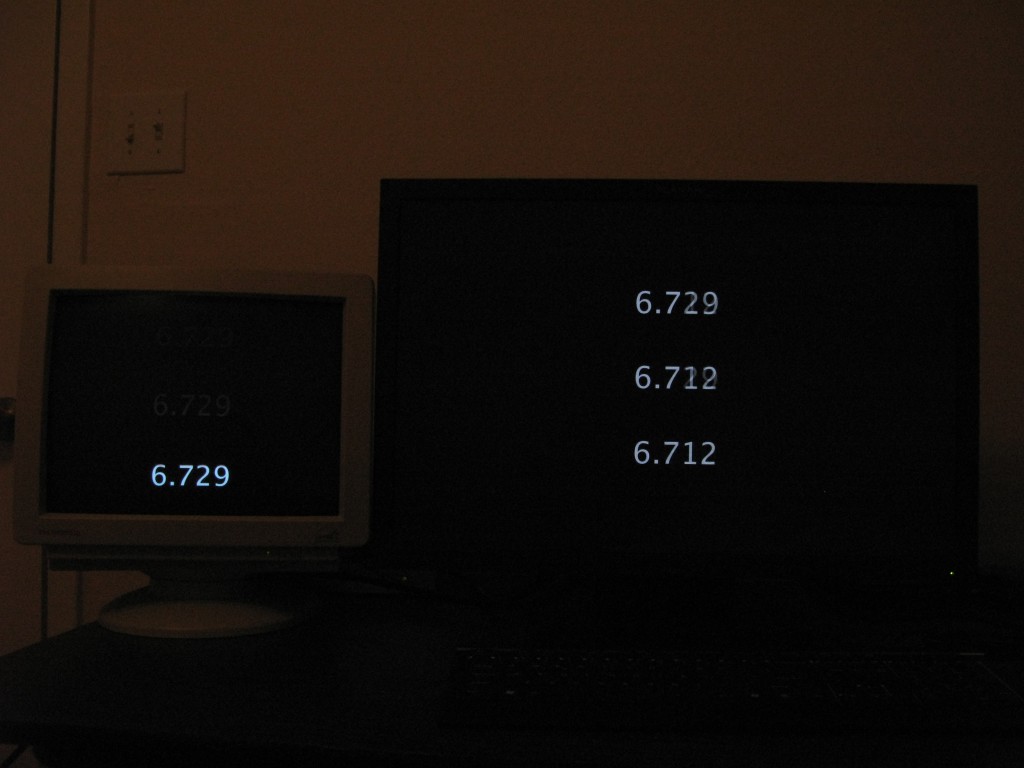
OK so just wondering how LCD's work, do they refresh the whole screen at once, every single pixel changing colour at the same time, or do they scan a single line at a time like a CRT refreshing each pixel in turn. Or do they refresh in blocks or in some other manner.
I ask because we still get tearing on LCD's and most have a common refresh rate of 60Hz.
I understand we dont get the flicker like CRT's because they're constantly backlit, where as CRT pixels are only bright for a fraction of a second when being hit by the cathode ray and then tends towards black very fast giving a noticeable flicker at low refresh speeds.
It seems with time to change colour as low as 2ms in the case of some TN panels that refresh speeds of upto (1000/2 = 500 times a second) should theoretically be possible (if all pixels change at the same time)
Presumably they still actually scan across like CRT's do when refreshing.