• Some users have recently had their accounts hijacked. It seems that the now defunct EVGA forums might have compromised your password there and seems many are using the same PW here. We would suggest you UPDATE YOUR PASSWORD and TURN ON 2FA for your account here to further secure it. None of the compromised accounts had 2FA turned on.
    Once you have enabled 2FA, your account will be updated soon to show a badge, letting other members know that you use 2FA to protect your account. This should be beneficial for everyone that uses FSFT.

Plugging UPS into non-grounded outlet

5pips49

Weaksauce
Joined
Mar 7, 2025
Messages
109
I read in my UPS (Cyberpower AVRG750U) manual that you should not use the UPS with an outlet that is not grounded.

"The UPS must be connected to an AC power outlet with fuse or circuit breaker protection.
Do not plug into an outlet that is not grounded.
If you need to de-energize this equipment, turn off and unplug the unit."

I think that it is saying that because you wont have protection from power surges. The UPS would have provided that protection had it been plugged into a grounded outlet. So, you only have protection from the power going out (edit: I am referring to a blackout). Am I understanding that correctly? Or is there something that I am missing like a negative effect on the battery?
 
Last edited:
During a surge that will either get passed to what it is connected to or its internal battery/control board. It won't have a controlled discharge path.

Surges often happen when the power comes back on.
 
During a surge that will either get passed to what it is connected to or its internal battery/control board. It won't have a controlled discharge path.
Which one of these?
"what it is connected to" means the ground wire or nothing
OR
"what it is connected to" means devices connected to the UPS, such as a computer or router.
 
In general I wouldn't recommend using non-grounded outlets on computers. They don't just use it for a safety ground, it also is for shielding and signals so you'll find that there can be issues like crashing, or getting shocked through your keyboard and such if you don't have it grounded. That said, if there's just no way to ground the outlet and you need surge protection, you need a series type of surge protector like this one. Normal surge protectors, including what's the in UPS, for by shunting surges to ground. That works pretty well, and is cheap to implement but has a few downsides, one of them being without a ground connection they do nothing, they are totally useless. Ones that work in series don't have that issue, they protect against surges by absorbing the surge in a bank of capacitors and then slowly releasing it more or less and work without a ground. They also have downsides, the biggest being that because they current has to pass through them all the time they are big and chunky, and thus expensive.
 
A lot of "ungrounded" outlets are actually grounded. They just don't have a pin for a ground like from whatever you plug into them. It's pretty common for older wiring to either be in metal conduit or use flexible metal clad cable (BX, etc.). If you have this sort of wiring generally the box is grounded by the conduit or cladding, and the outlet itself is grounded by being screwed into the box. If you have that you can often just install 3-conductor outlets in the existing boxes. It's not that way everywhere, old knob and tube wiring tends to lack a ground and there are also plastic clad 2-wire ungrounded systems around, so you have to check your building wiring & local code to see if you can do this.

I had that done once. I just talked to my landlord, called up an electrician, had them check over the wiring, and yep all BX like I thought, it's a grounded system, we can just upgrade the outlets. Landlord was fine with me swapping a few out as long as a licensed electrician did the work and everything was up to snuff with the building code, permits, etc. Wasn't free of course but wasn't a lot of $ either. Few hundred bucks in 2007 to have all the outlets in my apartment swapped out. Actually all but one. One was connected to a switch next to the front door. I left that as a 2-pin since it'd only ever be used for a lamp.

I also rented a house for a couple years where this wouldn't work. Ungrounded outlets but it was all 2-conductor plastic clad/romex/something like that. I got the landlord to agree to upgrade a few outlets as part of the lease. It was a 1-story with an unfinished basement so that was a simple re-pull through the basement to first floor outlets, plus I just asked for one in the west bedroom (office/rig room) and one in the living room. He decided it was a good idea to put one in each bedroom while he was at it. The kitchen was already upgraded to grounded wiring.

All this was a while back. I bought a house in 2017 and had it mostly rewired before I moved in. Replaced the original wiring & upgraded the service, but there's some BX/armored cable upstairs from a later attic conversion that the electrician said was in good shape, would cost a lot to replace and in his opinion just straight up wasn't worth doing for at least a few decades. The original wiring was all in conduit, so he could just pull new wiring through the existing conduit.

You can also use a GFCI with a 3-pin socket on an ungrounded circuit. That doesn't provide an equipment ground so it won't help with the surge protector, but it does make whatever it's plugged into safer for people. A hot chassis may still zap you, but the GFCI is supposed to cut the power before it kills you, at least on a good day. Building code may not allow it, but it's legal some places and better than just ripping the ground pin of the cable to your rig.
 
...That said, if there's just no way to ground the outlet and you need surge protection, you need a series type of surge protector like this one.
Interesting. I never knew about such devices. So, can handle a surge, to an extent. Also, can handle a buildup of charge in the device, to an extent. Edit: are such units able to absorb all different amounts of charge? (the more expensive ones can absorb more charge?)
Do you think that they disperse the charge from the capacitors to what's plugged in (later)?
Do you think you can plug a budget consumer UPS into one of those? Edit: in the specs https://zerosurge.com/wp-content/uploads/2025/12/2R-Series-12-25.pdf it says that you can plug a UPS into it.
Or, rather plug an extension cord into that and then a UPS into the extension cord?
I can be responsible by using a low gauge, quality extension cord.
edit: maybe the series type surge protector plugged into wall, then extension cord, then UPS is at least better than no ground at all.

edit2: the spec sheet for the device that you mentioned talks about Wide Voltage range technology. The apparently handles a range of voltages centered around 120V. I think it said 85V - 175V. So this is another feature that it provides, which seems separate from the surge protection. Seems interesting.
 
Last edited:
A lot of "ungrounded" outlets are actually grounded. They just don't have a pin for a ground like from whatever you plug into them. It's pretty common for older wiring to either be in metal conduit or use flexible metal clad cable (BX, etc.). If you have this sort of wiring generally the box is grounded by the conduit or cladding, and the outlet itself is grounded by being screwed into the box. If you have that you can often just install 3-conductor outlets in the existing boxes. It's not that way everywhere, old knob and tube wiring tends to lack a ground and there are also plastic clad 2-wire ungrounded systems around, so you have to check your building wiring & local code to see if you can do this.

I had that done once. I just talked to my landlord, called up an electrician, had them check over the wiring, and yep all BX like I thought, it's a grounded system,
So would really need an electrician to look at it?
I am not the home owner, which makes it a pain to deal with. But, as you explained, there are solutions.

I also just came across the "Whole house surge suppressor" product. Apparently, those are not expensive. Maybe that's an option.

I don't so much understand what you describe in terms of the wiring in the walls.

All that I understood before posting the OP is that you can have
1- a true ground, which is a ground wire going from the receptacle all the way into the physical ground.
2- receptacles grounded to a metal water pipe (or similar). the water pipe should go into the ground (to where the water pipe originates).
3- GFCI
4- ungrounded
 
Last edited:
So would really need an electrician to look at it?
That's mostly about local laws and property rights, but if you're not the owner you'll likely need permission from the owner. Even that depends on lease terms, so maybe not. It's common in commercial property leases in the US for the tenant to have the right to make all sorts of modifications, but rare for residential tenants. But that's just the US, and I'm just using it as an example because that's where I am and what I'm familiar with. Most of the time if you're not the owner the owner gets to decide on anything involving modifying the property unless your lease says otherwise. Also it's common for local jurisdictions to place restrictions on who is allowed to do electrical work and where. It often varies by type of property. Like that apartment where I had to hire an electrician was an 18 unit building. Generally speaking whatever government is in charge wherever you're looking to change an electrical system is far more restrictive about who can alter a multi-unit compared to a single family home. If it's your single family detached house and it's just you and your family living there you often get a lot more freedom than you do in an 18 unit apartment building - even if you're the landlord.
 
Interesting. I never knew about such devices. So, can handle a surge, to an extent. Also, can handle a buildup of charge in the device, to an extent. Edit: are such units able to absorb all different amounts of charge? (the more expensive ones can absorb more charge?)
No they can't handle any level of surge, there's always limits to any surge protector. Nothing is going to handle a direct, close by, lightning strike for example. If you want better protection, you need a type-2 or type-1 surge protector. Those are ones that protect big devices, panels, or the whole house. So what you want is something like this that is wired in to your house's breaker box. Ideally you have a professional electrician install it and they work with the power company to install it in front of the breaker (true type-1 mode) but you can also install it yourself on your bus bars if you are comfortable working with that (don't do it if you aren't comfortable and don't know how to work on a breaker box). That'll take a MUCH larger hit, and since it is at the service entrance it can dissipate it quickly. Code actually requires it in new construction. You ideally want a type-1 on the service entrance, a type-2 (like this) on anything high draw like an AC or on sub panels and type-3s, which would be normal power strips or the Zero Surge, right in front of devices.

The Zero Surge can take a hit of like 6000v/3000a. The HEPD80 can take a hit of like 80,000a.

Do you think that they disperse the charge from the capacitors to what's plugged in (later)?
Not sure how they do it, precisely. I think they discharge it pretty quickly.

Do you think you can plug a budget consumer UPS into one of those? Edit: in the specs https://zerosurge.com/wp-content/uploads/2025/12/2R-Series-12-25.pdf it says that you can plug a UPS into it.
Or, rather plug an extension cord into that and then a UPS into the extension cord?
Absolutely. That's why I do. I have one plugged in to the wall, then a Cyberpower UPS plugged in to that, and my computer stuff in to the UPS.

edit2: the spec sheet for the device that you mentioned talks about Wide Voltage range technology. The apparently handles a range of voltages centered around 120V. I think it said 85V - 175V. So this is another feature that it provides, which seems separate from the surge protection. Seems interesting.
Well the thing to note is it is NOT a voltage regulator. It means that it'll OPERATE at a wide range of voltages. That's just inherently how they work. You can get voltage regulators if you want, but for a computer with an active PFC power supply they are not needed as those track voltage very well and have no issues with high or low voltage (to a point of course).


I don't so much understand what you describe in terms of the wiring in the walls.
So in the walls the grounding can be handled in two ways: In old setups, like what it sounds like you have, there are two wires: The hot and the neutral. Black is hot, white is neutral. Now "neutral" in the context of the AC system is actually the ground. If you trace it back to the service entrance, it gets bonded to the ground. The whole grid is grounded (as in literally tired to the ground for the return path). That works, but there are potential safety issues so newer setups have an additional wire, the ground wire usually green (or just bare copper). It provides another path to ground, one that isn't normally used. The neutral wire is where the current from the hot wire flows to, the ground wire is idle unless there's a problem. For safety reasons though they have to be separate wires. You can't just connect the neutral to the ground pin, that's dangerous.

All that I understood before posting the OP is that you can have
1- a true ground, which is a ground wire going from the receptacle all the way into the physical ground.
That is the best. The wire goes all the way back to the service entrance (breaker box) along with the hot and neutral, and it is bonded to the neutral and to the actual ground at that point.

2- receptacles grounded to a metal water pipe (or similar). the water pipe should go into the ground (to where the water pipe originates).
That works fine and near as I know is still to code. We have some of that in our house. So long as the pipe is metal the whole way, it should provide a fairly low impedance path to ground.

This is actually NOT a form of grounding. It's just an additional form of safety that can be used with or without grounding. It means "Ground Fault, Current Interrupt." What happens is that it measures the amount of current coming in the hot wire, and the amount going out the neutral wire. Those should always be the same. If it isn't, it means the current is going out some other path, like, say, you. So if the current different is more than like 5ma, the GFCI trips and shuts off the outlet. They are a good safety to have around water (code requires them in places like kitchens and bathrooms). They also help make un-grounded outlets safer. But they are not a ground.


The additional potential issue aside from safety and surge protection to think about is signal grounding. This is a thing not unique to computers but it is a consideration with them. All the high frequency electronics inside them want shielding and grounding and that is usually done via the ground pin. If you open up a PSU, the ground pin ties right in to the case of that, and from there that gets tied in to the rest of the case and all the grounding it does. If it is missing, you can have issues. I'm not saying you WILL, but you CAN. If you do, nothing but grounding it is really going to help.
 
That works fine and near as I know is still to code.

I think it varies, but it's at least preferred to have all your electrical grounds connected to one place. Grounding through pipes in some places and your system ground in others is not ideal. Some systems will ground the panel with a grounding rod and some ground through a water pipe... some localities insist on grounding rods.

A hazard with using metal water pipes as a ground is potential for replacement with plastic pipes and detatching the ground. Should be fine if the pipe enters the ground not too far from the wiring, because the plumber should notice while doing the work and refer to an electrician; not so fine if the wiring is far away from while the pipes actually enter the ground... Someone could change out a section here or there with plastic and disconnect the ground without it being obvious.
 
I think it varies, but it's at least preferred to have all your electrical grounds connected to one place. Grounding through pipes in some places and your system ground in others is not ideal. Some systems will ground the panel with a grounding rod and some ground through a water pipe... some localities insist on grounding rods.

A hazard with using metal water pipes as a ground is potential for replacement with plastic pipes and detatching the ground. Should be fine if the pipe enters the ground not too far from the wiring, because the plumber should notice while doing the work and refer to an electrician; not so fine if the wiring is far away from while the pipes actually enter the ground... Someone could change out a section here or there with plastic and disconnect the ground without it being obvious.
I know it isn't ideal, but I think it is permissable. I'm not sure about that, I'm not an electrician, but I think it is allowed in situation where there just isn't the ability to properly run the ground.
 
Not sure if I should have these photos as thumbnails. I can edit if that's the expectation.

Here are some photos where I live
2 breaker boxes, connected by this wire. With the second breaker box, if you add up the numbers displayed inside, adds up to about 175 amps. The first breaker box adds up to way more. There is one electrical meter.
IMG_20260705_114125.jpg

this seems to be the ground wire for the first breaker box. I don't know a lot about this kind of stuff but doesn't seem like a good sign of the workmanship when that's grounded to the water pipe. I guess it's a lot of work to make a proper hole for it in the wall.
IMG_20260705_114205.jpg

the only caveat is that maybe one of these is a ground wire? I could try to shut off power and then touch it. I would be able to then tell if it's metal on the outside. Not sure how helpful that would be. Only breaker box 1 has a power shut off.
IMG_20260705_114311.jpg
 
I don't know a lot about this kind of stuff but doesn't seem like a good sign of the workmanship when that's grounded to the water pipe.

That's a reasonable way to ground a breaker box, as long as that pipe is metal (looks like it) and goes into the ground.

Some places code always requires a separare grounding rod, some places either way is fine, there's probably some places that require grounding this way.
 
how about a pic of the socket you want to use, and where are you that you power isnt grounded.
buying a ups shouldnt be this complicated. "this unit good?" "yup, buy it"....
 
how about a pic of the socket you want to use, and where are you that you power isnt grounded.
buying a ups shouldnt be this complicated. "this unit good?" "yup, buy it"....
Sorry. I am trying to write good posts but some of my lack of knowledge has made that difficult. You have a valid point that I might be getting lost in the details too much.

In my experience, there are a lot of ungrounded outlets in my area. This might be because of lots of older houses. I am speaking of the very "close to city limits" suburbs west of Philadelphia.

Also, unfortunately, my landlady is not very helpful, knowledgeable, or motivated. It's heartbreaking. I think the problem is that she just thinks, well, I have never heard of that being a problem for anyone. I strongly disagree with that stance.

I think that you are suggesting a photo with the assembly disassembled, or at least the face plate removed. But, here is a photo probably of not what you are looking for. Sorry again. I can delete the photo if it's totally useless and just taking up space.
outlet.jpg
 
That's a reasonable way to ground a breaker box, as long as that pipe is metal (looks like it) and goes into the ground.
yes, that is a metal pipe.
Some places code always requires a separare grounding rod, some places either way is fine, there's probably some places that require grounding this way.
Interesting. I did not know. I was always thinking that running it to the pipe is a shortcut. A good shortcut nonetheless because it's better than ungrounded. Now in thinking about this more, maybe a pipe can be better. For example, let's say that kids dig up and remove the ground rod.
In the US, it's SOP to tie neutral and ground together in the box. Check if that's the case in your house.
what does SOP stand for?
Standard operating protocol?
 
how and where? (did i miss your location?)
Suburbs of Philadelphia, very close to city limits, but West.
that looks like a standard north american grounded socket to me...
View attachment 814027
An electrician was in here about 2 years ago.
I asking him about 2 or 3 of the outlets in here. Might not have been this specific one. But, I definitely asked him about at least 1 in this room. My question was very close to either "are these fully grounded?" or "are these truely grounded?" He said no. I was NOT able to have a full conversation with him because the landlady insisted on being the only participant.
 
That linked tool will do the trick. You can do it with a multimeter too but that is easier. If it shows you are grounded, then you are good. Doesn't matter what kind of ground from the computer's point of view, or the surge protectors.
 
That linked tool will do the trick... If it shows you are grounded, then you are good. Doesn't matter what kind of ground from the computer's point of view, or the surge protectors.
So you think that the electrician was saying that it's not grounded all of the way back to the circuit breaker box which is then grounded to the water pipe that I photographed earlier? (If I am following,) instead, there is a ground wire running somewhere else, to a copper water pipe or to the foundation of the house (basement floor). Just trying to understand your theory.
I was able to get my hands on a model similar to the one that you linked to. Specifically, Gardner Bender GFI-3501.
Here are the results:
only the middle light on the tester turns on.
this means "open ground."

2 caveats:
1)
Is it possible that the outlet is a GFCI? There is no reset button, etc, but is that a 100% reliable indicator? Because there is a button on the tester that you use to indicate that you are testing a GFCI. I did not use that.

2)
The device manufacturer (Gardner Bender) says that you don't want any devices using the circuit during the test. I did my best to ensure that that was the case. However,
a) there are areas that I don't have access to that might be on the circuit. I talked to landlady and we might be able to solve that together but it will be probably at least a week;
b) I wonder if things like lights bulbs can be pulling power even when off. I read that chargers, such as cell phone chargers will do that.
 
Last edited:
As an Amazon Associate, HardForum may earn from qualifying purchases.
You can do it with a multimeter too but that is easier.
Here is my multimeter.
multimeter.jpg

However, the metal pointy ends are not in top shape.
neg_terminal.jpg

On this one, you can't see the condition as much from the photo. But, the metal cylinder end is not smooth when I run my finger over it.
pos_terminal.jpg
 
So you think that the electrician was saying that it's not grounded all of the way back to the circuit breaker box which is then grounded to the water pipe that I photographed earlier? (If I am following,) instead, there is a ground wire running somewhere else, to a copper water pipe or to the foundation of the house (basement floor). Just trying to understand your theory.
He might be. There's not really standard nomenclature so it could mean anything from "The ground pin isn't connected" to "I just don't like how the ground is run".

Here are the results:
only the middle light on the tester turns on.
this means "open ground."
That means, unfortunately, that ground pin (the one on the bottom middle) isn't hooked up to anything, or if it is, whatever it is hooked up to isn't grounded.

2 caveats:
1)
Is it possible that the outlet is a GFCI? There is no reset button, etc, but is that a 100% reliable indicator? Because there is a button on the tester that you use to indicate that you are testing a GFCI. I did not use that.
No, GFCI outlets have to have the test and reset buttons. There are also GFCI breakers, you can do it in the breaker box instead of the outlet and only one outlet on a circuit needs to be GFCI for them all to have the benefit but in your case I'm sure nothing is since it sounds like your landlord is like most and has zero fucks to give about any of it.

2)
The device manufacturer (Gardner Bender) says that you don't want any devices using the circuit during the test. I did my best to ensure that that was the case. However,
a) there are areas that I don't have access to that might be on the circuit. I talked to landlady and we might be able to solve that together but it will be probably at least a week;
b) I wonder if things like lights bulbs can be pulling power even when off. I read that chargers, such as cell phone chargers will do that.
Don't worry too much about that, they wouldn't likely effect the reading. I've used similar ones on circuits with shit and they work fine, and done it with a multimeter and it works fine.


It means your outlet isn't grounded. Since it sounds like your landlord won't deal with it (which is unsurprising) you have a few options:

1) Just accept things and keep going. Your computer has been working on that outlet, it'll keep working on it. The UPS will likewise work, you just have no power protection. That isn't ideal, but it is ok. There are a LOT of people who run without surge protection and generally, they don't get screwed. The US power grid is pretty stable. While it can cause computer issues, I know people who have run for years on ungrounded outlets, which is how I know about the issues. It works, it just isn't ideal.

2) Get a Zero Surge protector. This will give you protection that's realistically better than what your UPS would give you and require no ground. I have a fully grounded setup and I still use one, just as an extra set of protection.

3) Try and wire a ground yourself. I wouldn't advise that, but it is possible. All you have to do is connect a wire to the ground screw on the outlet and get that to something in the house grounded (like a metal pipe) and then you are good.
 
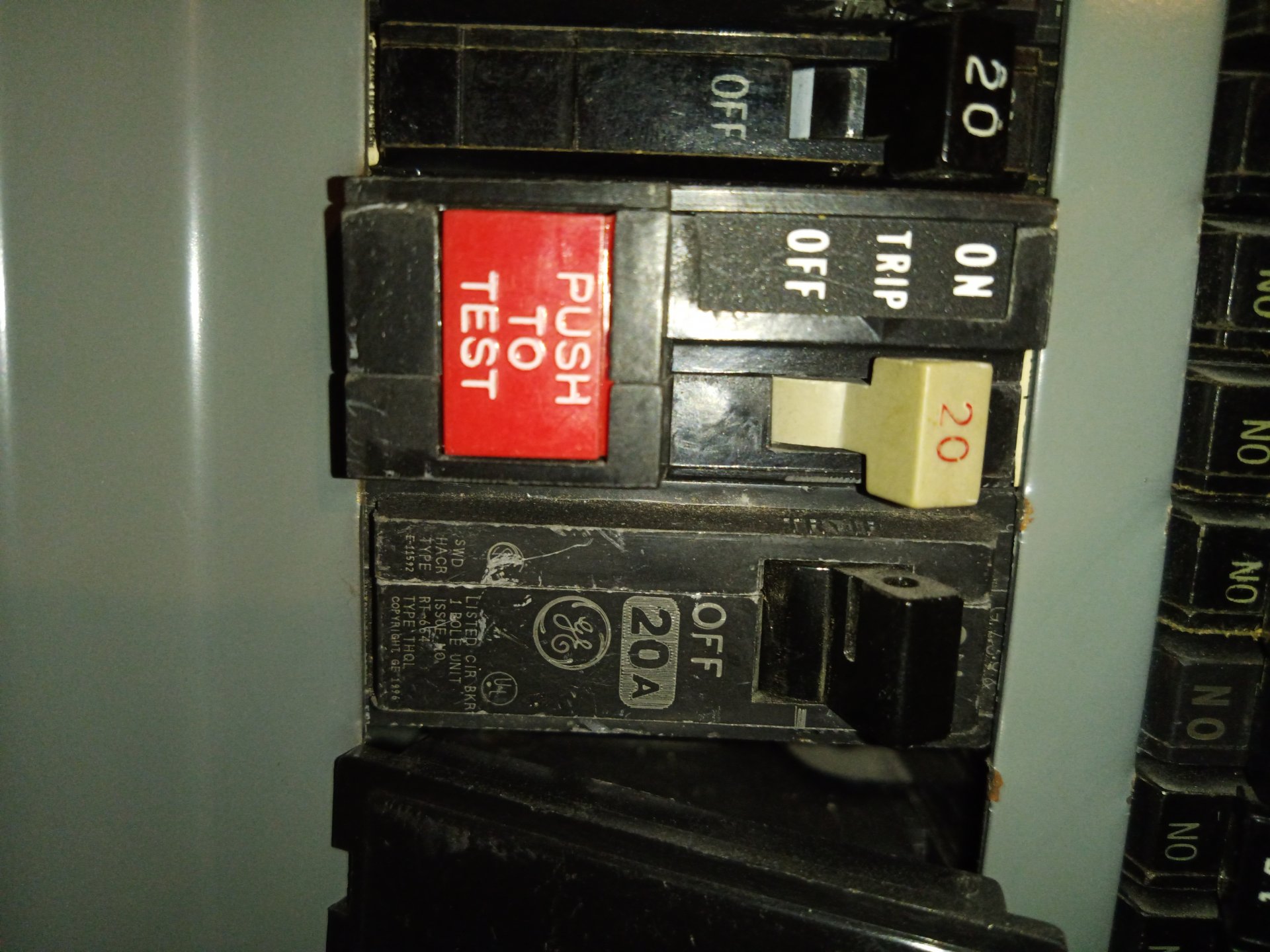
...There are also GFCI breakers, you can do it in the breaker box instead of the outlet and only one outlet on a circuit needs to be GFCI for them all to have the benefit...
In order for me to tell if that's a possibility, can I just look at the breaker box? Would that be a way to quickly rule that out as a possibility?
...but in your case I'm sure nothing is since it sounds like your landlord is like most and has zero fucks to give about any of it.
Things might not be too bad in certain respects. (I am speculating but) it seems that some of the electric in my apartment is not ancient because of renovation. If true, some stuff was probably forced due to the code.

I told the landlady about the results of the test (as well as reading her a bit of the riot act). But now I am a little concerned that she will talk to an electrician who will say that "ungrounded is no big deal..." or result in the electrician concluding that it's GFCI, and then paint me as the boy who cried wolf. Property owners need to keep notes on how things are wired, etc, but dream on? :)
2) Get a Zero Surge protector. This will give you protection that's realistically better than what your UPS would give you and require no ground. I have a fully grounded setup and I still use one, just as an extra set of protection.
And that helps in case the ground wire fails?
 
In order for me to tell if that's a possibility, can I just look at the breaker box? Would that be a way to quickly rule that out as a possibility?
Sure, the breaker will be labeled and have a GFCI button on it if it is.

I told the landlady about the results of the test (as well as reading her a bit of the riot act). But now I am a little concerned that she will talk to an electrician who will say that "ungrounded is no big deal..." or result in the electrician concluding that it's GFCI, and then paint me as the boy who cried wolf. Property owners need to keep notes on how things are wired, etc, but dream on? :)
The problem is that all she has to do to bring it to code is install a GFCI outlet (or breaker) and label it as ungrounded. Then it is fine. That is fine per your personal safety, but doesn't get you the computer protection you want.

And that helps in case the ground wire fails?
Yes, it will suppress surges even without an active ground. It doesn't ground your connection, and it doesn't get you a signal ground for your computer, but if there's a surge it'll work even with no ground wire.

I personally take computers surges pretty serious so I have all of the protection. I have a HEPD80 Type-1 protector on the house, then a Zero Surge on the outlet, to a UPS (with it's own protection) for the computer. Backups for the backups kind of situation.
 
Back
Top