![[H]ard|Forum](/styles/hardforum/xenforo/logo_dark.png)

- Joined
- Dec 19, 2005
- Messages
- 18,251
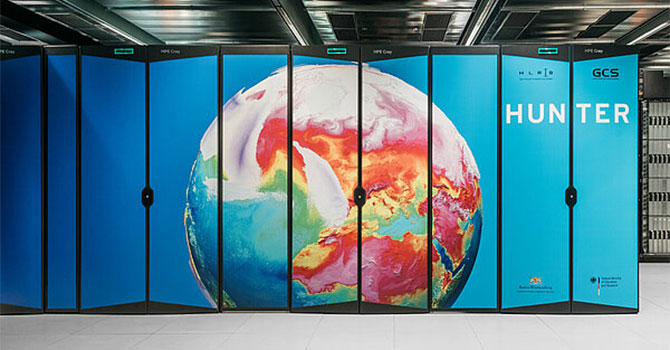
"During our visit, the conversation kept circling back to "sovereignty"—that is, whether a region can independently develop and manage its own digital infrastructure, including advanced chips, supercomputers, and AI systems. With the U.S. tightening export restrictions on AI hardware to China and global supply chains showing their vulnerabilities, the strategic value of tech independence is pretty obvious.
The EU Chips Act is a step forward, aiming to cut down dependence on external suppliers. But let's be real: building competitive processors isn't just a matter of throwing cash at the problem—people at HRLS confirmed that. It's a highly complex, multi-year challenge that demands more than just funding.
That said, Europe isn't starting from scratch. ASML's lithography machines form the backbone for industry leaders like TSMC and Intel. That's a serious advantage, and it really highlights why ongoing investment in sovereign tech capabilities isn't just smart—it's essential. We were also able to meet with Trumpf, who are the world's leading laser manufacturer for EUV lithography machines; an essential ingredient in the ASML systems that TSMC, Intel and virtually everyone else uses.
Looking to the future, HLRS is preparing for its next major system, "Herder," which is anticipated to launch in 2027. Building on the achievements of Hunter, Herder will employ an advanced Cray EX architecture that is liquid-cooled, high-density, and modular—engineered to meet the expanding requirements of both artificial intelligence and traditional high-performance computing. HLRS works closely with hardware vendors, engaging in regular roadmap discussions to understand upcoming technologies and influence their development. These conversations often span time horizons of two to five years, allowing HLRS to align future systems like Herder with evolving application needs. Since chip manufacturing involves long lead times—and orders have to be placed years ahead at fabs like TSMC—HLRS provides early input on design trade-offs and flags potential bottlenecks before products reach the market.
This level of collaboration means Herder isn't just another supercomputer—it's being purpose-built to meet Europe's strategic computing ambitions. Procurement is already underway, and the big component decisions should happen by late 2025. Once Herder spins up, the hope is for it to become a pillar for sovereign, high-performance infrastructure across Europe—backing open research, driving industrial innovation, and powering energy-efficient AI at scale. We'll know more, soon."
Source: https://www.techpowerup.com/forums/threads/our-visit-to-the-hunter-super-computer.338785/