• Some users have recently had their accounts hijacked. It seems that the now defunct EVGA forums might have compromised your password there and seems many are using the same PW here. We would suggest you UPDATE YOUR PASSWORD and TURN ON 2FA for your account here to further secure it. None of the compromised accounts had 2FA turned on.
    Once you have enabled 2FA, your account will be updated soon to show a badge, letting other members know that you use 2FA to protect your account. This should be beneficial for everyone that uses FSFT.

Loop routing help

scgt1

Supreme [H]ardness
2FA
Joined
Jun 4, 2007
Messages
5,474
I was currently using a dual loop setup with DDC pumps. Well one blew up a few days back.

I put an order in for an EK-XRES 100 Revo D5 PWM and some estimated fittings I'll need with changing things.

My hope is to clean up the current mess:
2885165

2885166


Project Red's setup:
6700K
Asus Maximus VIII Formula
EVGA GTX 1080 FTW
Kryo m.2 ssd block
UT 60 360mm (Internal w/ push fan setup)
RX480 480mm (External w/ push/pull fan setup)
3/8x5/8 BP Compression fittings
Rads have SP120 Performance Edition fans with voltage reducers to cut back on noise ran through a fan controller.

The goal:
To try and achieve the current cooling performance I have to the best of my ability and clean up that disaster in front of my PSU and would prefer to cancel out the looping tubing that drapes over the gpu if possible.

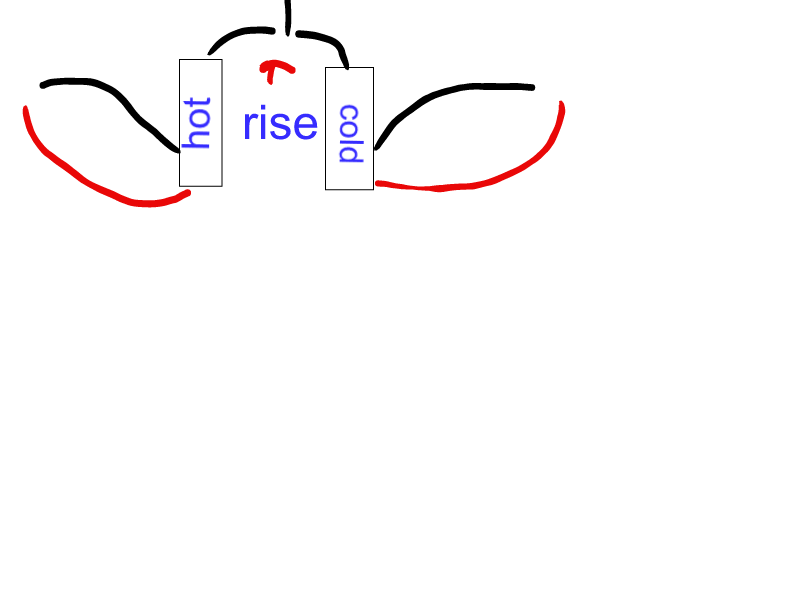
Feel free to toy with my second image above in paint with suggestions.

I did a rough draft of a different config to knock out the tubing that passes over the gpu cleaning things up some.
2885167

The in from RX480 goes to the D5 pump cooling off the coolant then out to the UT60.

Is there any specific order components should be cooled these days? Should it be broken up to run specific components through one rad before entering the other group of components and then into another rad?

Create/suggest away. :thumb:
 
Whoa, you were sharing water, essentially shared res? That defeats the point of running dual loop. Instead that is a shared loop. That was a shitload of complexity for naught I'm afraid.

Moving forward I would keep most of the block to block plumbing that is already as short as possible in tact, like vrm to cpu. Then connect the out on the vrm to gpu in. Invest in two sets of QDC, so you can break your loop when needed. The cpu in connect to the pump outlet. The kyro m2 out, keep that out to the 480. The 480, route it back in next to the kyro m2 out, and run that to your ut60. From the ut60 go to the inlet on your res, and I think that's it. Btw, I doubt you'd need extra fittings and in fact you'll have some left over since you're cutting your loop connections down not increasing them.

**But dude as I wrote in that other thread D5 will not be ideal for the restriction especially with an external. Shrugs, too late now I suppose. Look how you have your DDC mounted, slightly off the floor. There is no air flow there, and those pumps would heat soak themselves all day long in a very high flow setup. With DDC pumps you need cooling whereas with a D5 you are still cooling it just directly into the water. DDC dumps heat into your air whereas D5 dumps heat into your loop. PPL seem to think D5 is magical but its not it still follows the rules of physics. Thus you have to at least provide some some cooling on a DDC.
 
Last edited:
Not sure what you mean with sharing. If your talking about my fill port to the Y the out's on the Y go to the fill locations on the res tops.

I had a long conversation with Ek about the setup and they advised I would be fine using a single DDC or a D5. The DDC would yield about 220 L and the D5 200 L. I went D5 because it is cooled with the coolant, has a longer life history, and is said to be quieter.

Ek also suggested if I was buying new pumps to side D5 because of the same reasons I mentioned above.

The extra fittings are short 90s, male to male fittings, q connector, and another shut off valve so I can put one at the pump. So all essentially needed. I knew I would have several Compression fittings left over.
 
The Y makes your loop shared not dual. It's advisable to go D5 because most don't realize they have to actively cool DDC. And the difference between the two pump in actual loops is the head pressure. DDC is a lot stronger than D5 in all situations, flat out. When tuning your loop, ie. calculating restriction vs head pressure DDC's always come out ahead especially when you got more than a couple blocks. Very simple loops to slightly more are fine with D5, but yours is entering high restriction, vrm and kyro block. Small blocks are very restrictive.
 
It's shared insofar as the water in one loop is touching the water in the other, but (while the heat will migrate up into the wye) because heat rises and the water in the fill tubing isn't "in" the loop, the hot water from one res is unlikely to contaminate the water in the other res. Same goes for drain tubing if there is a similar setup.

That said, doesn't hurt to convert to a single loop if that makes things neat and easier to manage.
 
The loops aren't sharing water in the sense that there is no circulation between the two reservoirs. There will be some heat conducting along the water, but water is not a great conductor of heat. So for all intents and purposes, they are separate loops.

The best loop order is the one that uses the least amount of tubing. Simpler is better, as less tubing means less restriction for greater flow and cooling efficiency. Loop order does not matter.
 
The loops aren't sharing water in the sense that there is no circulation between the two reservoirs. There will be some heat conducting along the water, but water is not a great conductor of heat. So for all intents and purposes, they are separate loops.

The best loop order is the one that uses the least amount of tubing. Simpler is better, as less tubing means less restriction for greater flow and cooling efficiency. Loop order does not matter.

Water is a good enough conductor of heat, that's the whole point of watercooling in the first place. What are you gonna do go back to air? Sharing the water defeats the whole point of a dual loop! And technically it's not a dual loop if the water is shared.
 
Water is a good enough conductor of heat, that's the whole point of watercooling in the first place. What are you gonna do go back to air? Sharing the water defeats the whole point of a dual loop! And technically it's not a dual loop if the water is shared.

Water is not a good conductor of heat. It's a good transporter and distributor of heat when there is some sort of current, either naturally by convection (i.e. heatpipes) or artificially by a pump. There is a significant difference there. Water's high specific heat makes it able to absorb a large amount of heat without a significant increase in temperature, and the same in reverse. That is why water is good for cooling, not because it is a good conductor. If you notice the construction of high end radiators, they often have dimples in the fluid path. This is to create turbulence, so that the hotter water in the middle gets mixed with the cooler water at the edges. This wouldn't be necessary if water was a good conductor of heat. The stagnant water in the Y will not conduct heat easily.
 
Water is not a good conductor of heat. It's a good transporter and distributor of heat when there is some sort of current, either naturally by convection (i.e. heatpipes) or artificially by a pump. There is a significant difference there. Water's high specific heat makes it able to absorb a large amount of heat without a significant increase in temperature, and the same in reverse. That is why water is good for cooling, not because it is a good conductor. If you notice the construction of high end radiators, they often have dimples in the fluid path. This is to create turbulence, so that the hotter water in the middle gets mixed with the cooler water at the edges. This wouldn't be necessary if water was a good conductor of heat. The stagnant water in the Y will not conduct heat easily.

Now you're just mincing words. You're actually contradicting watercooling fundamentals. The water in the loop is shared, fact. The water temp will equalize, fact. Sharing the water between the res is the same as a single res. He's dumping the heat into the same pool of water. This defeats the point of a dual loop. Whatever heat from the gpu/kyro is dumped into the cpu loop. WTF is this stagnant water? How the fuck is shit stagnant in a loop? And you're getting caught up in googling conductors of heat. What are you gonna do go back to air? And you brought up conductors of heat to then argue it, why?
 
Last edited:
Now you're just mincing words. You're actually contradicting watercooling fundamentals. The water in the loop is shared, fact. The water temp will equalize, fact. Sharing the water between the res is the same as a single res. He's dumping the heat into the same pool of water. This defeats the point of a dual loop. Whatever heat from the gpu/kyro is dumped into the cpu loop. WTF is this stagnant water? How the fuck is shit stagnant in a loop? And you're getting caught up in googling conductors of heat. What are you gonna do go back to air? And you brought up conductors of heat to then argue it, why?

You clearly don't understand anything that is going on. There is no mincing words, everything I have said is factual with clear distinctions and no contradictions. Now you can either swallow your pride and ego and ask for a clear explanation, or get out before you embarrass yourself further with your lack of knowledge and poor attitude.
 
The loops aren't sharing water in the sense that there is no circulation between the two reservoirs. There will be some heat conducting along the water, but water is not a great conductor of heat. So for all intents and purposes, they are separate loops..

Flat out wrong. Good job.

That is why water is good for cooling, not because it is a good conductor.

The stagnant water in the Y will not conduct heat easily.

You've created a point to argue with yourself. We watercool because of water's high specific heat capacity. It is also the best usable liquid as far as a heat conductor, though it is not when compared to a solid, BUT that is a moot point obviously. What are you gonna do make a loop out of a metal??

On second look, it seems like you're stating that the water in the two res' won't conduct heat. WHAT? How would that even be possible. There's a serious suspension of logic there. Both of these loops share the same water. They won't be conducting heat like a block of metal. Why even bother introducing the point?
 
Last edited:
Flat out wrong. Good job.


You've created a point to argue with yourself. We watercool because of water's high specific heat capacity. It is also the best usable liquid as far as a heat conductor, though it is not when compared to a solid, BUT that is a moot point obviously. What are you gonna do make a loop out of a metal??

On second look, it seems like you're stating that the water in the two res' won't conduct heat. WHAT? How would that even be possible. There's a serious suspension of logic there. Both of these loops share the same water. They won't be conducting heat like a block of metal. Why even bother introducing the point?

I see you still can't put aside your ego and pride. All I will say is try to actually understand his loop configuration. If you can't do that, I'm not helping you until you fix your attitude.
 
Drawing.png
Given the above, heat will pool at the highest point in the loop (the wye). The hot water will not migrate down into the other loop (convection of the fluid will prevent that) as long as the water below the wye is cool, the same as why if you fill a bathtub 1/3 with cold water and 2/3 hot, the cold water will fall to the bottom.

The temperature will eventually equal out, but that can take a long time in a large body of water--in a small vertical tube the cross-section where hot and cold meet is very small, so it will take longer. The components in each loop will heat the water much faster than conduction within the water would be able to.
 
you guys did catch that the Y is JUST the fill port/tubes, right?! it doesn't contain any water after filling, only air and is, I assume, capped off at the top of the case as I don't see a valve.
If your talking about my fill port to the Y the out's on the Y go to the fill locations on the res tops
so the only time the res's are "sharing" liquid is during filling. once the loops are full they are totally separate. although I don't know how well this setup would work when the loops are so different in size...

OP, once you get your new pump/res, just combine the loops for simplicity. you can stagger the rads between component if you want but it doesn't really make a difference once water temp equalizes.
hope that helps, good luck!
 
you guys did catch that the Y is JUST the fill port/tubes, right?!
I did, but can't see the res in the OP's pics and he didn't say whether he filled past the wye or just to (or near) the top of the reservoir, so I assumed to the wye for the sake of the argument.

Generally simpler is better, of course.
 
Doesn't matter if reservoir is shared or not really.

Yes, the water temps will equalize in a shared reservoir, provided the reservoir is in the flow path. That won't be a problem unless you have insufficient heat removal over all. Your steady state temperature of the liquid in the loops will ultimately be a function of your (total energy in) - (total energy out). That being said - you could plumb the reservoir such that it only acts in a surge capacity, and the only flow in/out of the reservoir would be as temperature in the loops changes. The water between shared loops would still co-mingle to a small degree (based on overall head loss of the loops and pump configuration), but the two loops would appear much more independent of each other.

Hot water does tend to rise, because it's less dense so gravity pulls the more dense water down, but the natural effect of gravity is overcome by a pretty modest pump. The effect of this is pretty much negligible when there is a mechanical pump involved.

Because of the difficulties balancing flow and such with shared loops, I tend to stay away from parallel paths in plumbing whenever possible. There are times where you need it, then I suggest a pump in each loop to ensure everything gets adequate flow.

Water does have an excellent heat capacity. That's why a very small volume of water can move heat as effectively as a relatively large volume of air. Ammonia is a bit higher, but there are some obvious problems using that in a non-industrial setting. There have been reactors cooled with metal (sodium in particular), but you aren't going to see that in a PC anytime soon.

I agree with Tsumi in this regard:
The best loop order is the one that uses the least amount of tubing. Simpler is better, as less tubing means less restriction for greater flow and cooling efficiency. Loop order does not matter.

I would plumb both water blocks in series, with one pump, one reservoir, and big radiator to cool it all.

Loop order does matter somewhat. If you have multiple water blocks running in series, they will run hotter as you go down the chain until you get to some radiators (or other heat removal). That may matter for on-edge overclock cases. You can mitigate that and keep it in the single-digit degrees by keeping the overall water temperature low, which is done by a) Making sure you have enough flow (and it doesn't take a whole lot, because water's good heat capacity) and b) Making sure you have enough heat removal in the form of radiators (or whatever else you use). Only in very outlying circumstances would I use parallel loops - maybe if you had Tri/Quad SLI with CPU cooling, as that would be a large heat load across a lot of blocks, and the effort and expense of running parallel loops there would allow you to maintain adequate cooling to every component.
 
  • Like
Reactions: Nobu
like this
Wow this turned into a large pissing match. SMH

Just for argument closure of my old loop setup. The distilled water is not combined at the Y. The level is a few inches below on each side (to each loop) So no the water never touches from loop to loop.

I put in an order for a new pump and some different fittings for certain locations along with another drain valve so I can drain right at the pump now not just the rads. Thankfully Performance-PCS came out unscathed from Matthew and they are filling orders today. It will all get broke down and reconfigured into one loop. I never had a problem with temps even overclocked across any components so what I had configured before worked wonderful and I never had to turn my SP120's past 50% with the voltage reducers installed on each fan during heavy overclocking. So those that want to argue can have at it but my temps were plenty cool the last time I was doing heavy benching.
 
Well yep she was burned up alright! Think there was a bit more shenanigans going on then just the small smoke stream I saw when I stopped playing that night. Looks more like a small fire started.
sMuRHOU.jpg

97NTeTJ.jpg

sq7xp82.jpg

X9xuXeF.jpg
 
Well damn, I haven't seen that before. That's why I stick with my dual D5s, haha.
 
  • Like
Reactions: Nobu
like this
Apparently it's a thing with the DDC pumps. At the time when I purchased them 2010 there wasn't heatsinks available for them and it wasn't an issue then. I can see why they have made heatsinks now.
 
Pump got too hot, ceased, which then caused the motor to short?
 
Apparently it's a thing with the DDC pumps. At the time when I purchased them 2010 there wasn't heatsinks available for them and it wasn't an issue then. I can see why they have made heatsinks now.

It really seemed to have only popped up with the MCP35X (higher peak power than the 350). Wonder if it is a design flaw.
 
Well finished the change up today. Running right now burping air out. This thing was a PITA to fill. Not really sure why either. It's strange how the top of the res really needs to be cracked open to allow fluid to go in from the fill port. The fill port is higher then the res so I wouldn't think it would be like this. I keep hearing air bubbles in my UT60 so it's slowly working them out.

I ended up using all the fittings I ordered (a Q, shut off valve, some more stoppers, 90s, and swivel 90s. I was able to keep one of the ssd cages installed with the pump mounted above the psu which I'm happy about. Don't have a drive to go in right now but maybe Black Friday when 1TB drives drop some more/go on sale. Would like to make my 5TB Black strictly Steam but right now I have some Origin games and misc games also on that drive. That's what I would use the 1TB ssd for.

I ended up as I suspected having which is a good amount of fittings left over along with a whopping 58 3/4" extra tubing that I pulled out of the build. Hey the pump just got quieter. I believe it is nearing the end of the burping process since that just happened and the bubbles in the UT60 have slowed considerably.

So this is the amount of tubing and fittings I started with. Two of those long runs go to my external RX480. I actually didn't shorten those any since I will eventually move my case to the other side of my monitor I'll have the RX480 still where it is on one side of it.
0Qlhz6e.jpg


Much much cleaner looking now.
05E6pfd.jpg

5Uuo8EG.jpg


This is what I was left with when done.
VO8cXUj.jpg


Temps at idle anyway seem about the same as they were before. Although I really don't think the Asus fan software is doing anything with the pump speed. It's sitting around 4800rpm and doesn't change with moving the graph around. I really wish an alarm could be set in the bios for if the pump stops working. :-( You would think a $400 board would have this feature.
 
Back
Top