• Some users have recently had their accounts hijacked. It seems that the now defunct EVGA forums might have compromised your password there and seems many are using the same PW here. We would suggest you UPDATE YOUR PASSWORD and TURN ON 2FA for your account here to further secure it. None of the compromised accounts had 2FA turned on.
    Once you have enabled 2FA, your account will be updated soon to show a badge, letting other members know that you use 2FA to protect your account. This should be beneficial for everyone that uses FSFT.

CoolClouds Crowdfunded CPU Cooler

octoberasian

2[H]4U
Joined
Oct 13, 2007
Messages
4,081
There isn't much detail on this but found this on Reddit.
http://www.hardcoreware.net/coolclouds-suprcool-pc-startup/

Neither the funding site nor the product page go into great detail in how the SuprCool-PC actually works, but a lot of lofty claims are made. They say that it will be capable of cooling a 300W load, which puts it above the best aircoolers like the Noctua NH-U14S and in line with huge custom water cooling systems. However they say they can do this in a much smaller package, that is “roughly half the noise of the standard heat sink”.

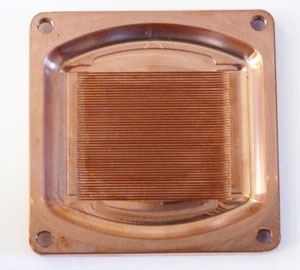
suprcool-pc1.jpg


The funding page: http://www.fundable.com/coolclouds
 
The funding page reads like it was written by someone with very little experience building a computer.
SuprCool-PC™ unleashes power of more than 4.7Ghz (over 300 watts) in the latest Intel and AMD processors
Umm... no it doesn't, the cooler doesn't magically make the cpu be able to perform faster. It might help with the overclock but its no guarantee of hitting 4.7ghz.
Also, in high temperature environments (high ambient temperature), heat pipes suffer a rapid increase in case temperature and thus a rapid decrease in performance.
I get what this sentence is trying to say, at least I think I do, it's written poorly to me, I think they are trying to say when the case heats up heatpipes don't work well. Though from the looks of it their cooler would suffer the same problem.

The air pressure drop created around the heat pipes can also choke airflow across the motherboard.
Most coolers with heat pipes are tower coolers and don't even blow air across the motherboard.

Liquid-cooling solutions require cumbersome piping and external radiators, they're sometimes very expensive (up to $1000) and prone to leaks, and sometimes they require the overclocking PC user to place components outside the chassis.
All sorts of problems with this one. Makes it sound like liquid cooling is going to make your pc into some huge beast that leaks everywhere.

SuprCool-PC™ can overclock the latest Intel and AMD processors to over 4.7 Ghz, with power in excess of 300 watts. You'll be running the fastest chip speeds in the personal computing world with the convenience of a simple-to-install heatsink.
Once again somehow this magical heatsink overclocks your cpu for you?

I'd stay away. This company honestly sounds like scam for some money and you'll probably get some pos product if one ever does come about.
 
I call shenanigans. Almost every diagram has a different thing illustrated and when it comes right down to it, limited fins only gets rid of so much heat, liquid doesnt change that. Lets not ignore that 300w 4.7 figure....
Would not touch with a 10 ft pole myself.
 
I call shenanigans. Almost every diagram has a different thing illustrated and when it comes right down to it, limited fins only gets rid of so much heat, liquid doesnt change that. Lets not ignore that 300w 4.7 figure....
Would not touch with a 10 ft pole myself.

Yeah, looked really dubious when I first saw it, too. I'm never even heard of this company until I saw it on Reddit.
 
Hi- thanks for the many comments.

First I will post a more detailed technical description of how our heat sink technology works and reference papers tomorrow if I can figure out how to attach a power point.

For the comment about clock speed being dependent on other factors than just the cooling, 100% agree. We only address the efficient cooling part of overclocking.

The compact module uses micro channels with fluid flowing in them to provide a very efficient heat transfer from the processor case to the heat sink fluid. Then the fluid is pumped to the radiator. I will provide more details on this later but this is the 6'th heat sink that we have completed (the rest for custom engineering for major corporations) and the thermal models are essentially the same. So we are confident of our isothermal cooling performance. We do need to complete testing on this unit on processors. The crowdfunding is to fund the production start up costs- that is a big leap for our small company.

Finally about heat pipe designs. There are great heat sink products on the market using heat pipes that offer good performance/price. We do list advantages but you would expect that as our product is more expensive to build. It has a pump and expensive micro channel cold plate.
 
i doubt it will outperform a 120mm AIO watercooler. there's insufficient surface area / volume, and the tiny fan can't move enough air across the fins.
 
confident in your untested design.... cool story bro.

Attach via dropbox links.
 
Id also like to see some of the math/proof of concept on how you KNOW this will be able to perform better than anything on the market currently?

Not saying this cant be done but their are companies who poor tons of money into R&D into stuff like this.

Also agree that you need to tighten up your funding page. A lot of what you have written seems really ignorant of anything computer or OC related.
 
confident in your untested design.... cool story bro.

Attach via dropbox links.

Id also like to see some of the math/proof of concept on how you KNOW this will be able to perform better than anything on the market currently?

Not saying this cant be done but their are companies who poor tons of money into R&D into stuff like this.

Also agree that you need to tighten up your funding page. A lot of what you have written seems really ignorant of anything computer or OC related.

Everyone laughed at the Spruce Goose too!
 
The compact module uses micro channels with fluid flowing in them to provide a very efficient heat transfer from the processor case to the heat sink fluid. Then the fluid is pumped to the radiator. I will provide more details on this later but this is the 6'th heat sink that we have completed (the rest for custom engineering for major corporations) and the thermal models are essentially the same.

Can you give us links to some of your custom solutions that are in use?
 
How does the SuprCool PC ™ liquid air cooling solution provide high performance in such a small volume and with low air flow compared to heat pipes?
*
In short, the heat transfer from the processor case and TIM is more efficient when you use a micro channel cold plate. In addition, there is a more efficient heat transfer from the water to the radiator to the air.
*
The first link provides some basic background on micro channels- the concept has been around since 1981 with many proposed variations. Our challenge was to select the micro channel size (they can range from 10’s of microns to 100’s of microns) and have a design that does not create hot spots all at a cost your will like.
http://www.eetimes.com/document.asp?doc_id=1279032
*
The link below provides an illustration of why a liquid radiator is more efficient than a heat pipe in transferring heat to air.
https://www.facebook.com/photo.php?v...type=2&theater

The next link illustrates how micro channel cold plates are more efficient at transferring heat from the processor to the heat sink and why the liquid will not change phase.
https://www.facebook.com/photo.php?v...type=2&theater

In few days we will post the links to test data and pictures of two of our past heat sink designs, one for the Xeon Phi processor heat sink that was used for lab tests by Intel and shown at IDF 2011 and a heat sink for a military project that needed to cool 500 W at 60C ambient.
 
everyone knows water can absorb heat faster than air. However you still have to dissipate the heat with a radiator. The big air coolers do this with a large array of fins. All in one liquid coolers do it with a large radiator.

In this case, the radiator surface area is not high enough to produce good results. Maybe if it had more surface area it would be more believable, But that thing looks tiny with less surface area than a traditional 120mm radiator.
 
Cool. Send [H]OCP one and I'm sure they'll be glad to test it.

This just looks like solicitation to me.

Also, 195$ seems very steep to me. Most HSFs can support a 300w heat load. Using this as a metric isn't very descriptive. The delta temp between the cold plate and ambient air is what's truly important. I'm sure my stock intel cooler could dump 300w of heat, but it would do so with a base temperature well over 100c :p.

These have to perform better and quieter than the AIO watercooling kits, that retail for around 90$.
 
Yeah, I'm skeptical; but let the numbers speak for themselves. I've been skeptical of things before and been proven wrong.

I've also been spot-on.
 
Hmm, such a cooler might be adequate at cooling laptop chips. It definitely isn't going to suffice for desktop chips pushing 130W or more. It's possible those pictures aren't correctly showing the scale of this cooler, however from what I can see there isn't possibly enough surface area to be able to cool something producing 300W of heat. Heat dissipation is mainly determined by airflow and surface area. So with a lower surface area a larger airflow is required to dissipate the same amount of heat. I doubt such a cooler as this will ever work, it doesn't matter what kind of micro channels are used.
 

I looked at one of the links. It seems you don't know enough about thermodynamics.

In a radiator, the incoming temperature should be higher than the outgoing temperature. And the fins near the incoming fluid should be hotter than the fins near the outgoing fliud. So your claim about the temperature being unform across the fins in your design is simply wrong.

Fin design is a very complex issue. Simply because the temperature is not uniform across a fin does not mean it is less efficient than a fin with a uniform temperature.

---

Does anyone on your staff have a degree related to engineering and heat transfer?
 
Hmm, such a cooler might be adequate at cooling laptop chips. It definitely isn't going to suffice for desktop chips pushing 130W or more. It's possible those pictures aren't correctly showing the scale of this cooler, however from what I can see there isn't possibly enough surface area to be able to cool something producing 300W of heat. Heat dissipation is mainly determined by airflow and surface area. So with a lower surface area a larger airflow is required to dissipate the same amount of heat. I doubt such a cooler as this will ever work, it doesn't matter what kind of micro channels are used.

thank you for the comment. The radiator is 120 mm square with width varying from 16 to 20 mm. With an optimized fin spacing and thickness, it has enough surface area to manage upto 300 W. Micro-channels help too, because they help improve the thermal connection between heat transfer fluid and the chip, thought the relative contribution of micro-channels is much less when compared to that of radiator.
 
In one of your videos, you mentioned the cooler was 7 degrees cooler than the stock cooler... so what? there are countless other coolers which can do as well if not better under the same space constraints.
Also, the videos just seem... strange... you liked your own video and then complimented it in the comments? You used powerpoint animations and clip art, and the microphone is far too close to your mouth. Nothing in the video did much to show how your solution is better than the competitions. And when I mean better, I mean cheaper, more effective, and more convenient. Too much time is spent educating us on thermodynamics and not enough is focused on actual evidence.
Overall it sounds like a semester project for engineering... and I would know, because I just finished mine and listened to 24 other VERY similarly structured presentations.
 
Hmmm So intel let you test on their phi .... So why are they not investing in your solution?
 
I looked at one of the links. It seems you don't know enough about thermodynamics.

In a radiator, the incoming temperature should be higher than the outgoing temperature. And the fins near the incoming fluid should be hotter than the fins near the outgoing fliud. So your claim about the temperature being unform across the fins in your design is simply wrong.

Fin design is a very complex issue. Simply because the temperature is not uniform across a fin does not mean it is less efficient than a fin with a uniform temperature.

---

Does anyone on your staff have a degree related to engineering and heat transfer?

Dear GeorgeHR,
Thank you for your comment. The cooling system that better heats fins will perform better because as air flows over fins, it only sees the temperature of the fins. Radiators heat fins more uniformly than heat pipe. This is the main point we wanted to convey in the video.

You are correct in saying that "in a radiator incoming temperature should be higher than outgoing". However, when water is used as a cooling fluid at a flow rate of 1 liter/second, due to the high specific heat capacity of water (4200 J/Kg-K) the temperature difference while cooling 300 W is only going to be 4.2 C ( and for 150 W, 2.1 C). This difference is small and we did not show this in our video.

The video was just meant to demonstrate that radiators heat fins more uniformly than heat pipes.

Again, please keep posting your thoughts suggestions. We are happy to communiate with you.
 
In one of your videos, you mentioned the cooler was 7 degrees cooler than the stock cooler... so what? there are countless other coolers which can do as well if not better under the same space constraints.
Also, the videos just seem... strange... you liked your own video and then complimented it in the comments? You used powerpoint animations and clip art, and the microphone is far too close to your mouth. Nothing in the video did much to show how your solution is better than the competitions. And when I mean better, I mean cheaper, more effective, and more convenient. Too much time is spent educating us on thermodynamics and not enough is focused on actual evidence.
Overall it sounds like a semester project for engineering... and I would know, because I just finished mine and listened to 24 other VERY similarly structured presentations.


Dear Neek,
Yes, the video was made by our engineer, not a professional movie maker. We are working on shoe-string budget so we have to just work with the limited skill sets! Power point animations came in handy and we found it a useful tool. The part where we say that our heat sink made the chip cooler than stock solution, was at 250 W. The heat sink we will offer to the market has a different design, it can perform better than that.
 
Hmmm So intel let you test on their phi .... So why are they not investing in your solution?

Dear Patriot, thank you for your comment. Our work with Intel was to prove that the concept works. There is a lot more that needs to be done beyond proof of concept to get investor attention. One of the factors is market traction which we hope we can get by introducing our SuprCool module for the gaming/overclocking market.
 
If they want public backing... they need to show it off at a public demo...

Speaking of ... we also need another hardocp event :)
 
1 liter/sec = liter/minute?

The obvious limiting factor, which everyone on this thread tried to point out, is the flow and heat capacity of the air over your tiny surface area. That's what I'd like to see calculations on.

Never mind why someone would want to dump that heat into their case for double the price of an AIO water unit... Quite frankly, from what i've read the concept is flawed in almost every way.
 
1 liter/sec = liter/minute?

The obvious limiting factor, which everyone on this thread tried to point out, is the flow and heat capacity of the air over your tiny surface area. That's what I'd like to see calculations on.

Never mind why someone would want to dump that heat into their case for double the price of an AIO water unit... Quite frankly, from what i've read the concept is flawed in almost every way.

You're right, I believe he meant 1 liter/min as a simple number for the hypothetical heat calculation (I have used it too in the past).

Change in Temp = Heat / (specific heat * mass)

(300 J/s) / (4.186 J/g C * (1000/60)g/s) = 4.3C

If it was 1 liter per second that is both ludicriously high flow, and would make his number off by a convenient factor of 60 ;)
 
We need to see external testing by a third party before we trust any claims. Anyone can draw a diagram, anyone can make a mockup; even I can design something in a 3D CAD program and it will look nice and professional. I can then make claims about it's effectiveness and say that it will beat out anything on the market. Without third-party testing and validation, my claims are as valid as yours.
 
We need to see external testing by a third party before we trust any claims. Anyone can draw a diagram, anyone can make a mockup; even I can design something in a 3D CAD program and it will look nice and professional. I can then make claims about it's effectiveness and say that it will beat out anything on the market. Without third-party testing and validation, my claims are as valid as yours.

Thank you for your message KazeoHin, once we have made it, we will test it ourselves as well as give it to independent parties to test.
 
Thank you for your message KazeoHin, once we have made it, we will test it ourselves as well as give it to independent parties to test.

That's awesome. I am actively interested in this now: good luck in your work.
 
thank you for the comment. The radiator is 120 mm square with width varying from 16 to 20 mm. With an optimized fin spacing and thickness, it has enough surface area to manage upto 300 W. Micro-channels help too, because they help improve the thermal connection between heat transfer fluid and the chip, thought the relative contribution of micro-channels is much less when compared to that of radiator.

Any 120mm radiator out there will cool 300W... and more. You can double that if you want.

What is interesting into any thing with a radiator is:

a) The quantity of heat its dissipating.
b) The difference between ambient temperature and water temperature (Delta).
c) The fan you are using for the task.

So, dissipating 500W with a 120mm fan would be super easy If I had a huuuuge Delta and a super powerful fan. The thing is, though, with computers it ain't that simple because if you have a high Delta your cpu temp will skyrocket.

Also, whats up with microchannels?! Everybody in this business uses micro-channels.

eki01.jpg


You use the word like you are the first to do it... when you aren't. Every single waterblock out there has channels on it. All of them.

So, your radiator would have to do magic for it to being able to cool down 300W and maintain a good enough Delta, because I doubt your block is better than the competition.


Dear GeorgeHR,
Thank you for your comment. The cooling system that better heats fins will perform better because as air flows over fins, it only sees the temperature of the fins. Radiators heat fins more uniformly than heat pipe. This is the main point we wanted to convey in the video.

You are correct in saying that "in a radiator incoming temperature should be higher than outgoing". However, when water is used as a cooling fluid at a flow rate of 1 liter/second, due to the high specific heat capacity of water (4200 J/Kg-K) the temperature difference while cooling 300 W is only going to be 4.2 C ( and for 150 W, 2.1 C). This difference is small and we did not show this in our video.

The video was just meant to demonstrate that radiators heat fins more uniformly than heat pipes.

Again, please keep posting your thoughts suggestions. We are happy to communiate with you.

The problem I see is that you are dealing with highly educated people... and the video isn't up to the task. Why say that the temperature is the same when you know it isn't? Is 4.2ºC not a big difference? I'm telling you: it is. In this and other forums computer enthusiasts will go all the way to change a few parts to gain 0,5 - 2ºC. 4.2ºC??????? Thats a huuuuge difference. If we were talking about cpu blocks that would be the difference between the best and the 25th one.

Also, we don't believe in magic... or, at least, I don't. The downside you claim in heatpipes isn't such: you simply build fins around the heatpipe and be done with it... and its not like the water has the same temperature throughout the loop (it doesn't), let alone the fact that a water circuit relies on the pump. What happens if the pump fails? Well, your design won't work.

So, please, show us some numbers. We understand how stuff works. If this thing is as good as you claim it to be, the numbers alone will sell it. We don't need to be explained how fins and water channels and other things work. We need the numbers.
 
Back
Top