• Some users have recently had their accounts hijacked. It seems that the now defunct EVGA forums might have compromised your password there and seems many are using the same PW here. We would suggest you UPDATE YOUR PASSWORD and TURN ON 2FA for your account here to further secure it. None of the compromised accounts had 2FA turned on.
    Once you have enabled 2FA, your account will be updated soon to show a badge, letting other members know that you use 2FA to protect your account. This should be beneficial for everyone that uses FSFT.

How AI will fail

To be fair, that's what these companies are primarily pushing to the public so that's what the public knows. The other products are in the background and not being heavily advertised to most of the population because they're industry specific. If you work in medical imaging you know all about the AI use there but most of the public is clueless. If these people were actually spreading the advertising dollars around and showing everyone what some of the data centre load was serving then maybe it would help their image. But, they won't do that because they want to bump those token numbers as high as possible and the more normies they have making funny pictures of their pets the better for their token numbers. This is all to help train the AI and give a big token number to investors as to why they need those data centre dollars to be spent.

the other side of that is you have models based on LLM (transformer) architecture/model/idea that don't do language/chat at all - genomics/protein folding/robotics/finance etc use customized LLM models (yes LLM models like ATM machine 😁) - and the development/furtherment of public facing 'normie LLMs'/chatbots/etc do help further these as well edit: it's the transformers really it's using from LLMs that are then customized, not the LLMs themselves
 
Last edited:
Can anyone explain the difference between the software running in a Tesla car vs a LLM?

Same as I explain above - it has the transformer from an LLM but instead of chat it uses it to match to/decide things about physics/spatial awareness vs chat/language - so instead of in your head imagining blocks of words matching to one word/the next word/related word imagine it with things like tree/pedestrian/acceleration/etc - and it does these with images of the things like a tree or pedestrian - and it learns non-image things (like acceleration) from comparing multiple images of things (like a tree passing by) and figuring out 'acceleration' from the difference of the images and what must be happening in between them to make them look different

And just think of the transformer as the algo of matching/processing/predicting/etc

Edit: to add to that - so during training the model has no concept of 'acceleration' - it can only learn it by 'learning to run' and then 'running past a tree' to then see how that resulting 'mental head image' it acquires doing so matches the two different input images of a tree passing by - to then recognize the difference between those two photos is 'running by'/acceleration

and it learns to 'run' because at first in training it does nothing, then just sits up, then flops around a bunch of times, then gets up and falls over etc - and each successful model/run that is or closer to what the designer wants, is used for the next 'learn to get up and run' model/trial run - until through enough trial and error and 'survival of the most correct' - it learns 'running' - but also obviously with a Tesla you're giving it/the model the inputs/capabilities of a car not a human so it's 'driving' instead of 'running'

and it's not just one transformer/one algo/one matching process in total that's occurring when doing Tesla FSD - it's multiple going on simultaneously, all trained from multiple/different models - and then to coordinate/orchestrate all those different transformers/algos together in real-time is the FSD algo - which itself was modeled/trained on 'orchestrate and coordinate all these other transformers/algos together in real-time'

Double edit: and then to add even more and make it even more crazy - that initial image of 'a tree passing by' that it's fed - in order for the model to have a 3D arena to 'flop around and learn to run in' - it first has to actually design/create the 3D arena itself by 'randomly drawing/creating' the same as 'flopping around' until it accurately creates a 3D arena matching the input/tree photo that it can then learn to 'run past' until it finally matches and understands the tree photo - it's fed a bunch of descriptive/annotated and etc data attached to the inputs to help with this 'random drawing' phase (as well as the 'get up and run' phase)
 
Last edited:

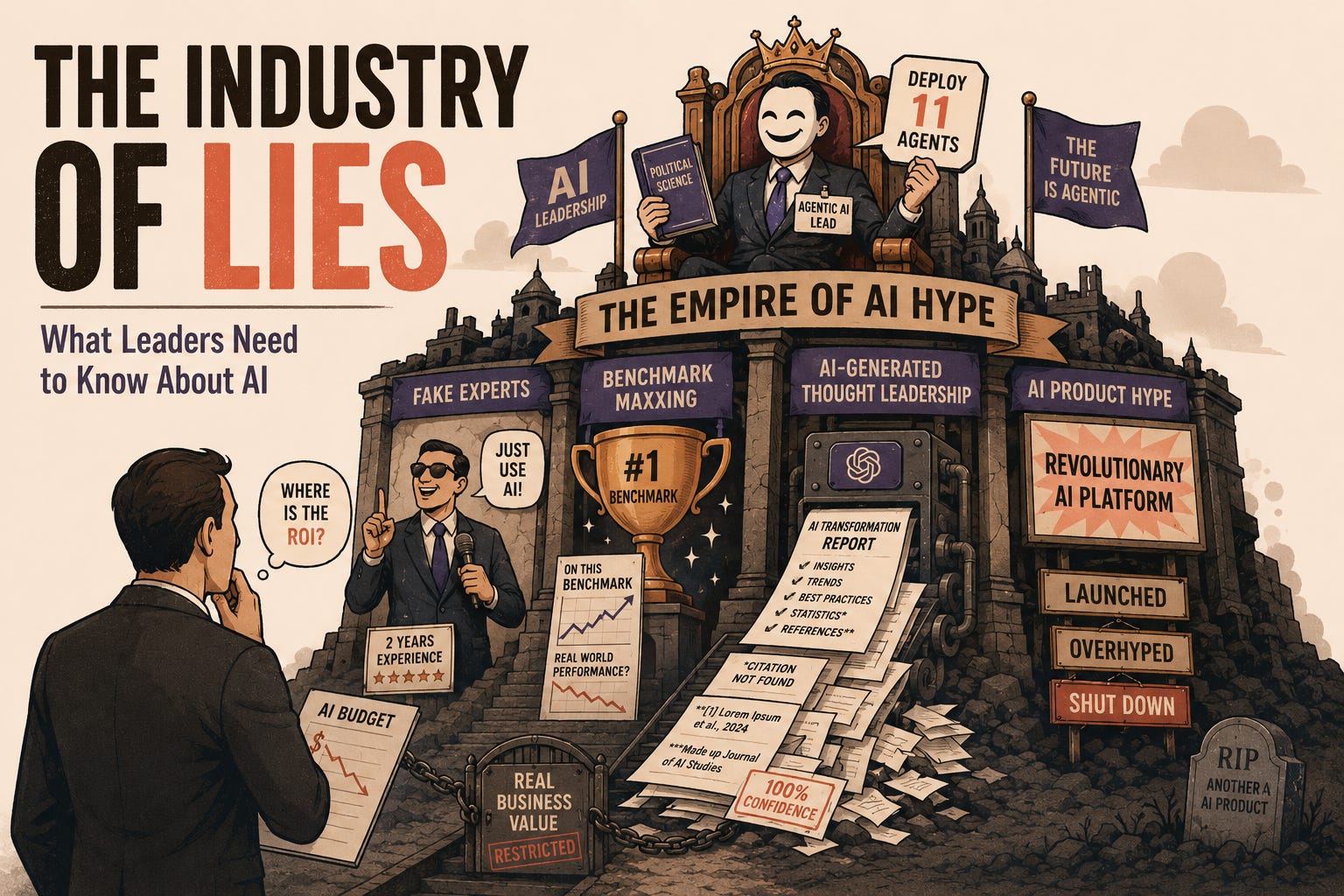
d09a6a55-4535-473c-b8dc-8c7327b76302_999x1351.jpg


Economists don't know shit.
 
I remember when people said that people would never have their own personal computers in their house as well. Honestly, I do not understand the train of thought behind your argument.
This.

When the automobile came along, people opined about how that will fail because a horse can go places that the automobile can’t. Same for automatic starters. Air conditioning, who needs that when you can buy ice and ceiling fans. Electricity in the home. Total failure. Mobile phones, no one will want those. Personal computers. The internet, yeah that will go away for sure.

AI inference? Just the latest in a long line.
 
This.

When the automobile came along, people opined about how that will fail because a horse can go places that the automobile can’t. Same for automatic starters. Air conditioning, who needs that when you can buy ice and ceiling fans. Electricity in the home. Total failure. Mobile phones, no one will want those. Personal computers. The internet, yeah that will go away for sure.

AI inference? Just the latest in a long line.
I agree, but AI is something different—the things you mention are tools that can be used by humans, whereas AI will be a tool that uses humans, and depending on how it develops, this could become “scary” in some aspects.
 

Ford had to hire back former engineers to fix mistakes made by its automated systems
https://www.theverge.com/transportation/956316/ford-quality-jd-power-ranking-ai-automated-mistakes

To celebrate its new status as No. 1 in JD Power’s initial quality ranking among mainstream automakers, Ford is opening up about the challenges it has faced in recent years, especially around its reliance on automated systems in production and design. It turns out that those automated systems were not as robust as previously assumed, requiring Ford to hire experienced technicians — sometimes bringing back former employees — to correct errors made by the company’s robots.
In Ford’s view, AI is both powerful and prone to pitfalls. Its effectiveness depends entirely on the quality of the data used to train the AI models. In addition, the automaker underestimated the value of the institutional knowledge accumulated by its more veteran engineers who had worked through multiple vehicle-development cycles. And this combination of phenomena led to a drop in quality in Ford’s vehicles.
“Mistakenly, we thought that by just introducing artificial intelligence and adjusting the design requirements that we had, that that would produce a high-quality product,” said Charles Poon, VP of vehicle hardware engineering, in a briefing this week with reporters.

“Mistakenly, we thought that by just introducing artificial intelligence and adjusting the design requirements that we had, that that would produce a high-quality product.”
— Charles Poon, Ford’s VP of vehicle hardware engineering
According to Poon, some of the company’s most experienced personnel left before all of their accumulated knowledge could be fully transferred into Ford’s automated systems. That necessitated bringing back some of those employees to retrain those systems, or in some cases, mentor younger engineers who were currently struggling to maintain Ford’s vehicle quality. Poon said that Ford hired, promoted, or brought back over 350 experienced engineers to rebuild that layer of expertise. In addition to guiding younger engineers, they’ve also been tasked with improving the data collection and AI training that underpin Ford’s automated systems.
“That’s where some of our most experienced engineers have had experience solving and identifying those problems before they creep into the system,” Poon said.
Ford currently leads the industry in the number of recalls, and its quality ratings have slipped over the past several years. Those challenges became more pronounced recently, with the difficulties associated with the launches of the Explorer and Aviator, supply-chain disruptions during the covid pandemic, and the noticeable growth in the number of its vehicle recalls.
According to Ford’s COO Kumar Galhotra, the automaker eventually concluded that its approach to quality had become too fragmented. Different departments operated in silos, and the company relied heavily on a “find and fix” philosophy that focused on identifying defects after they appeared and correcting them as quickly as possible. While that approach could address immediate problems, it did not prevent those problems from occurring in the first place.
“We’re moving from that find-and-fix mentality to preventing issues before they occur,” Galhotra said. “We’re focused on enablers and early indicators versus outputs. Stop admiring the problem and start solving it.”
The transformation extends beyond vehicle hardware. Software and digital teams now work much more closely with vehicle engineering, manufacturing, and supply-chain teams, executives said. And Ford is now attempting to combine the speed and flexibility associated with software development with the rigor and validation requirements of automotive-grade engineering.
Historically, this wasn’t always the case. Ford was only discovering software bugs late in the process because it wasn’t fully leveraging the rapid iteration cycles available, Poon said. That said, the automaker couldn’t push out software updates as fast as consumer electronics companies with the mentality that it could “move fast and fix later,” Poon said. Vehicles, unlike smartphones, operate in a safety-critical environment where customers depend on software functioning correctly from the moment the vehicle is delivered. To fix this, Ford created a dedicated 40-person software quality assurance team with the sole responsibility of preventing problems before they occur.
But don’t think that Ford isn’t dedicated to integrating AI into more of its processes. The automaker says it has dramatically expanded its automated testing capabilities, adding more than 100,000 new AI-powered tests designed to identify edge cases and stress software systems under a wide range of conditions. Because the testing framework is highly automated, software changes can be rapidly revalidated even late in development, ensuring that modifications do not introduce new defects.
“Because these tests are highly automated, even if we have a late change in the software, we can rapidly run back through the entire validation process to guarantee it works perfectly well before it reaches the customer,” Poon said. “We’ve established software reliability as its own rigorous disciplines with strict metrics.”
 
  • Like
Reactions: Nobu
like this
Last edited:
So shocked. To be honest, I wish that NO engineers would choose work for Ford so that Ford can bury themselves in the grave they dug. Getting so sick of companies offsetting employees with AI then realizing what a stupid decision that was.
At no point the word fired/offest is in the article, the way it is phrased make it sound they are paying a fortune to bring back for a short time people that retired with full benefit already, which is common in many industry and usually as little to do with AI, just baby boomer retiring leaving gapping instutional knowledge hole, we see it in old school climatisation system and many other sector.

You will see it many case around you, people that retired in the "trades" that get to work as consultant for very large fees.
 
At no point the word fired/offest is in the article, the way it is phrased make it sound they are paying a fortune to bring back for a short time people that retired with full benefit already, which is common in many industry and usually as little to do with AI, just baby boomer retiring leaving gapping instutional knowledge hole, we see it in old school climatisation system and many other sector.

You will see it many case around you, people that retired in the "trades" that get to work as consultant for very large fees.
My apologies. My attention span for reading anything from The Verge is very short.
 
I agree, but AI is something different—the things you mention are tools that can be used by humans, whereas AI will be a tool that uses humans, and depending on how it develops, this could become “scary” in some aspects.
AI is also a tool that is used by humans.
 
Back
Top