are they using liquid capacitors or Solid State capacitors in this unit?

Happy Hopping

[H]F Junkie
2FA
Joined
Jul 1, 2004
Messages
8,579
nuprime-dac-10-dac-10h-interieur_1.jpg


this is the NuPrime DAC 10h
 
Are you worried about life span or audible quality? I would say it looks like any of the bigger caps that have the stamped + on the top are electrolytics. The little ones with 1/3 of the top a darker color are the solids.

so-2.jpg


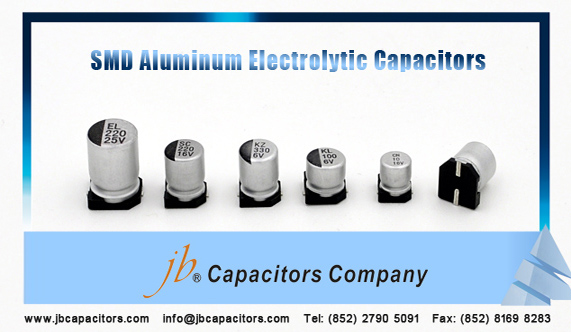
That being said, you can just as easily have electrolytic surface mount

jb-SMD-Aluminum-Electrolytic-Capacitors.JPG
 
Can I ask why you are asking this? Usually when I hear questions like this it comes from a place of either a) I heard on the Internets it is bad or b) one time in the way past this type of thing hurt me therefore it is always bad in the future.

Note: the current board i'm designing has multiple different capacitor technologies and used where their strength are.

At first glance I see wet electrolytic, possible dry electrolytic, ceramic, and tantalum
 
In the case of radial barrel type caps, look is there is a 'vent' on top. A 'K' shaped incision on top of the casing which allows pressure to escape if the capacitor experiences failure.

With audio, electrolytic ("liquid") caps are usually found in the power regulation section where they act as (among other things) power reservoirs. Typically 300uF upwards.
The reason for this is that electrolytics normally have large capacitance values combined with low to high voltage ratings, and the 'solid' types (like blocky film caps) have high voltage ratings but tiny capacitance, making them more suitable for signal coupling.

Look at the voltage ratings. Odds are, the largest ones rated for 100+ Volts are the main primary caps and they rarely go out.
The lower Voltage rating ones are usually for circuit logic, signal processing etc.
In the signal path you will usually find solid (MKP 'blocks', little red ceramics) coupling caps with a tiny capacitance like 1uF, 0.1uF. They are used to block DC, among other stuff.


Westrock2000, Trepidati0n, I am concern about lifespan. For me, any electronics, a few thousands, but uses liquid capacitors, in which in a few years, it will look like this:

Capacitor plague - Wikipedia, the free encyclopedia

from where I come from, that's called Highway Robbery. I was told a guy named trump invented this concept. :D


Michalrz, can I bother you one more time:

originally someone convinced me that a $2000 DSD DAC can deliver much better sound than my Emotiva XDA-1 DAC. After digging further, because Emotiva doesn't have wholesale / retail, a $400 Emotiva is really worth competing against a $1000 DAC. And that for an average person like me, for vocal music CD, there shouldn't be any noticeable difference between a $1000 DAC vs. the NuPrime $2000 DAC above.

Meanwhile, I need a SACD player, as my current CD player is 15 yr. old. And I need one that has HDMI out, in which there is only 1 brand, the Sony XA5400ES

Sony SCD-XA5400ES SACD Player - HomeTheaterHifi.com

Now, at this link, on the left bottom photo, if you click it, it enlarge the inside of the Sony. Now, isn't that liquid capacitor again? For $1600, and they called it "Elevated Standard" (ES), that's what I get?
 
Electrolytics have been used for decades without issue in just about every electronic device that's ever existed. There are just some things an electrolytic are better suited for than another type.

The cap plague you're so worried about was an issue with the (probably stolen) compositiion of the electrolyte used by a few cap manufacturers and cheap-ass manufacturers.
 
Michalrz, can I bother you one more time:

originally someone convinced me that a $2000 DSD DAC can deliver much better sound than my Emotiva XDA-1 DAC. After digging further, because Emotiva doesn't have wholesale / retail, a $400 Emotiva is really worth competing against a $1000 DAC. And that for an average person like me, for vocal music CD, there shouldn't be any noticeable difference between a $1000 DAC vs. the NuPrime $2000 DAC above.

Meanwhile, I need a SACD player, as my current CD player is 15 yr. old. And I need one that has HDMI out, in which there is only 1 brand, the Sony XA5400ES

Sony SCD-XA5400ES SACD Player - HomeTheaterHifi.com

Now, at this link, on the left bottom photo, if you click it, it enlarge the inside of the Sony. Now, isn't that liquid capacitor again? For $1600, and they called it "Elevated Standard" (ES), that's what I get?

The purpose of pricing audio gear is sometimes related to building up expectation bias.
There is, for most electronics, a certain price point above which actual design improvements and component selection is no longer possible or feasible.

There are military grade components like resistors and capacitors. But when you pay premium, you're also paying for a guy who is assembling the unit to accurately measure each capacitor's capacitance and each resistor's resistance. All components vary in their characteristics by a certain percentage. The higher the price - the tighter the quality control. You need matching components if you want accurate left+right stereo.
Electrolytics are not 'cheap', they simply have, as Ryan said, their particular niche. In the picture you linked to, I mostly see electrolytics in the power supply. It's because electrolytics are suited for storing a large charge. They may introduce some resistance and they would add distortion to a complicated waveform, but in the power section this is usually a non-issue.
To avoid getting into details - one of the reasons has to do with frequency of the signal. Wall power is around 50 cycles per second, while 48kHz audio is 48 thousands of cycles per second.
In the photos I can make out some Nichicon capacitors. These are decent. I'm guessing these are elements of circuitry powering the integrated circuits. The low profile all silver ones look like solid caps, I see no vent on top.
Hobbyists like changing capacitors to better brands (better electrolyte formula), with higher temperature ratings. Some try out other capacitance values. Some look at their Voltage ratings and put in lower rated caps where higher voltage spikes are not expected. That is to reduce ESR - the undesirable tiny resistance capacitors exhibit.
I have a 40 year old or so Hitachi speaker amplifier, no capacitor has been changed and it works just fine. And a DAC has better chances still because of lower power requirements.
 
  • Like
Reactions: N4CR
like this
What manufacturer and rating? Quality caps with 105C rating such as Rubycon, Nippon Chemi-Con, Nichicon and Panasonic will last a very long time.
 
"The capacitor plague was a problem related to a higher-than-expected failure rate of non-solid aluminum electrolytic capacitors, between 1999 and 2007, especially those from some Taiwanese manufacturers,[1][2] due to faulty electrolyte composition that caused corrosion accompanied by gas generation, often rupturing the case of the capacitor from the build-up of pressure."

the article you linked explained and should have alleviated your concern. they are fine and as Michalrz said there are 40-50 year old components still working fine.

I fix PC motherboards. I lost count how many motherboards have capacitor plague, w/ the most recent one that I replaced being last week. So clearly the problem w/ cheap liquid capacitor is NOT between 1999 to 2007.
 
The cap plague you're so worried about was an issue with the (probably stolen) compositiion of the electrolyte used by a few cap manufacturers and cheap-ass manufacturers.

but this problem (see my reply above to Pendragon1) is still happening, so maybe it's the composition, and cheap manufacturers are still doing it to save a buck.

See, I always got the impression that Japanese solid capacitors, the ones tested at 105 deg. C, are the only ones that will last many years
 
Hey I was just quoting. And in my experience, I haven't personally seen this in a few years. Also, how old was that board? Was it from the tail end of that time, like 2007-8?
 
but this problem (see my reply above to Pendragon1) is still happening, so maybe it's the composition, and cheap manufacturers are still doing it to save a buck.

See, I always got the impression that Japanese solid capacitors, the ones tested at 105 deg. C, are the only ones that will last many years

You are questioning and that's okay. You see it in the field - I get that, I really do.
But, the MOBO is a specific kind of device... I'm guessing the capacitors you had to replace there were mainly in the CPU power regulation section? that is, between the CPU socket and the back I/O plate?
You probably noticed that area is littered with surface mounted transistors. These have a very hard job... say you have a CPU of a TDP of 100W. Assuming a VCORE voltage of 1V, that's a hundred of Amperes of current. That's why the manufacturers have to make do and 'repeat' some circuitry 4-5 times and call those "power phases".
To distribute that load.
You also have the CPU there all smoldering and a rush of 60 deg+ air running from the PCIe graphics card by convection.

So, it's a very hot place. And when you use aftermarket cooling, you can bump into an issue where the CPU fan is blowing air from the socket towards the back, bypassing the "VRM" (voltage regulator) section.
I'm typing this post from an old P35-S3G Gigabyte board that has solid caps in the VRM section and yet it became brownish and warped because I was running an overclocked Q9550 almost passively (it was cooled by a HR-02 MACHO using just case fans).

Some integrated circuits in a DAC no less have such miniscule current needs that an electrolytic cap should suffice for like 25 years. Then there's the huge 20% tolerance meaning the capacitance is all over the place between each piece, so the equipment vendors provide much headroom.
If you look at Mouser Europe's catalogue, a 2200uF 16V 105C liquid aluminum electrolyte by Nichicon costs 0.604 euro, while a 2200uF 16V 105C conductive polymer aluminum solid cap costs 1,3 euro.
Difference? You DAC will need maintenance in 35 years instead of 25. Either way, lots of other parts in a DAC may "float" out of spec with time, that's why stuff like operational amplifiers have common mode noise rejection and other "self-correcting" circuitry.
 
Some HiFi porn for your viewing pleasure:


Partially symmetrical amplification section (L+R).
This is a 20+ year unit. In excellent working order, no hum, no buzz, used to drive my Tannoy M4 to thunderous levels in a large room with no annoying distortion.
And those radial capacitors we see in the middle reside under a layer of dust within an inferno stuck between two ginormous heatsinks. How did they manage this? Quality, ELNA 105C caps. If those were the kind mobo vendors use to cut corners, we'd be having a different discussion :D

edit: Yamaha AX550 RS
 
Hey I was just quoting. And in my experience, I haven't personally seen this in a few years. Also, how old was that board? Was it from the tail end of that time, like 2007-8?

I see it monthly, on main PC motherboard, as well as on capacitors on video card. It's not "a board" that I see it at, it's all the ones that people call me for repair. It's definitely happening at today's motherboards.
 
Some integrated circuits in a DAC no less have such miniscule current needs that an electrolytic cap should suffice for like 25 years. Then there's the huge 20% tolerance meaning the capacitance is all over the place between each piece, so the equipment vendors provide much headroom.
If you look at Mouser Europe's catalogue, a 2200uF 16V 105C liquid aluminum electrolyte by Nichicon costs 0.604 euro, while a 2200uF 16V 105C conductive polymer aluminum solid cap costs 1,3 euro.
Difference? You DAC will need maintenance in 35 years instead of 25. Either way, lots of other parts in a DAC may "float" out of spec with time, that's why stuff like operational amplifiers have common mode noise rejection and other "self-correcting" circuitry.

now that's what I needed to hear. I don't need 25 yr., perhaps 10 to 15 yr. is good enough. My first receiver is 16 yr. old, at the time, I don't have $ to buy a DAC, and I didn't realize the huge difference in CD sound quality. w/ the way DAC moves forwards, I would imagine in 10 to 15 yr., there better a huge difference in the next generation DAC that will move people like us to dump our old DAC and buy new ones regardless whether they fail or not.

Thank you for the useful info.

No problem.

BTW. You might need to re-state your requirements if you're shooting for a digital setup. HDMI transfers sound digitally, meaning the whole analogue stage (operational amplifier integrated circuits and such) are bypassed anyway.
 
PC motherboard, as well as on capacitors on video card. It's not "a board"
the "board" I was referring to was the "PC motherboard". its short form like; board=motherboard same as mobo=motherboard. just because you had a system to repair last week does not mean that it is current hardware. what was the manufacture date of the motherboard you are referring too? that is what I meant, it could be ten years old inside.

re the DAC, you are comparing two drastically different environments between the inside of a dac and the inside of a pc. regardless, the DAC you are looking at is not going to be affected by bad caps. no need to worry. michalrz hopefully helped alleviate that too, I hope.
 
the "board" I was referring to was the "PC motherboard". its short form like; board=motherboard same as mobo=motherboard. just because you had a system to repair last week does not mean that it is current hardware. what was the manufacture date of the motherboard you are referring too? that is what I meant, it could be ten years old inside..

You see, it's not just 1, I see all sort of PC motherboard w/ capacitors fails weekly, they are about 4 yr. old on average. May be 5. A few are slightly older, say 7. And a mix of all sorts of brand
 
No problem.

BTW. You might need to re-state your requirements if you're shooting for a digital setup. HDMI transfers sound digitally, meaning the whole analogue stage (operational amplifier integrated circuits and such) are bypassed anyway.

I just ordered a HDMI to Digital Coax box from Monoprice, to cut to the chase, if I can't get that to work, I'll need to ask for your help again. I'm really hoping it'll work
 
Happy,

I am glad your anecdotal evidence is so compelling that we should ignore all other facts and say electrolytic capacitors are bad. I'm still looking at you because my eyes rolled a complete 360. :D I need to make this very clear so I will post it in a separate sentence in a quote box.

ALL CAPACITORS WILL FAIL PREMATURELY IF NOT APPLIED CORRECTLY

This is why I asked "why he was asking" in my first post because nobody on this forum who is an electrical engineer, with design experience, would post such a question. I can make a ceramic cap fail just as fast (if not faster) as a wet electrolytic if I do something stupid. In reality, by time you parallel enough ceramic caps to equal a wet electrolytic, there is a good chance your reliability will actually be worse in high bulk (e.g. a lot of capacitance) conditions. Either way, realize that MB was probably designed just about right (4-5 years) based upon the spec they were given. It has nothing to do with that wet electrolytic are "inferior" Remember cheap ass fuck bean counters say "i don't want to spend any money, make it cheaper you fool". People who make high end DAC's are counting on that you aren't a cheap ass and willing to pay the premium for over design. ;)

As a FYI..the temperature rating of the capacitor means jack/shit if not correlated to its life rating. The reason why they list 105 deg C caps is because @ 85 the number, in most cases, is too stupidly huge..so they bump it up a bit.
 
Back
Top