

cybereality
[H]F Junkie
- Joined
- Mar 22, 2008
- Messages
- 8,787
I think this can be good in many cases and should help improve the graphics of games. If anyone is familiar with 3D modeling packages it is very common to use this effect for pre-rendered content (mesh-smooth in 3Dmax or Sub-division modeling in Maya). In the majority of cases this can add extra geometry without affecting the general topography or normals so it retains the same shape (just at the higher mesh density).
That air canister is just a simple example, I think some of you guys are missing the point. Yes the devs could have just made it a high-res mesh. But then performance would be lower. In order to compensate they will use dynamic LOD (level of detail) which means the artists have to go in there are output multiple versions of each mesh (lets say 3 or 4 versions at various detail levels). This is more work for the artists and does not look so great in games. You know when you are playing a game and looking at say a rocky mountain and then as you move closer the geometry just snaps/pops to a different formation? That is LOD at work. Dx11 tessellation fixes that. So ideally you would get a higher mesh density (ie more poloygons), better performance, and smoother transitions. Its a win win situation assuming it is implemented correctly in Dx11 (which is yet to be seen). There also has to be a way to customize the tessellation so games will need to be specifically built for this feature. But it has a lot of potential.
FYI: I think the first game to use this technique was Messiah which came out like 10 years ago. I would be interested to load that game up today and see if it actually scales...
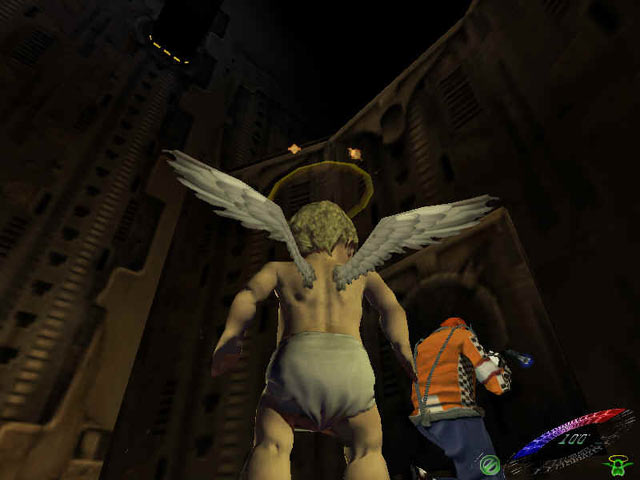
No so bad for 1998.
That air canister is just a simple example, I think some of you guys are missing the point. Yes the devs could have just made it a high-res mesh. But then performance would be lower. In order to compensate they will use dynamic LOD (level of detail) which means the artists have to go in there are output multiple versions of each mesh (lets say 3 or 4 versions at various detail levels). This is more work for the artists and does not look so great in games. You know when you are playing a game and looking at say a rocky mountain and then as you move closer the geometry just snaps/pops to a different formation? That is LOD at work. Dx11 tessellation fixes that. So ideally you would get a higher mesh density (ie more poloygons), better performance, and smoother transitions. Its a win win situation assuming it is implemented correctly in Dx11 (which is yet to be seen). There also has to be a way to customize the tessellation so games will need to be specifically built for this feature. But it has a lot of potential.
FYI: I think the first game to use this technique was Messiah which came out like 10 years ago. I would be interested to load that game up today and see if it actually scales...
No so bad for 1998.